A Guide to Musical Terms
A Guide to Musical Terms
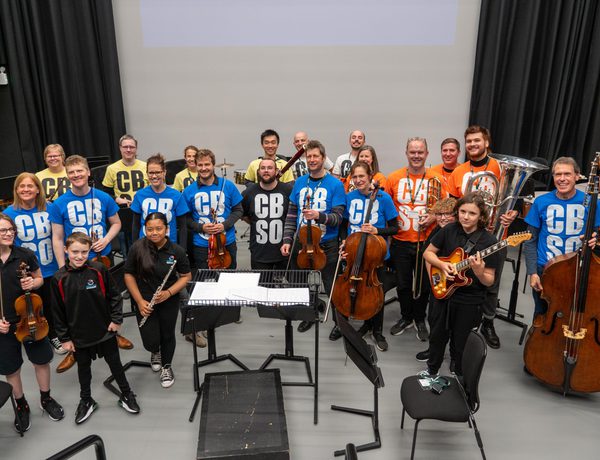
In an ongoing collaboration with Shireland CBSO Academy, we are working with music students to jointly develop a glossary of useful terminology to ensure all audience members can understand the orchestral terms used in programmes.
Through workshops taking place since February 2025, students from Shireland CBSO Academy have developed a list of key words within orchestral music alongside their own definitions. We will continue to collaborate with students to develop and grow this list, which will be accessible here and in specific printed programmes.
Thank you to the students who have contributed to this project so far, including Abigial, Emilia and Lewis.
Our concert programmes are a chance for brilliant writers to share their insights into the amazing pieces we're playing this season. You can read the notes online, or download a PDF of the full concert programme on our programmes page.
Definitions:
Adagio
Italian for ‘Slow’. A marking given on a piece to direct the conductor and musicians that music should be played at a leisurely, slow pace.
Allegro Molto
Italian for ‘Very Fast’. A marking given on a piece to direct the conductor and musicians that music should be played at an energetic and lively pace.
Concerto
A musical structure that features a solo instrument accompanied by an orchestra, often organised in several movements to focus on the interchange between the soloist’s skill and the orchestra’s sound.
Conductor
The person who leads musicians by directing expression, speed and volume to ensure a unified or individual message is addressed and actualised in a performance.
Double/Triple-stopping
When a string instrument plays two or three notes simultaneously.
Encore
An extra piece played at the end of a concert not specified in the programme, usually in response to the audience’s strong applause and excitement.
Fanfare
A brief, elated piece of music often played by brass instruments, such as a trumpet. It is used to mark the start of a principal event.
Key
The key tells you what set of pitches the music sits on and what notes and chords to play.
Melody
A melody is a pattern of sounds in different pitches also known as a tune. It may be used to form a theme (see definition for theme below).
Movement
A section of an enormous musical work, much like a chapter in a book, with its own expressions and speed. Often included in a symphony (see definition for symphony below) and is intended to be played in a particular sequence. Movements are defined by numbers listed under the title of the work.
Opera
A story that is told largely by music, acting and singing, often accompanied by elegant sets and costumes.
Opus
A numbered, categorised ‘word’ of compositions by a particular composer, used to recognize and separate pieces within a composer’s body of work (i.e. Op.45) .
Overture
A short instrumental piece, played at the beginning of a larger musical work (opera, ballet, musical) that sets the mood or presents an important melodic theme.
Score
The written/printed document of a musical composition, like an instruction manual for performers to follow.
Suite
A set of short sequential, melodic pieces played in a registered order and often splitting a common theme from larger projects like an opera or ballet.
Symphony
A detailed, long piece of music divided into different sections, usually in four parts.
Tempo
The temporary or permanent speed at which a piece of music is played.
Theme
A melody or idea that forms the major focus of a piece, often serving as the signature tune.
Waltz
A type of music that is dance-like in style with three beats in a bar and often the first beat of the bar sounds quite strong. The Waltz is typically exceptionally soft, soothing and smooth.