Beethoven & Puccini
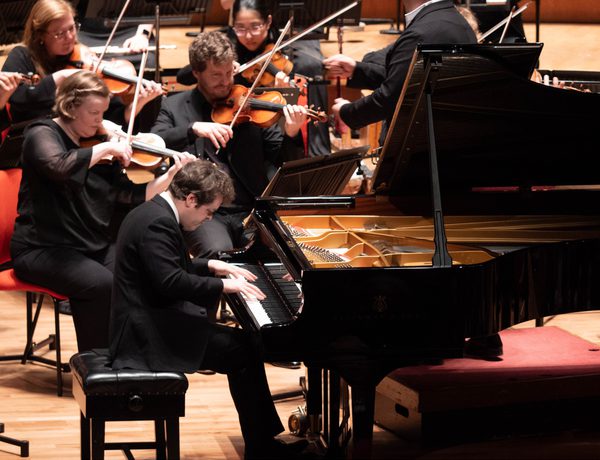
Full programme
- Rossini, The Thieving Magpie: Overture (10mins)
- Beethoven, Piano Concerto No.1 (37mins)
- Puccini (arr. Rizzi), Tosca: Symphonic Suite (20min)
- Puccini (arr. Rizzi), Madam Butterfly: Symphonic Suite (18mins)
Performers
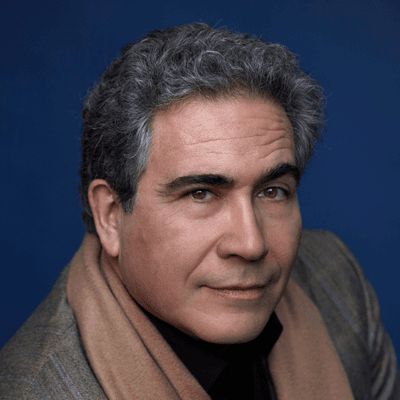
Carlo Rizzi
Conductor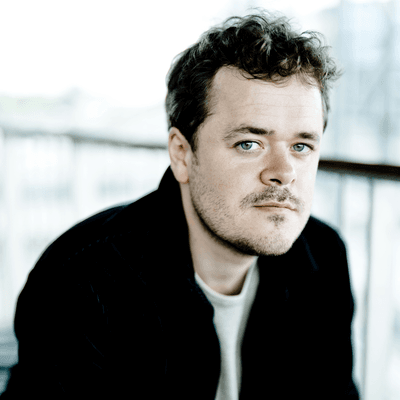
Benjamin Grosvenor
Piano
Introduction
Welcome to this concert where we explore one of the most important Italian composers: Puccini.
Puccini is known as a composer that wrote some of the most beautiful and recognizable arias in the operatic world. While studying and re-studying Puccini’s operas, I was struck every time by the sophistication of his orchestration and the very innovative use of the instruments.
Who would have thought, for example, that the use of two notes, played by the piccolo and the bass clarinet five octaves apart would be so poignant and effective in describing the moment when the dead body of Liù leaves the stage in Turandot? Or that a repeated fifth on the timpani played independently from the rhythm of the rest of the orchestra could describe so powerfully the moment when Butterfly decides to take her life? This is why during the pandemic I decided to create these two “Symphonic Suites” from Tosca and Madama Butterfly, to show that the artistry of Puccini is much more than just “nice melodies”.
The suites are the original orchestration; nothing is added, nothing has been taken away. There are no “karaoke” moments where I gave the line of the singer to an instrument: the orchestra is enough to be the “voice” of Puccini.
We are hugely grateful to Benjamin Grosvenor who has stepped in at the last minute for this afternoon's concert and will be performing the first piano concerto of Beethoven, with his lively interaction between the orchestra and the piano, the expressive second movement, and the joyous and energetic finale. With many dazzling piano passages, we're sure that Benjamin with delight us.
This afternoon, I am very happy to be able to offer you this wonderful music together with the great musicians of the CBSO. I hope you will enjoy the concert.
Carlo Rizzi
Conductor
Programme Notes
Be immersed in a dazzling array of sounds and moods. Rossini’s Thieving Magpie sounds as mischievous as ever, from opening drumroll to galloping conclusion. Beethoven’s early piano concerto is both assertive and playful, full of bold contrasts and surprising effects. The exceptional British pianist Benjamin Grosvenor dazzles in the solo part. In the second half we find beauty in tragedy: orchestral suites from two of Puccini’s most powerful operas, Tosca and Madam Butterfly, arranged by conductor Carlo Rizzi. Puccini’s genius at orchestration is revealed in all its expressive glory.
Overture to The Thieving Magpie
Gioacchino Rossini (1792-1868)
Anyone fortunate enough to be invited to one of Rossini’s famous musical evenings at his villa on Avenue Ingres, Paris, would not find themselves sitting down to a table groaning with extravagant delicacies. In his long retirement, Gioacchino Rossini was fastidious about his food. A simple glass of wine and a cigar would suffice him for lunch. For his dinner parties, he did the shopping in person, selecting fresh Italian imports of the highest quality. A French shopkeeper was astonished when the elderly maestro, offered some authentic “Neapolitan” macaroni, promptly rejected it as Genoese. "If he knows as much about music as he does about pasta he must be a great composer!” remarked the disappointed merchant.
In short: Rossini was all about fresh ingredients, skilfully prepared. Those were the components of the musical delicacies he rustled up for his public, whether songs or piano pieces, or hit operas such as La Gazza Ladra (The Thieving Magpie), which premiered at La Scala, Milan in May 1817. The plot – based, incredibly, on a true story – involves a sweet-natured servant girl, wrongly accused of stealing her employers’ silverware. (The actual culprit? Spoiler alert: the clue’s in the title, a certain black-and-white bird with an eye for bling). The spirited overture, spiced with military percussion, is a piquant hors d’oeuvre to the feast of melody ahead. From the swaggering opening march to an effervescent finish, this Overture is a succession of tasty musical ingredients, flavoured with zingy orchestral colours, and dished up with thrilling crescendos (a Rossini trademark) and a side-order of drum-rolls. Prego!
Piano Concerto No.1
Ludwig van Beethoven (1770-1827)
We tend to forget about Beethoven’s performing career, but as a young aspiring composer, he quickly realised that his best chance of winning fame and fortune in Vienna was as a virtuoso pianist. Such a reputation needed careful maintenance, so it’s no real surprise that the work Beethoven finally published in 1801 as his First Piano Concerto was actually his third attempt in that form. He’d been working on the concerto since at least 1795, and probably performed it for the first time in March that year, repeating it in Budapest, Bratislava, and finally (in 1798) Prague.
But everything about this concerto suggests a confident debut. This is music written to make an impact. For starters, it’s in C major – the brightest, most uncomplicated key. That meant Beethoven could use trumpets and drums, giving an irresistible swagger to the climaxes of the first movement. He begins with a broad, rather martial procession of themes, and then keeps the audience guessing as the piano makes its first appearance quietly, and with a completely different melody.
And the Largo, with its tender piano melody floating over soft strings (and later, low throbbing woodwind) is sure to have had Beethoven’s female fans swooning. Beethoven follows the example of his former teacher Haydn and sets his slow movement in the remote key of A flat major. That gives it the feeling of an intimate glimpse into another world - one that’s unmistakably his own, and Romantic with a capital “R”.
This is still young man’s music, though, and there’s never been any composer who could mix comedy, grandeur and sheer, unstoppable energy quite as dazzlingly as Beethoven does in the concerto’s final Rondo. Beginning with the rhythmic equivalent of a tongue-twister for solo piano, Beethoven just about remembers his manners – toying with his audience with such charm and panache that even the crustiest of Viennese traditionalists would have had to admit that maybe there really was something to this Beethoven craze, after all. Such a clever young man!
Tosca: symphonic suite
Giacomo Puccini (1858-1924)
At the heart of Italian opera is the human voice, and the art they call bel canto: literally, “beautiful singing”. But by the start of the twentieth century, the tradition was evolving, and in the operas of Giacomo Puccini the orchestra is almost a character in its own right. Few conductors understand that better than Carlo Rizzi, and after a lifetime in the world’s great opera houses, the lockdown of 2020 set him thinking. “While conducting the orchestral suite from [Richard Strauss’s] Der Rosenkavalier, I found myself reflecting on the fact that in Strauss’s operas the orchestra is always deeply embedded” he recalls:
My mind quickly started to play with the idea of how some of Puccini’s greatest works might be re-imagined in a purely orchestral version, in their own right… As I studied the scores in detail, I was guided by what had always been clear in my mind from the beginning - that, after all my re-imagining, selecting and arranging, the final works must be completely pure and faithful to Puccini’s original orchestration alone, with nothing added to “cover” any perceivable lack of vocal line.
Again I found the answers in the sheer brilliance of Puccini’s original music. These are, after all, his masterpieces in another form. I also hope that those who already love Tosca and Butterfly will enjoy the opportunity to focus wholly on the orchestra as they listen.
With Tosca (premiered in Rome in January 1900), Puccini took a play by the French dramatist Victorien Sardou (1831-1908) and gave it the pace and punch of an action movie. The setting is Rome, in June 1800: a revolution has failed and the forces of repression are hunting down its survivors. Amid the terror, the young artist Mario Cavaradossi is going about his business of painting saints, and soothing the jealousy of his beautiful and passionate lover, the opera singer Floria Tosca. But Cavaradossi has revolutionary sympathies, and the sadistic police-chief Baron Scarpia – consumed with lust for Tosca – is weaving a web that will trap both lovers.
Scarpia arrests and tortures Cavaradossi, and Tosca strikes a bargain – her virtue for his life. Scarpia agrees; he will arrange a mock execution, and then the two lovers will be free to go. But instead of surrendering her body to Scarpia, Tosca stabs him and escapes to witness the mock-firing squad that will restore Mario to her. Dawn breaks over the towering Castel Sant’Angelo and the soldiers take aim - but Scarpia has planned a final trick from beyond the grave. Cavaradossi falls dead and as the cry goes up for Tosca’s arrest, she leaps from the battlements, defiant to the last.
Madama Butterfly: symphonic suite
Giacomo Puccini (1858-1924)
Premiered in February 1904 at La Scala, Milan, Madama Butterfly is set in the Japanese port of Nagasaki in what was then the present day. Cio-Cio San, a 15-year old Japanese girl, is about to marry Lieutenant Pinkerton, an American naval officer. Her relatives’ objections only make her more determined: “Be careful, she trusts you” warns the American consul, Sharpless, as Pinkerton and Cio-Cio San go through a traditional Japanese wedding ceremony – severing all ties with her disapproving family.
But she’s certain that her new husband loves her, and is proud to be mistress of an “American home”. When we rejoin her three years later she has a young son, known as “Sorrow”, but Pinkerton has long-since sailed. Cio-Cio San is sure that their parting is only temporary and assures her devoted maid Suzuki that “one fine day” he will return. And so he does, with his new American wife close behind him. They’re here to take the child away with them. For Cio-Cio San, robbed of all illusions, Japanese tradition - and the ceremonial dagger that the Emperor sent to her disgraced father - offers a final escape for her broken heart.
© Richard Bratby
Featured image © Jonathan Ferro