Kazuki conducts Grieg's Piano Concerto

Full programme
- Bax, Tintagel (16mins)
- Grieg, Piano Concerto (30mins)
- Anna Clyne, Restless Oceans (5mins)
- Debussy, La mer (25mins)
Performers
Introduction
Experience all the romance, strength, and beauty of the ocean. The Atlantic is on fine form in Bax’s Tintagel, shimmering in the sunlight, or crashing against the Cornish cliffs. Debussy draws on paintings of the sea in his luminous evocation of La mer. In Restless Oceans, Composer in Residence Anna Clyne channels Audre Lord’s inspiration poem: she speaks of the turbulence of the cosmos, and the power and resilience embodied by Black womanhood. In between the waves, Grieg’s gloriously romantic Piano Concerto surges and soars in the expert hands of the dazzling Alice Sara Ott, our 2026-2028 Collaborative Artist. This performance marks the beginning of her two-season partnership with the CBSO as a Collaborative Artist, bringing audiences a deeper artistic journey across the seasons ahead.
Programme notes
Tintagel
Arnold Bax (1883-1953)
Bax’s tone poem Tintagel is a heady mix of Celtic romance, Wagnerian excess, and a very British obsession with the coastline. As musicologist Peter Atkinson once pointed out, during the early years of the twentieth century, British composers could hardly stay away from the sea (Tintagel’s marine companions include Frank Bridge’s The Sea and Elgar’s Sea Pictures). Tintagel itself is a ruined medieval castle on a peninsula off the north Cornish coast, sometimes claimed to be the birthplace of King Arthur. Bax and his lover Harriet Cohen visited the site in 1917, at a time when there was still a vogue for all things Arthurian. Tintagel quotes from Wagner’s Tristan und Isolde, which draws on a Cornish-Irish legend with its own Arthurian connections.
In his 1922 programme note on the piece, Bax wrote of his intention to portray ‘the long distances of the Atlantic as seen from the cliffs of Cornwall on a sunny but not windless summer day’. The Atlantic is on sparkling form as the work begins, with swaying horns and undulating strings; out of this orchestral texture emerges a serene theme for the violins. A considerably more restless section follows, its slithering chromatic passages building to the ‘sick Tristan’ motif from Wagner’s opera, and generally creating a sense of unease. The Atlantic surges back, as Bax puts it, with ‘immense waves slowly gathering force until they smash themselves upon the impregnable rocks’. Tintagel concludes with the sumptuous theme from the start, building to a triumphant blaze of sound in the final bars.
Piano Concerto
Edvard Grieg (1843-1907)
Grieg’s Piano Concerto is without doubt the composer’s most famous piece. It certainly has a special place in the hearts of British listeners of a certain age due to its prominence in a famous Morecambe and Wise sketch. Nonetheless, it can still surprise: Grieg wrote no other concerto, and he was a mere 24 when he composed it. Grieg was a virtuoso concert pianist and while he did not give the premiere of his Concerto in 1869 he performed it on other occasions, especially when touring in Europe. It is a deeply personal work, shot through with Norwegian folk melodies, containing a musical ‘fingerprint’ which would appear in many of his subsequent pieces: the opening three notes (A,G#,E) comprising a falling minor second and a falling major third.
Following the initial timpani roll and mini-cadenza on the piano, soloist and orchestra romp through a breathtaking series of themes, with four showstoppers by the third minute, the last of which is sumptuously romantic. As if in celebration, the piano plays another brief cadenza, followed by an orchestral version of the opening theme in a boisterous major key. And so it continues: variations on the main themes, alternating with and commenting on each other, plus some touching solo spots for several instruments.
The Adagio movement has a lyrical grace and a yearning quality to its principal theme. A decorative piano melody in the middle section leads to some agitation of its calm surface, but overall the mood is serene throughout. The final movement pays tribute to the Norwegian ‘Halling’ folk dance in its rollicking opening bars, then harks back to the Adagio with a swooningly gorgeous second theme, initially introduced by the flute. In a dramatic piano restatement of this theme in the closing seconds, Grieg flattens the second: perhaps not the most thrilling gesture on paper, but it sent Grieg’s fellow composer Franz Liszt into ecstasies on hearing it for the first time. Liszt marched about the room bellowing the theme, flinging his arms out and declaring ‘G, G, not G sharp! Splendid! That’s the real thing!’.
Restless Oceans
Anna Clyne (b. 1980)
In Anna Clyne’s short orchestral work, the ocean’s ‘restlessness’ – as well as its power and beauty – is expressed through a series of musical elements: flotsam and jetsam, as it were, generated by the water’s churn. The punchy opening section resembles the jagged rhythms of Stravinsky’s Rite of Spring; the orchestra is required to stomp as well as play their instruments. In the more lyrical passages they sing – a wordless ululation, perhaps channelling the enigmatic end of Holst’s Planets suite. Indeed, the work has a cosmic and planetary dimension. It was initially inspired by Audre Lorde’s poem A Woman Speaks, a hymn to the resilience of Black womanhood and in which the ‘restless oceans pound’ in the ‘entrails of Uranus’. The piece was premiered by an all-female orchestra, under the baton of Marin Alsop, and concludes – after more stomping, singing, and other vocal explosions – with the entire ensemble rising triumphantly to its feet.
La Mer
Claude Debussy (1862-1918)
It is fair to say that in the early twentieth century the primacy of the symphony was being somewhat challenged. While composers such as Sibelius and Mahler were still producing monumental symphonies, others were playing fast and loose with the form, producing symphony-like works which were not in thrall to the tradition. Between 1899 and 1912 Debussy wrote several three-part orchestral pieces, none of which he designated a symphony. La mer was composed in 1903-05. It acknowledges the symphony in its subtitle of ‘three symphonic sketches’, but its style is shaped more decisively by its subject matter: the flowing, unpredictable sea.
Debussy began composing the work in Burgundy while staying with his parents-in-law. Writing to fellow composer André Messager, he revealed that as a child he ‘was promised for the fine career of a sailor, and only the chances of existence made me branch off.’ Debussy’s father had indeed hoped his son would have a career in the French navy, but his musical talents found him entering the Paris Conservatoire at the age of ten. “I’ve nevertheless.” added Debussy, “preserved a sincere passion for Her [the sea].”
Although composition began very much inland – as Debussy remarked to Messager, “you’ll tell me that the ocean doesn’t exactly wash the hillsides of Burgundy!” – he continued to work on it while staying in Jersey, and completed the orchestration during a holiday in Eastbourne on the Sussex coast. He wrote from the Grand Hotel that it was “a charming peaceful spot: the sea unfurls itself with an utterly British correctness.”
Debussy’s meanderings to coastal resorts were partly due to a turbulent period in his personal life, during which he left his wife Lily for his mistress Emma Bardac, causing a huge scandal. It is crude to map such biographical details onto the piece itself, but there is an unpredictability, as well as passages of sheer musical ecstasy, that are suggestive of grand passions at work.
The opening movement, ‘between dawn and midday’, begins with misty murmurs, then builds – via several wave-like themes overlapping or interrupting each other – to a blazing burst of sunshine at the movement’s conclusion. In the second movement, the ‘play’ of the waves is evoked in fluttering and trilling figures, as well as delicious ‘glissandi’ (slides), all crashing exuberantly against one another. In the final movement, the ‘dialogue’ between wind and sea takes on a terrifying force. Themes and rhythms from the first movement reappear in a darker environment, while repeated melodic fragments take on a cumulative and menacing character; tantivy-like figures in the horns even suggest the sea is a kind of hunter. A section marked ‘plus calme’ provides respite, but otherwise the sense of momentum is unstoppable – until the tumultuous crash onto the shore in the final bar.
Programme notes by Lucy Walker.
Meet the CBSO
Violin I
Eugene Tzikindelean*#
Andrew Harvey
Kynan Walker
Jane Wright*#
Julia Aberg*#
Victoria Farrell-Reed*
Nathan Bomans*
Richard Thomas*
Colette Overdijk*#
Vera Beumer
Mark Robinson#
Bethan Allmand*
Cathy Chambers
Kath Gittings
Victoria Gill
Eleanor Hill
Violin II
Lowri Porter*
Moritz Pfister#
Amy Jones#
Charlotte Skinner#
Yuriko Matsuda*
Tim Birchall*#
Bryony Morrison*#
Henry Salmon
Tam Mott#
Gabriel Dyker*#
Amy Littlewood
Adam Hill
Lucy Haggerwood-Bullen
Imogen Brewer
Viola
Chris Yates*#
Adam Römer*#
David BaMaung*#
Michael Jenkinson#
Amy Thomas*#
Jessica Tickle*#
Sarah Malcolm*
Isobel Doncaster*
Helen Roberts
Cath Howe
Amy Swain
Henri Ridgeon
Cello
Balacz Renczes
Arthur Boutillier
Kate Setterfield*#
Miguel Fernandes*#
Helen Edgar*#
Jacqueline Tyler*#
Catherine Ardagh-Walter*#
Philippa Schofield
Alesssandro Sanguinetti
Gen Li
Double Bass
Anthony Alcock*#
Julian Atkinson*#
Jeremy Watt*#
Julian Walters*#
Daniel Vassallo*
Mark Goodchild#
Aisling Reilly
Dave Burndrett
Flute
Marie-Christine Zupancic*#
Emilia Zakrzewska
Piccolo
Elizabeth May
Oboe
Hyun Jung Song*
Emmet Byrne*#
Cor Anglais
Rachael Pankhurst*#
Clarinets
Oliver Janes*#
Joanna Patton*#
Bass Clarinet
Mark O’Brien#
Bassoon
Nikolaj Henriques*#
Tony Liu
Ben Hudson
Contrabassoon
Margaret Cookhorn*#
Horn
Elspeth Dutch*#
Neil Shewan
Daniel Curzon
Jeremy Bushell*#
Martin Wright#
Trumpet
Jon Holland
Gideon Brooks
Emily Ashby
Cornet
Ryan Linham
Jonathan Quirk#
Trombone
Richard Watkin#
Gemma Riley
Bass Trombone
David Vines*#
Tuba
Daniel Trodden*
Timpani
Matthew Hardy*#
Percussion
Andrew Herbert#
Toby Kearney*#
Jacob Brown
Harp
Katherine Thomas*#
Jean Kelly
# Recipient of the CBSO Long Service Award / * Supported player
Biographies
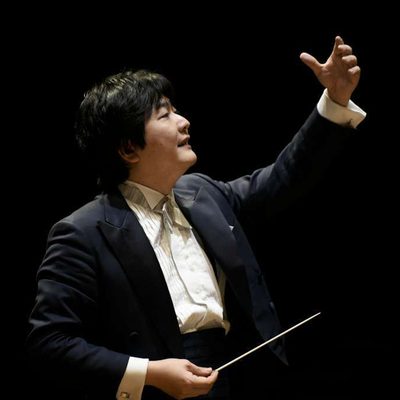
Kazuki Yamada, Conductor
Kazuki Yamada is Music Director of the City of Birmingham Symphony Orchestra (CBSO), Chief Conductor and Artistic Director of Deutsches Symphonie-Orchester Berlin (DSO) and Artistic Director of the Music Division at Tokyo Metropolitan Theatre. Time spent with Seiji Ozawa underlines the importance of Yamada’s “Japanese feeling” for music. Born in Kanagawa, Japan, he continues to work and perform in Japan every season. The 2026/27 season includes returning to the BBC Proms with the CBSO, before embarking on another European tour with the orchestra featuring Britten’s War Requiem. He opens his tenure as Chief Conductor and Artistic Director of the DSO and makes his debut with Symphonieorchester des Bayerischen Rundfunks and The Koninklijk Concertgebouworkest. He returns to The Boston and Chicago Symphony Orchestras, The Cleveland Orchestra, The BBC Symphony Orchestra, Orchestre Philharmonique de Radio France, Orchestre National du Capitole de Toulouse and Swedish Radio Symphony Orchestra to name only a few. Yamada appears annually as a guest artist at the Seiji Ozawa International Academy Switzerland and is actively involved in the CBSO’s outreach programme. He first achieved international attention upon receiving first prize in the 51st International Besançon Competition for Young Conductors in 2009.
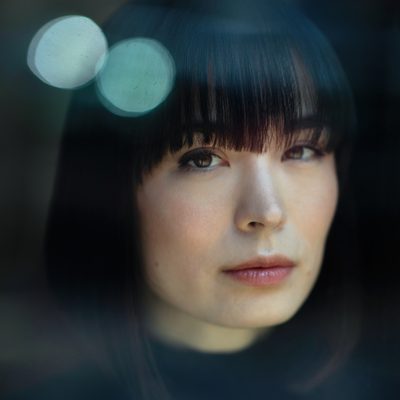
Alice Sara Ott, Piano
Pianist Alice Sara Ott is one of the most original musical voices of her generation. The 2026/27 concert season marks the beginning of two new artistic relationships in the UK. As Collaborative Artist at the City of Birmingham Symphony Orchestra for two seasons, she will perform with the orchestra in Birmingham and internationally, as well as taking part in chamber music, recording and wider creative projects. In January 2027, Alice begins a year-long position as Artist in Residence at London’s Barbican Centre with a series of performances and specially conceived projects. Contemporary repertoire sits at the core of Alice Sara Ott’s performances and in February 2027 she will give the world premiere performance of Joe Hisaishi’s Piano Concerto with the composer conducting the Philadelphia Orchestra. Alice works closely with the composer Bryce Dessner and in spring 2027 will present Love, Icebox in concert halls across Europe including London, Antwerp, Berlin and Hamburg. An album of Dessner’s music will be released in spring 2027 on Deutsche Grammophon, with whom Alice has recorded exclusively for since 2008. Alice’s Deutsche Grammophon recording of John Field’s complete nocturnes topped international classical charts, entered the Top 30 of Germany’s mainstream pop chart and was named Apple Music Classical’s Album of the Year 2025.
Collaborative Artist 2026–28
Alice Sara Ott
We’re delighted to welcome internationally acclaimed pianist Alice Sara Ott as a CBSO Collaborative Artist for the next two seasons, with performances at home in Birmingham and on tour in Japan. A visionary musician, Alice is known for captivating audiences worldwide with performances and chart-topping recordings that combine technical brilliance.
You can next see Alice perform in Birmingham at Kazuki conducts Shostakovich’s 5th Symphony, Saturday 29 May 2027.
Composer in Residence 2026-27
Anna Clyne
GRAMMY-nominated and Ivor Novello Award-winning composer Anna Clyne is the CBSO’s Composer in Residence for the 2026-27 Season. Her residency with the CBSO will place her music at the heart of the season, including major symphonic performances, a world premiere commission and a significant new recording project.
You can next hear Anna’s music at Family Concert: Halloween Spooktacular, Sunday 25 October 2026.
Featured image © Hannah Blake-Fathers