Kazuki conducts Mahler
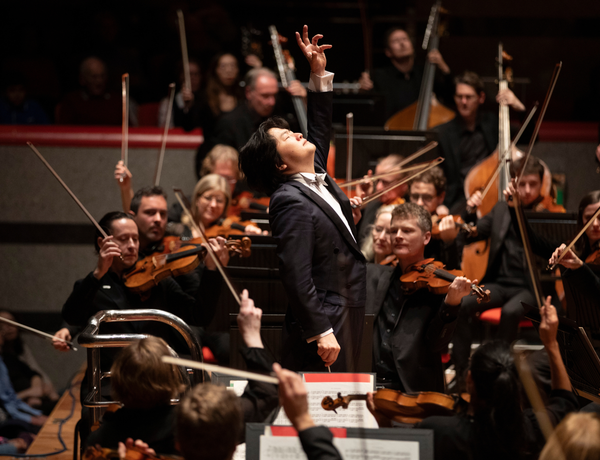
Full programme
- Mahler, Blumine (10mins)
- Dai Fujikura, Trombone Concerto (Vast Ocean II) (UK Premiere) (20mins)
- Mahler, Symphony No.1 (56mins)
Performers
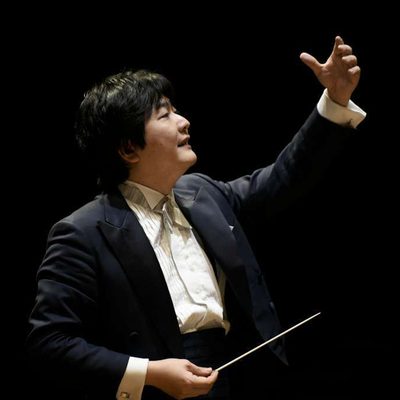
Kazuki Yamada
Conductor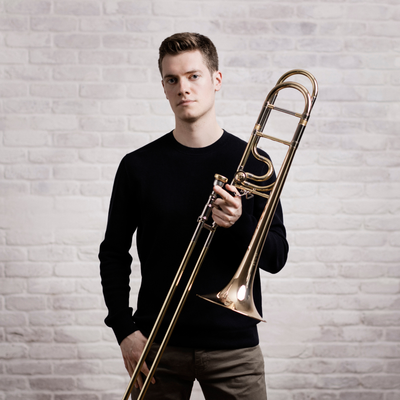
Peter Moore
Trombone
Introduction
It is a pleasure to be welcoming in the new year with this concert and to be kicking off the Mahler cycle with the CBSO.
This is my second time doing a Mahler cycle. I first explored all of Mahler’s symphonies with the Japan Philharmonic Orchestra, it was a huge project but I’m so excited to go on the journey again with the CBSO.
Mahler’s first symphony is unlike any of his others. From his second symphony and beyond, the music became quite heavy and was often inspired by the theme of death, but the first symphony was not so dark, instead it is quite optimistic in feeling.
At the time of its composition, Vienna was going through an almost industrial revolution with many reconstructions of the city’s buildings. Mahler’s music reflects this change with a feeling of noisiness and chaos, yet it is also met with a strong feeling of wishfulness and hope - it is for this reason that I love this symphony so much.
The first movement is the most magical way to open the symphony. Mahler takes inspiration from his Songs From a Wayfarer and there’s a strong theme of nature. I always imagine that we begin with a beautiful sunrise, the birds singing whilst nature wakes up as the morning begins. We begin the symphony with such a positive feeling.
The fourth movement is also a favourite of mine. We begin with very noisy, chaotic writing however in a moment of quiet, we are met by the most beautiful melody - perhaps for me, one of my all-time favourite melodies ever written. I cannot believe that such a young Mahler could write something so beautiful – it is so fantastic and always makes me feel very warm.
Mahler’s Blumine was originally written to be included in the first symphony as the second movement. I love this piece so much and have performed it many times. It has the most fantastic melodies and although the orchestration is quite simple, it creates the most romantic and moving atmosphere. It is a piece that really resonates with me.
We also play for you tonight Dai Fujikura’s Trombone Concerto with soloist Peter Moore. Fujikura is a close friend of mine and we have been fortunate to work on and become familiar with a lot of his music together as an orchestra. Fujikura has such an uplifting lightness to his composition style and I know it will be a wonderful piece for you to enjoy.
Kazuki Yamada
Music Director
Programme Notes
If you’re in a mood to contemplate the unfathomable size of the universe, this is the perfect concert for you. Kazuki Yamada conducts Mahler and Fujikura in an absolutely epic programme. Mahler embraces the whole world in his first symphony, aptly nicknamed ‘Titan’. It is slightly less massive today than at its first performances, as one movement was cut: this is ‘Blumine’, a delightful folk song featuring solo trumpet. Outstanding young trombonist Peter Moore is the soloist in Fujikura’s Vast Ocean II in which the composer portrays ‘a world that does not exist on this earth’, inspired by the enigmatic film, Solaris.
Blumine
Gustav Mahler (1860-1911)
Blumine was originally the second movement of Mahler’s Symphony no.1, composed in 1888, and in turn was recycled from some incidental music Mahler had written for Joseph von Scheffel’s play Der Trompeter von Säckingen. It is a gently lyrical piece, scored for small orchestra and trumpet solo, and sat comfortably within the original ‘programme’ of the Symphony’s first half, with its emphasis on spring and general air of ‘blooming’. The movement’s conclusion hints, however, at a more ethereal, less earth-bound quality, with its soaring string melody dissolving into nothingness in the final bars.
Blumine more or less disappeared after Mahler removed it from the Symphony. It was rediscovered in 1966 by the Mahler scholar Donald Mitchell while researching his PhD. Mitchell believed that Mahler cut ‘Blumine’ mainly because it had originated from earlier music, and was not therefore organically related to the development of the larger work. After its rediscovery, it was performed in a UK ‘premiere’, conducted by Benjamin Britten at the 1967 Aldeburgh Festival (Mitchell was Britten’s publisher at the time). Subsequently it was occasionally inserted into Symphony no. 1 as a tribute to the work’s ‘original’ form, but most conductors prefer – as Mahler did - to omit it. It remains, however, a fascinating piece of musical history when performed alongside (rather than inside) the symphony.
Trombone Concerto (Vast Ocean II)
Dai Fujikura (b. 1977)
Dai Fujikura is a composer drawn to ‘otherness’ - other spaces, other senses, other forms of intelligent communication – and how music can explore these ‘other’ realms. This can take the form of a playful question (Fujikura once considered whether music might taste like jam doughnuts), or something of more cosmic proportions, such as his lifelong fascination with Stanislaw Lem’s novel Solaris. In this 1961 work of science fiction, Lem depicts an extraterrestrial intelligence that takes the form of a ‘vast ocean’, and which – while it has an effect on the scientists examining it – is ultimately unknowable to humans. Fujikura’s first ‘Vast Ocean’, for trombone, orchestra and electronics was composed in 2005 as a response to this novel, as was his first opera (titled Solaris) completed in 2014.
In Vast Ocean II Fujikura takes the trombone back to Solaris, revisiting – in fact largely rewriting – his earlier piece, removing the electronic component, but retaining the sense of wonder on the part of the soloist. As Fujikura puts it, ‘it is an ocean unlike anything on Earth. The trombone is the person who has arrived there—the piece is the world as seen through that person’s eyes.’ The soloist opens the work in a quizzical style: a single note, followed by slightly distorted repetitions, then a series of slides and explorations of the curious universe into which he has arrived. The ensemble (presumably representing the vast ocean itself) responds with string textures and unsettling interjections from the percussion. While the trombone takes a break, the orchestra establishes itself more firmly as a presence, presenting shards of themes against one another, forming a thickly-textured aural landscape.
Returning to the fray, the soloist sets off to explore once more, while the orchestra begins to heave and rustle in an increasingly agitated manner, pitting plucked or sliding strings against rattling woodwind. Yet the music in this section is generally lyrical rather than abrasive: there is a will to achieve some kind of harmonic consensus. By the final section, however, the texture has fragmented under the trombone’s repeated questions – which are, ultimately, unanswered.
Symphony no.1
Gustav Mahler
Mahler symphonies often have backstories, or evolutionary processes, as complex and lengthy as the works themselves. Symphony no. 1, originally completed in 1888, could be said to establish this template, given its extensive revisions, and Mahler’s application, followed by removal, of a poetic ‘programme’. The symphony also established Mahler’s tendency to self-recycle, as well as his fascination with contrasts of musical style, often resulting in some startling juxtapositions. However, before giving a brief summary of its journey, it is worth noting that even without any knowledge of the symphony’s story, its sound world – right from the first bar - suggests a work in a constant sense of becoming; of transitioning from one state of being to another, often achieved through a struggle. The critical journey of the symphony itself, moreover, had its own difficulties. Mahler was somewhat better known as a conductor at the time of its premiere, and some of the more unkind critics effectively advised him not to give up his day job.
Mahler originally presented Symphony no. 1 at its Budapest premiere in 1889 as a ‘symphonic poem in two parts’, the first part including the later discarded ‘Blumine’ movement. He did not, however, provide a ‘poem’ or any kind of narrative to the first audiences. Partly as a response to its somewhat mixed reception, Mahler later compiled a series of titles, with particular detail given to the funeral march of the fourth movement (now third) which the more conservative critics had had particular difficulty with. The first part (movements 1 and 2, plus ‘Blumine’) was associated with spring and lowers; the breezy Scherzo described as ‘with full sails’. The funeral march is subtitled ‘Stranded!’, and compared to a picture of a ‘huntsman’s funeral’ from children’s picture books, in which the procession is accompanied by animals, both ‘ironically merry’ and ‘mysteriously brooding’ in tone. The finale, Mahler suggested, is ‘like the suddenly erupting cry of a heart wounded to its depths’. The repeated surges and recessions of a triumphant march was later explained by Mahler as a spiritual struggle; that for the symphony’s ‘protagonist’ ‘victory is furthest…just when he believes it is closest’.
The opening movement is one of awakening, as if the music is yawning, stretching and gradually coming alive after a long winter. Long, sustained notes in the strings hover over a series of fanfares and ‘cuckoo’ calls elsewhere in the orchestra, gradually dissipating into the texture (though returning at the movement’s centre). One of the key motifs is taken from Mahler’s recent song cycle Leider eines fahrenden gesellen (Songs of a Wayfarer), specifically the song "Ging heut' Morgen über's Feld", which sets a typically Mahlerian text of a poet rhapsodising to a beautiful day, yet unable to feel joy himself.
Having cut ‘Blumine’ from the Symphony, the second movement is now the relatively straightforward ‘scherzo’, full of bucolic charm and Austrian ‘ländler’ (waltz-like) rhythms. The third movement, by contrast, is a funeral march based on a minor-key version of Frère Jacques, initially heard growling in the bassoons and low strings, before an insouciant oboe counters with a contrasting melody. The rest of the ensemble joins in the Frère Jacques round, as the funeral cortège processes gloomily along, then segues into saucy, swaggering motif for woodwind. It is, perhaps, easy to understand the dropped jaws at the Budapest premiere: this is hardly a funeral march of solemnity, but one of dark, subversive humour.
The finale, with its struggling protagonist, opens with a demonic outburst, then takes the length of its richly expansive running time to throw back to the opening movement, periodically burst with fanfares, and finally come to a blazing, blistering conclusion – all whoops and glittering percussion, concluding with a humorous octave drop. It is a triumphant, if not entirely noble, conclusion. With over 130 years distance since the premiere, this unpredictable, occasionally wild work can perhaps be appreciated as a remarkably modern-sounding contribution to the symphonic repertoire.
© Lucy Walker
Featured image © Andrew Fox