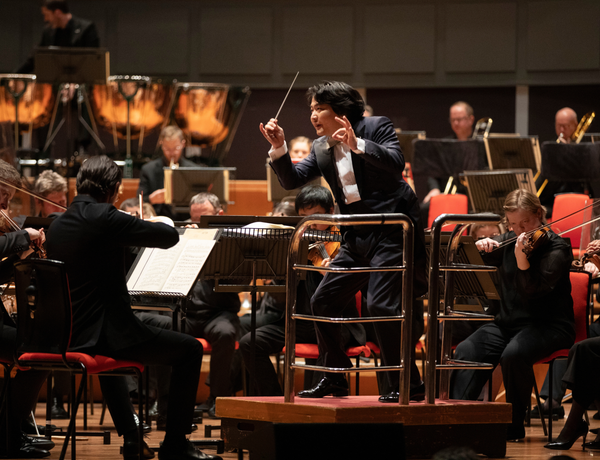
Kazuki conducts Rachmaninoff & Bartók
Full programme
- Hindemith, Symphonic Metamorphosis of the Themes by Carl Maria von Weber (20mins)
- Rachmaninoff, Rhapsody on a Theme of Paganini (27mins)
- Bartók, Concerto for Orchestra (40mins)
Performers
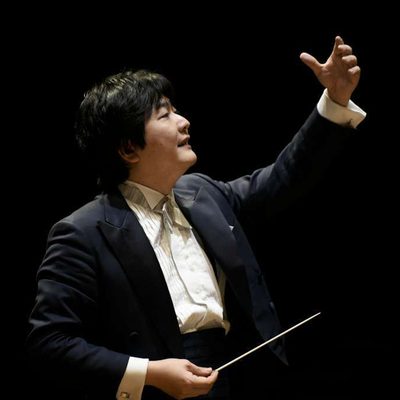
Kazuki Yamada
Conductor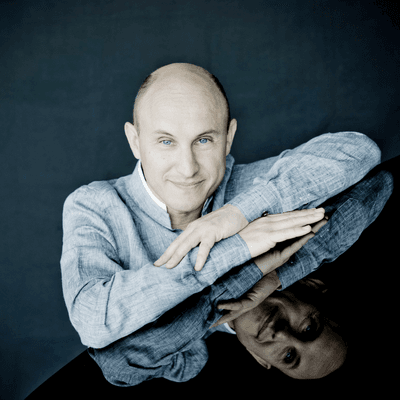
Nelson Goerner
Piano
Introduction
It has been over 10 years since I last performed with the City of Birmingham Symphony Orchestra so I am really looking forward to being back, especially as I will be playing one of my favourite pieces.
Rachmaninoff’s Rhapsody on a Theme of Paganini was the last of Rachmaninoff’s concertos that I learnt. The first time I performed it was with the BBC Philharmonic Orchestra – it was broadcast live and I remember feeling so nervous to have my first performance of it recorded live, especially as it’s quite a complex piece of piano repertoire!
It’s an incredibly imaginative piece of music. Paganini’s theme has been used by many composers like Brahms and Liszt but Rachmaninoff’s version is completely different; it is daring and full of novelty.
Typical of Rachmaninoff’s last works, he includes the plainchant from Dies Irae which was rumoured to haunt him throughout his life. Listen out for a magical variation of the chant: the piano is playing the chords whilst the orchestra play an elongated form of the Paganini theme, creating a very compelling moment. Another moment I advise you to listen out for is when the theme returns but played in reverse – another gripping passage!
The rhythmic drive created in the piece is mighty and challenges the pianist to keep exactly in time and so that the character of the melody remains crystal clear. At the same time, there is a lot of lyricism and pulling around of the theme we know so well.
It makes for a difficult piece to play – the many different elements demand the pianist to be able to change character at a split second whilst maintaining a sense of unity to the overall music – you can’t lose concentration that’s for sure!
It’ll be wonderful to play alongside Kazuki – we recently recorded Ravel’s concerti with the Monte Carlo Philharmonic Orchestra but this will be our first time working together on this piece, so I look forward to working closely with him again.
Nelson Goerner
Piano
Programme Notes
Artists often look back in order to move forward. Take a time-trip with the CBSO and Kazuki Yamada as three composers transplant music from the past into new, radical environments. In Hindemith’s Metamorphosis the nineteenth century sounds of Weber are hurled, kicking and sometimes howling, into the modern era. Rachmaninoff riffs on a beautiful melody from the 1800s, examining it from 24 angles. Internationally renowned pianist Nelson Goerner is the soloist. Bartók’s Concerto honours the folk music of his native Hungary while giving the spotlight to almost every instrument of the modern orchestra. An exhilarating, head-spinning evening is guaranteed.
Symphonic Metamorphosis of the Themes by Carl Maria von Weber
Paul Hindemith (1895-1963)
Among the myriad developments of musical form in the twentieth century was a trend for exploring, reframing or ‘metamorphosising’ music from earlier eras, commonly defined as ‘neoclassicism’. Rachmaninoff riffed on a theme of Paganini (featured later in this programme), Stravinsky plundered the works of the eighteenth century Pergolesi and other composers for his ballet Pulcinella, Ravel looked back to the works of Couperin, while Hindemith went to town with music by the nineteenth-century Weber (1786-1826).Hindemith
was familiar with Weber’s music from various piano duets that he would often strum through with his wife Johanna. For his Symphonic Metamorphosis he chose from Weber’s op.60 and op.10 piano duets, as well as from an arrangement of incidental music Weber composed for Carlo Gozzi’s play Turandot (also the basis of Puccini’s 1920s opera). Hindemith’s score, completed in 1943, was originally commissioned by choreographer Léonid Massine for a ballet. However, Massine felt that Hindemith was straying too far from Weber’s original style, and the project foundered. It would indeed be hard to identify Hindemith’s score as entirely Weberian but it is characteristically Hindemith-like in its creative deployment of the orchestra and in its fusing of modern musical language with ‘classical’ forms.
After an assertive opening, the orchestral embarks on a series of scampering, interweaving musical lines, very much a tribute to the virtuosity of the New York Philharmonic Orchestra who performed the premiere (Hindemith had moved to the USA in 1940). The opening of the second movement, based on the Turandot music, introduces the main theme which is then varied upon throughout. The variations are melodic and harmonic, but often purely orchestral, such as passages for percussion only, or trills passing from one instrument to another to create a perpetual ‘shimmer’. The final variation begins with the brass section, which swings the theme into a jazzy fugue. A soulful ‘Andante’ follows, with a melting principal theme, and a beguiling ‘cadenza’ for flute towards the end (a complete departure from Weber’s original). The last movement, sometimes performed as a standalone piece, is a characterful march. It begins sternly but then channels some of the flamboyance of the first movement, ultimately building to a festive conclusion, complete with a crowd-pleasing flourish in the final bar.
Rhapsody on a Theme of Paganini
Sergei Rachmaninoff (1873-1943)
Rhapsody on a Theme of Paganini was one of only a handful of original works Rachmaninoff composed in the last years of his life. This death was not due to lack of inspiration, but mainly lack of time: he was so much in demand as a conductor and concert pianist that composing nearly always took a back seat (he said in 1933 that ‘Instead of hunting three hares at once, I’m sticking to one’). As the main ‘hare’ was a career as a concert pianist, it is not surprising that Rachmaninoff chose to celebrate the piano’s romantic and virtuosic potential through a series of concertos and other works. The most well-known is probably no.2, partly due to its co-starring role in the 1946 film Brief Encounter. But the Rhapsody must run a close second, and has made the odd film appearance itself (variation 18 plays a prominent, and repeated, role in 1993’s Groundhog Day).
The theme, from Paganini’s 24th Caprice for Solo Violin, had been used by other composers before, such as Brahms in his Op.35 variations piano. (Andrew Lloyd Webber would, decades later, deploy it in a classical and rock fusion album.) Rachmaninoff’s piece opens, wittily, with a variation – the first ‘straight’ presentation of the theme does not appear for around thirty seconds. The theme then appears in numerous guises throughout, and is joined at times by the Gregorian chant melody Dies Irae (Day of Wrath). In Variation 7 the bassoons play a double-time version of the main theme, while the piano intones the Dies Irae in slow chords, and the violins flutter the Paganini above. Variation 13 is a melancholy, nostalgic-sounding waltz, while 16 and 17 revel in minor-mode mystery. In the famous variation 18, the longest of the group and in a sumptuous major key, Rachmaninoff turns Paganini upside down: the melody of this movement is an extremely skilful inversion. A series of brisk final variations follow, with dizzyingly complex passages for the piano. Variation 24 concludes the piece with a final outing for the Dies Irae theme, and the Rhapsody ends not with a bang, but a surprisingly understated whisper.
Concerto for Orchestra
Béla Bartók (1881-1945)
Bartók composed his Concerto for Orchestra at the very end of his life, when he was suffering from a terminal illness, yet also experiencing a sudden surge in output. Like many of his European composer colleagues, including Hindemith and Rachmaninoff, Bartók had emigrated to the United States and this work was a commission from the Koussevitzky Foundation (as was, around the same time, Britten’s Peter Grimes and Copland’s Symphony No.3). The Concerto is a brilliant summation, in some senses, of a lifetime honing his craft and was – for Bartók – composed unusually quickly (from August-October 1943). Bartók had frequently struggled with composition, and only became consistently successful quite late in his life. Even in fallow times, however, his creativity was fuelled by his lifelong collecting of folk melodies from his native Hungary, and further afield throughout eastern Europe and North Africa.
The Concerto’s apparently contradictory title refers to the symphonic texture over which sections of the orchestra showcase themselves. For its Boston premiere in December 1944, Bartók wrote in a programme note about the work’s gradual progress towards the ‘life-assertion’ of the final movement:
The general mood of the work represents, apart from the jesting second movement, a gradual transition from the sternness of the first movement and the lugubrious death-song of the third, to the life-assertion of the last one.
The first movement is certainly ‘stern’, starting low in the strings in the Andante section, then gradually assembling the rest of its orchestral forces. It continues in this vein in the Allegro vivace, blazing with assertive fanfares. By complete contrast the second movement is indeed ‘jesting’, even cheeky, with pairs of woodwind and brass playing in surprising, sometimes dissonant intervals. Bartók was influenced here by Dalmatian folksongs, where singers would sometimes perform in clashing seconds: the trumpets imitate the Dalmatians, while the clarinets crunch against each other in sevenths. A beautiful brass chorale briefly calms the restless rhythms, but the movement concludes with some deliciously eerie rustling from the strings, and an insouciant sign-off from the side-drum.
Seriousness and cheek are even more starkly contrasted between movements 3 and 4, with the dramatic, solemn harmonies of the ‘death-song’ followed by an ‘Intermezzo interotto’. The nostalgic folk-tune Szep vagy, gyönyörű vagy Magyarország (You are lovely, you are beautiful, Hungary’) features alongside what sounds like a none-too-subtle parody of a theme from Shostakovich’s ‘Leningrad’ Symphony. Bartók’s son Peter insisted some years later that the melody was in fact taken from Léhar’s The Merry Widow and had little or nothing to do with the ‘Leningrad’ theme; but others are quite certain that Bartók was, quite frankly, encouraging his orchestra to blow raspberries at it. The final, ‘life-asserting’ movement opens with a welcoming brass introduction followed by cheerful, bustling strings. There are moments of dark disquiet in the finale but the Concerto ends with a tremendous, celebratory force. Not surprisingly, this vivid and virtuosic work was a great popular success after its premiere. Bartók achieved – finally – the recognition that had often evaded him.
© Lucy Walker
Featured image © Andrew Fox