Kazuki & Isata Kanneh-Mason

Full programme
- Rachmaninoff, Piano Concerto No.3 (39mins)
- Walton, Symphony No.1 (43mins)
Performers
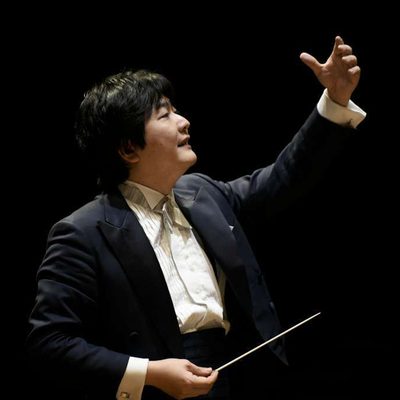
Kazuki Yamada
Conductor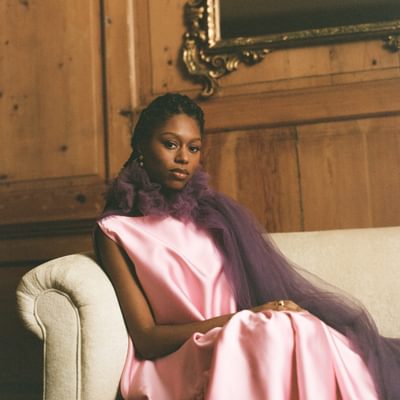
Isata Kanneh-Mason
Piano
Introduction
I am extremely excited to be returning to perform with the City of Birmingham Symphony Orchestra. The last time I played with the orchestra I had such a great experience; often it can be quite intimidating to join an orchestra as a soloist as you feel like an outsider, but the CBSO are such a friendly orchestra, I know I will be made to feel warmly welcomed.
Birmingham also feels special for me to perform in as I have some family that live here and it's not too far from Nottingham, which is where I grew up. Having family in the audience is always such a treat for me.
Rachmaninoff’s Piano Concerto No.3 is a piece that I’ve known for years; I’ve listened to it so many times and it’s one of those pieces where I felt like I had such a strong feeling for the music before I even had the chance to play it. I last performed the concerto in March and I always crave the next time I get to play it, so I’m extra excited for today’s concert. The more I play it, the more imaginative and emotionally involved I become with the music.
There are so many magical moments that you can listen out for in this piece. The middle section of the first movement sees the opening theme return but developed in a really interesting way. The movement builds to a climax and you should be able to follow that same opening theme all the way through to the cadenza. Rachmaninoff’s music is so thrilling in the way he develops his musical ideas, I particularly think the harmony is just incredible.
The second movement begins almost turbulent in style with quite discordant piano writing, mirrored also in the orchestral parts. But then it's like the music just melts away and we’re left with the most beautiful melody in the piano – it’s one of my favourite moments in Rachmaninoff’s writing.
We’re left with the most exuberant final movement; it’s virtuosic and buzzing with energy, the middle section humorous whilst also graceful in style. It is the perfect end to the musical journey Rachmaninoff takes us on.
I am delighted to be working with Kazuki Yamada and the CBSO once again – I hope you enjoy this performance as much I am looking forward to playing it for you.
Isata Kanneh-Mason
Piano
Programme Notes
Rachmaninoff’s third Piano Concerto is both famously beautiful and famously difficult. While Isata Kanneh-Mason tackles its joys and challenges, for audiences this magnificent piece feels like stepping into a luxurious bath. Walton’s Symphony is a kind of diary of his emotional state when writing it. Join him on his roller-coaster, from the dark days of ‘composer’s block’, to a snarky commentary on a failed relationship, to devastating heartbreak and finally to the upsurge of elation (and new love) by the end. Kazuki Yamada leads the CBSO in this rousing and deeply cathartic programme.
Piano Concerto No.3 in D minor, Op.30
Sergei Rachmaninoff (1873-1943)
Rachmaninoff never liked talking about inspiration. But when you’re an international star – possibly the greatest piano virtuoso of the twentieth (or any) century – people are going to speculate. Finally he relented, and gave his own description of the melody that opens his Third Piano Concerto.
The first theme of my Third Concerto is borrowed neither from folk songs nor from church sources. It simply ‘wrote itself’’! If I had any plan in composing this theme, I was thinking only of sound. I wanted to ‘sing’ the melody on the piano, as a singer would sing it…
True: musicologists in the 1960s spotted that this great melody bears a close resemblance to a Russian Orthodox religious chant, Thy Tomb, O Saviour, Soldiers Guarding. But that doesn’t mean that Rachmaninoff (an irregular churchgoer at best) was conscious of the fact. One relative recalled seeing Rachmaninoff walking the avenues of his family’s country estate at Ivanovka: “From a distance, one could see his tall figure in a Russian smock. He would walk, head bowed, drumming his fingers on his chest and sort-of singing to himself”. Rachmaninoff worked on the Third Concerto at Ivanovka throughout the summer of 1909.
The effort paid off. The Third Concerto is the largest of Rachmaninoff’s concertos: colossally virtuosic, and yet somehow, at the same time, deeply personal. The key is in that opening melody. Its rhythms and melodic patterns recur, giving an inner logic to the vast, arching span of the first movement, with its massive central cadenza. They find an echo in the desolate, falling theme that opens the Intermezzo second movement, and float softly behind the whirling, glittering scherzo that emerges from the gloom. And they drive the finale – from galloping opening to soaring climax, before a final euphoric rush to the finish.
Rachmaninoff finished the concerto in late September 1909, and practiced it on a dummy keyboard onboard a liner bound for New York. There, he performed the concerto for the first time on 28th November 1909 – and for many years, he was one of the only pianists alive who was capable of doing so. Indeed the concerto’s dedicatee, the Polish virtuoso Josef Hofmann, never played it in public: it was simply beyond him. “Rachmaninoff”, he recalled years later, “was made of steel and gold - steel in his arms, gold in his heart”. The Third Concerto demands both.
Symphony No.1
William Walton (1902-1983)
The man
In the autumn of 1935, William Walton was 33 years old. He’d been too young to fight in the First World War; he’d grown up in Oldham and - thanks to a musical father and a beautiful voice – he’d won a choral scholarship to Oxford University. But it was after his voice broke that the fun really started. Shunning a job as a mill clerk back in Lancashire, he’d started trying to compose. Happily, his teachers at Oxford knew talent when they saw it, and so did his new college pals. He was taken up as an “adopted brother” by three aristocratic writers, the ultra-Bohemian (and wonderfully named) siblings Osbert, Edith and Sacheverell Sitwell.
For the rest of the swinging twenties, Walton’s feet hardly touched the ground. In 1922 he wrote Façade, a bizarre “entertainment” that combined Walton’s jazzy, sardonic music with Edith Sitwell’s surreal poetry. London was scandalised (“rubbish they paid to hear” sniffed one newspaper) but Walton and his friends didn’t care. He wrote a powerful, poetic Viola Concerto and in 1931, Belshazzar’s Feast: a choral work so raucous and irreverent that some cathedrals banned it. By the early 1930s Willie Walton from Oldham had become the hottest new thing in British music.
Now, in response to a commission from Hamilton Harty (the Irish-born conductor of Manchester’s Hallé Orchestra) he confronted the supreme musical challenge: a symphony. He started work in 1932, and as rumours of a symphony by Walton began to circulate, few doubted that it would be a musical reflection of the times. But Walton’s friends knew something else – that he’d fallen wildly in love with a young German princess called Imma von Doernberg. It was a fiery relationship, and when Imma ditched William in 1934, the symphony wasn’t even finished. For a while, it looked like it never would be.
“It is almost hopeless for anyone to produce anything in any of the arts these days” wrote Walton to Harty. “It is practically impossible to get away from the general feeling of hopelessness and chaos which exists everywhere…But I’m trying my best”. In fact, the turbulent social and political climate of the time unlocked his imagination; so too did the experience of heartbreak. “Symphonies are a lot of work to write” he told his wife Susanna, years later. “Too much. One has to have something really appalling happen to one, that lets loose the fount of inspiration.”
The music
Walton’s model was Beethoven: a symphony that spoke on no terms but its own, driven by unstoppable musical logic and emotional force. The emotion came from his private life. The musical logic proved more challenging, and when Walton finally allowed an impatient Harty to premiere the symphony in December 1934, only three movements were ready: the finale was still beyond him. The breakthrough came the following year, and the completed symphony was premiered in London on 3 December 1935 – to an overwhelming response. Walton’s fellow-composer John Ireland wrote to him in person. “It is simply colossal, grand, original, and moving to the emotions to the most extreme degree…It has established you as the most vital and original genius in Europe. No-one but a bloody fool could fail to see this”.
The music begins quietly – with a distant rumble, a note from the horn and a quiet, nervous rhythm from the violins. The oboe plays a long opening melody: its little two-note fall (plus the swirl of notes that follows) is the seed from which the whole symphony grows – the atoms, if you like, that Walton is about to split. Even the singing, bittersweet second theme can’t halt the first movement’s escalating power. If the stormclouds are building, the second movement is like a flash of lightning – a furious, steel-toothed scherzo that Walton marked con malizia – “with malice”.
In the symphony’s slow movement, anger has passed but sorrow remains. A flute plays the melancholy opening theme (apparently it was the very first melody that came to Walton when he began work on the symphony) though passion (the strings) and pain (stabbing trumpets) are never far away, too. As the finale begins, the music suddenly seems to pull itself together – and leaps up into the light.
And after that majestic (Walton’s word) first flourish, the music almost seems to dance – though Walton understands that a simple switch from pain to joy is too easy an answer. He solved the problem by building the movement in stages: a huge, muscular fugue, and a desolate soliloquy for a solo trumpet (a powerful symbol in a decade haunted by war). But for now, we’re headed for triumph – as Walton, brass blazing and percussion thundering, blasts a very personal path into the open. “Truly marvellous” exclaimed Sir Henry Wood, founder of the Proms, after the first complete performance. “It was like the world coming to an end”.
© Richard Bratby
Featured image © Karolina Wielocha