Tchaikovsky’s Violin Concerto
Full programme
- Martinu, Memorial to Lidice (8mins)
- Tchaikovsky, Violin Concerto (30mins)
- Prokofiev, Symphony No.6 (43mins)
Performers
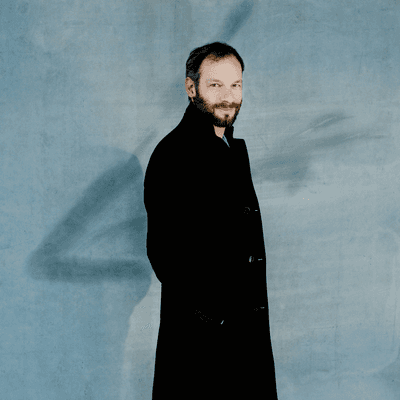
Dima Slobodeniouk
Conductor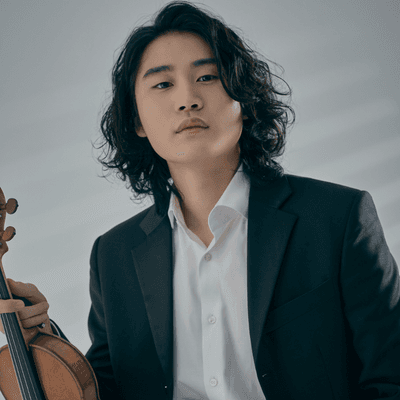
Inmo Yang
Violin
Introduction
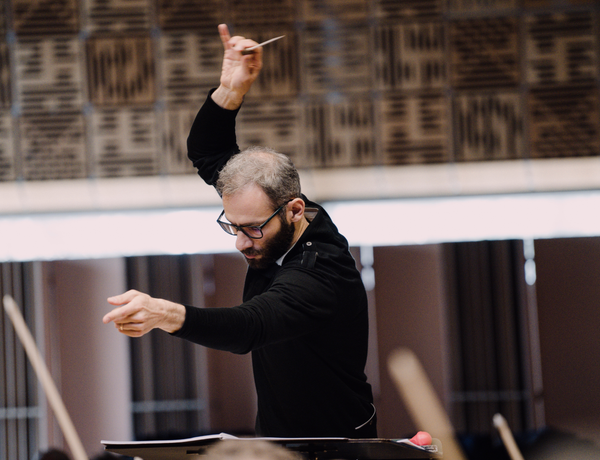
I am very happy to be returning to the CBSO after many years since my last visit. I have been looking forward to this week for a long time both because I remember how vibrant, sensitive and brilliant the orchestra is, but also because we get to do this amazing programme.
We start with Memorial to Lidice: a touching and heartbreaking piece which reminds us that sticking to our principles and values really does make a difference as after all, the history which our children will read and learn from is being made now in the present. The piece is dedicated to the memory of the horrific murder of a whole Czech village by Nazis during WW2. I wish I could say, that what happened in Lidice was just history, but unfortunately atrocities like this are happening today in many wars we are witnessing.
We continue with Tchaikovsky’s violin concerto which is, and will remain, a highlight in any concert programme. I am especially happy to be able to perform it with Inmo Yang. I conducted the finals of the Sibelius Violin Competition in 2022 when Inmo won and have been wanting to work with him ever since - now it finally becomes a reality!
The second part of the programme is Prokofiev’s sixth symphony. I am doing my best to bring this amazing symphony in front of audiences as often as I can as it’s not performed nearly as often as it should be.
The symphony reflects on what an individual goes through when facing war. Prokofiev manages to incorporate so many different emotions here: from drama and insecurity about the future, to joyful everyday tunes. I think Prokofiev’s music represents an urge to create something to help him get through the unbearable times, whilst also creating an incredible musical atmosphere where one can understand the feelings of confusion from what is happening in the world.
The music will speak better than a thousand words. I’m looking forward to experiencing this amazing piece of music with all of you and the wonderful CBSO.
Dima Slobodeniouk
Conductor
Programme Notes
Prepare to be shaken, stirred and uplifted by this programme of spectacular orchestral works, led by the brilliant Dima Slobodeniouk. We start with the raw emotion of Martinů’s wartime lament, Memorial to Lidice. Tchaikovsky’s stunning Violin Concerto famously flopped at its premiere (one critic remarked that it ‘stank to the ear’) yet today it is an absolute favourite with both performers and audiences. Soloist Inmo Yang relishes every Romantic moment. Prokofiev's Sixth Symphony tells of a life-and-death struggle, but in Stalin's Russia, even the most stirring masterpiece could carry a darker meaning.
Memorial to Lidice
Bohuslav Martinů (1890-1959)
There have been many musical memorials composed over the last hundred years. Some are personal, following the death of an individual, while others are composed in the aftermath of an atrocity. Far too many of these have occurred during this century of violence. In June 1942 the Czech village of Lidice was burnt to the ground, its male inhabitants (including teenagers) murdered, and its women and children deported to concentration camps. It was a horrific act of reprisal against the villagers for supposedly harbouring the killers of a high-ranking SS officer. The village of nearby Ležáky was similarly razed to the ground.
Martinů had moved to the USA in 1941 after a period of residence in Paris (he was blacklisted by the Nazis in 1940, and fled Prague when the German army arrived). Word reached him about the Lidice massacre, and some have suggested that the funeral march of his first symphony, completed in 1942, was his first musical reaction. The following year, he was commissioned by the American League of Composers to write a piece in response to the ongoing war; Memorial to Lidice was the result. It opens with an uneasy juxtaposition of two chords, quickly establishing the overall mood of the piece in which passages of great dignity are intruded upon by menacing slabs of sound. Phrases from two versions of the Czech St Wenceslas chorale – an important symbol of nationhood dating back centuries – are played with great reverence and a kind of defiance against the disruptive orchestral onslaughts. At the end, there is a violent hammering out of the famous motif from Beethoven’s Fifth Symphony, either a symbol of victory or, in this context, of horror. The final bars react: initially dissonant and fearful, but ultimately sinking into a peaceful C major.
Violin Concerto
Pyotr Ilyich Tchaikovsky (1840-1893)
Nobody liked Tchaikovsky’s Violin Concerto. His patron, his close friends, the intended dedicatee and first soloist, the critics: all united in their views that this concerto was an absolute dud. The reviewer Eduard Hanslick wrote of the most notorious critical diatribes in musical history about the work, including this slap in the face: ‘Tchaikovsky’s Violin Concerto for the first time confronts us with the hideous idea that there may be compositions whose stink one can hear.’ The disastrous reception of the work was, naturally enough, a body blow to the composer who had been experiencing tremendous turbulence in his life, including the failure of his (admittedly unwise) marriage, and a terrible depression. The period of the concerto’s composition, however, took place during a relatively sunny patch. He had decamped to Switzerland in 1878 with the violinist Yosef Kotek, a friend and – probably – a lover and he wrote the work extraordinarily quickly, which can perhaps be heard in its elegant flow and general sense of irrepressibility. Indeed, today we might wonder what on earth the early critics were on about, given the concerto’s abundance of beautiful melodies, soulful ‘song’ of second movement, and exuberant finale.
The violinist Leopold Auer declined to perform the work at its Viennese premiere having declared it unplayable; Adolf Brodsky eventually took it on. It is true that the solo part is technically challenging – violinist Augustine Hedelich has described it as ‘one of the most exhausting concertos in the repertoire’. The soloist does not have to wait long before appearing, and throughout is rarely given time to breathe. The first movement opens with a teasing, gently Mozartian melody – then flips the script for a dramatic build towards the arrival of the soloist. Initially unaccompanied, the violin then launches into its first principal melody. A virtuosic flurry builds to another theme, related to the first by a shared, elegant twist of four semiquavers. These melodies are treated to a series of increasingly complicated variations, a fiendish cadenza, and several other cadenza-like passages before and after. The movement ends with a boisterous burst for soloist and the whole ensemble.
The slow movement is a melancholy ‘Canzonetta’ and features a pair of graceful, yearning themes against a backdrop of subtle, often muted scoring in the orchestra. The soloist trills into silence in the final moments, giving way to an exchange of figures between strings and woodwind, which themselves gradually dissolve. The acrobatic energy of the finale, bursting into this hushed atmosphere, is almost shocking. The soloist almost instantly teases with a brief cadenza on themes which haven’t yet taken flight – and then everyone takes off. Again, there are two principal themes: a scurrying one, and another which subjects itself to some playful tempo changes. Despite some more contemplative passages, the general atmosphere here is of a solo part that simply can’t be contained: as soon as the leash is loosened, as it were, it gallops off. The vivacious energy sustains until the end of this exuberant movement. Tchaikovsky, who masochistically committed Hanslick’s ‘stinker’ of a review to memory, would no doubt gratified (if astonished) that his concerto remains so admired, and so frequently performed nearly 150 years later.
Symphony no.6
Sergei Prokofiev (1891-1953)
Russian music composed during Stalin’s reign can often be weighted down by political or ideological contexts, perhaps especially those works which were denounced during one of Stalin’s many mood swings in relation to contemporary art music. Prokofiev’s Sixth Symphony, composed in 1947, certainly became a victim of this, accused of being ‘anti-Soviet’ by Stalin and his repressive ‘Congress for Composers’. Yet its bleak and searching quality seems to express a more global sense of suffering in the aftermath of World War II. As Prokofiev once put it in relation to this work ‘each of us has wounds that cannot be healed. One has lost those dear to him, another has lost his health. These must not be forgotten.’
The first movement sounds like music in search of its own consolation. Brass and low strings punch out the opening notes, followed by a gentle(ish) melody that dances, but which struggles for lightness.
It travels through a series of moods, ranging from obsessive (growling in the low strings) to transfixingly beautiful when transformed into a haunting horn solo. In between are ominous march-like passages which interrupt the ‘dancing’ melody and any chance it has to blossom into sweetness. Repeated sustained octaves periodically pause the action, and they return to close the movement. The slow movement begins in a similarly stern mood; indeed its first bars comprise an anguished, dissonant outburst. A soaring theme with a pulsing accompaniment attempts to break through and there are telling moments where the harmonic tension eases a little, like sunshine emerging from behind thick clouds. It eventually appears in an expanded form, but the immediate aftermath is brutal, with a sinister ‘ticking’ in the percussion and heavy brass blasting away memories of this brief interlude. Towards the end of the movement, the ‘soaring’ music manages, more or less, to dominate, albeit undercut by outbursts from the brass. A truce, of sorts, is reached in the final moments. The brass is muted and the ensemble relaxes briefly into a major chord.
The finale opens in a bright, breezy and thoroughly contrasting manner, with bouncing rhythms and a whirling, carnivalesque figure for strings and solo clarinet. Prokofiev brilliantly controls the momentum, flinging shards of the opening theme across all sections of the orchestra, while counter-melodies come and go elsewhere. The carnival finally slows down, clearing a space for some thoughtful woodwind solos – and a surprise return of the first movement’s principal theme. In this context, it takes on a more elegiac quality, though is followed by shivery build to an explosive outburst. The final bars see a return of the opening rhythms, but not its jaunty melody. This symphony bares its wounds openly, and does not permit an easy resolution. It is, though, exhilarating in its frankness.
© Lucy Walker
Featured image © Marco Borggreve