News Story
Come behind the scenes with CBSO Stage Manager, Dave, as we venture out of Birmingham to perform at Bristol Beacon.
Hello! My name is Dave and I am a freelance Orchestra Stage Manager currently working with the CBSO. I work alongside the orchestra's full-time Platform Manager, Pete Harris, and I usually work with the orchestra between 3-6 days a week.
The job of an Orchestra Stage Manager is to plan and set up the layout of the orchestra's rehearsal and performance spaces, from chairs and music stands to bigger items such as large percussion instruments. We also have to load, unload and drive the CBSO truck to wherever the orchestra needs to be, working with the orchestral management team and venue staff to ensure that everything is in the best possible condition on stage for the musicians to perform to the best of their ability.
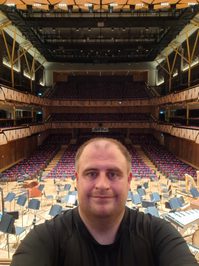
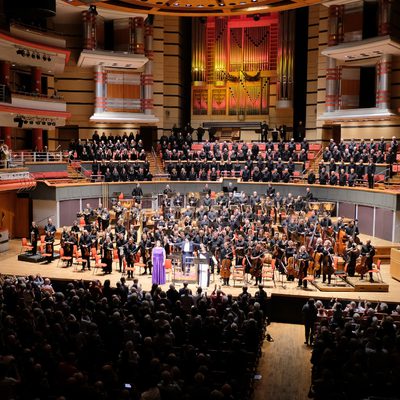
On Thursday 20 November 2025, the orchestra performed at the fantastic, newly refurbished Bristol Beacon concert hall - a venue we haven't performed in since 2018.
Dave brought us along to show us what he gets up to behind the scenes:
09:45
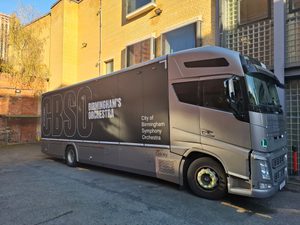
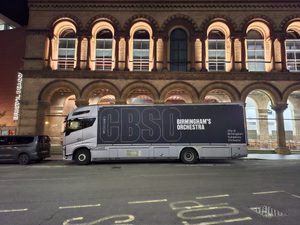
My working day starts at the CBSO Centre. This morning I just needed to carry out mandatory vehicle checks to make sure that the lorry is safe to go on the road. I've been driving lorries for orchestras for just over 5 years now, so I feel like I know all the checks off by heart, inside-out!
As part of my vehicle checks, I must check the inside temperature of the lorry, as the instruments must be kept at around 20-21°C. This is to ensure that they don't get too hot or too cold, which can cause damage to the wood in the string and woodwind instruments, as well as some of the drum skins on the percussion instruments.
13:25
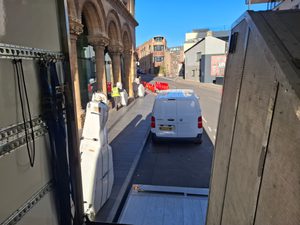
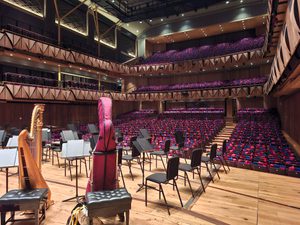
After a 2 hour journey down to Bristol, we took a short break before starting to unload the lorry. Pete is based inside the venue to place the equipment where we need it and I am on the back of the lorry unstrapping all the boxes. Once the vehicles are unloaded, we head inside and start laying out the stage alongside Jean from the orchestra's artistic planning team. This includes all of the chairs, music stands, larger percussion instruments and celeste, as well as one of the harps for the orchestra's brilliant Harpist, Katherine Thomas.
15:30
With the stage set, the players start arriving, so I try to make sure I am visible on the side of the stage and engage with as many players as I can to ensure they know they have someone to mention any issues to. A few of the venue's music stands are a bit loose and require tightening, so between Pete, the crew and myself, we work quickly to solve any little problems like this before the rehearsal starts.
16:30
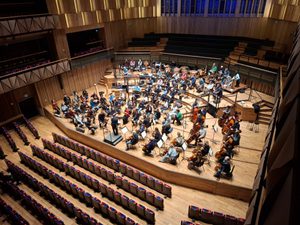
The orchestra start a short rehearsal, which helps them, the conductor and tonight's soloist to adjust to the different performance space and acoustics. Although this is normal for every concert we do, this is especially important today as due to the venue's recent closure and refurbishment, the orchestra have not performed here for a few years.
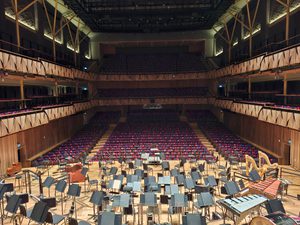
Thankfully, the rehearsal goes smoothly and there are no further issues for us to address. During the rehearsal, I head out into the auditorium to get some photos of the orchestra on stage. This helps me when I next have to plan for a future concert at the venue as I usually work on between 90 and 100 concerts across the country per year, so I can't possibly remember every venue without picture aids of each concert's different layout!
17:15
With the rehearsal over, I have a quick walk around the stage to close the music folders on each stand and generally tidy the stage before the audience are allowed in, then I take a long meal break, which allows me to switch off and rest before the duties of the evening.
18:40
With the audience filling the auditorium, I wait at the side of the stage as the players enter to warm up before the concert. This is always a nice time to have a chat with a few players and management too – we spend a lot of time working together each week, but don't always get much time to chat socially as time just seems to fly by!
19:00
The first half of the concert starts and aside from opening the door to let a few musicians on and off stage, it's a nice quiet start to the evening.
19:50
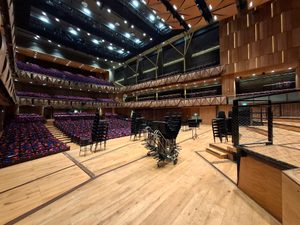
It's time for the interval and as the musicians take a well-earned twenty minute break, Pete and I enter the stage to remove anything not needed for the second half of the performance. Tonight, this means taking off both of the harps, as well as a few chairs, music stands and accessories that are no longer needed.
20:15
With the second half of the concert underway, it's then time to find a comfy sofa and get 30 minutes rest before the load-out and drive back. I never really sleep during this period, but it's nice to get some quiet time and just unwind a bit while we can.
21:00
The concert finishes and as the players leave the stage and the audience head home, we start packing up the rest of the equipment we have brought. This includes lifting the seven heavy timpani off the risers and onto their trolleys, as well as the larger percussion instruments like the bass drum, xylophone, vibraphone and tam tam. With everything back in covers and flight cases, our two local crew have returned to help us get everything back out of the venue and onto the lorry and van.
00:35
With the vehicles loaded, it was time for the long drive back. After a near 15 hour day, 200 miles of truck driving and a successful concert to just over 1,000 people, it's the end of a long but very successful day 'at the office'.
I hope you've enjoyed seeing what the day of a CBSO Stage Manager is like. If you see us around at Symphony Hall or any other venue we visit, please feel free to say hello!