News Story
For Anthony Gabriele, conducting film scores live is no new feat - we sat down with him to find out the secrets behind working on John Williams' iconic film scores of the Star Wars Original Trilogy.
Anthony’s career started as a pianist, working as a repetiteur in opera and musical theatre. Accompaniment is a big part of his musical background, working in a pit, accompanying singers and instrumentalists on stage. 11 years ago, he began conducting music live to picture and he approached this style of conducting like he would as a repetiteur: the orchestra are the pit and the film on screen is the stage.
So how does a conductor keep the music exactly in time with what’s happening on screen? Anthony explains that conductors keep synchronised to the picture either by a click track or by having a small screen on your music stand which shows an enhanced picture of the film. The screen is the most common option and it may include small flashes which indicate the tempo and coloured streamers which indicate different pauses or significant moments within the music. As a conductor, you are responsible for the moments that have to be at pin-point precision, and other moments where the music is free to speak naturally to convey the orchestral colour and emotion required.
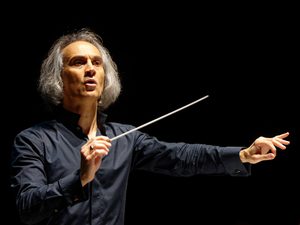
My job is to make sure the way the music is being performed truly accompanies the images on the screen so that the musical narrative supports the dramatic narrative.
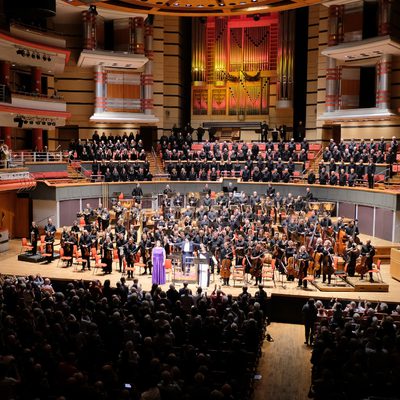
Film music is often played by orchestras, highlighting the most famous and memorable themes but seeing a film with live orchestra means you get to hear the entire score performed live whilst synchronised with the picture. Anthony explains that it's a very different experience to watching a film at home or even in the cinema because more often than not, there are musical moments that are mixed back into the soundscape whereas when you see it live you get to hear the soundtrack in its full force. The robust energy of the music fills the concert hall and Anthony remarks that it gives the audience the complete freedom to decide what it is they focus on: the orchestra, the film or a bit of both.
The Star Wars Original Trilogy film scores will have restored cues that were cut by the director in the final picture, extended cues which were originally shortened for the cinema release and in some places, John Williams has restored some alternate cues that weren’t used in the film - see if you can listen out for these bonus additions!
The Trilogy stands the test of time, not only for their incredible stories, the way they were made, the beloved characters, but what really defines them is the music by John Williams. It is instantly recognisable and so iconic. It will be rather special because the audience get to immerse themselves into the world of storytelling, both through the narrative of the film and the musical narrative that John Williams is telling alongside it.
One of Anthony’s favourite parts to conduct from these movies is the opening Main Title. The film opens with a powerful chord after the rolling introductory text on screen. Everybody knows it; it is the chord that changed the face of film composition in 1977. “It remains to me as one of the great moments. The auditorium erupts with excitement and that is such a wonderful moment for me because it shows that people are really engaged and listening because they are fans of the film and score”. Another of Anthony’s favourites is also the horn solo in Binary Moon. “It is so short and haunting and has so much poignancy in where it is placed in the film”.
The films will be produced before your eyes. The wonderful gift about doing films live with orchestra is that it just breathes new life into these wonderful titles and gives the opportunity to showcase the score, creating a truly visceral experience; audiences will be part of something that is entirely unique.
Whether you’re a lifelong fan of the Star Wars films, a lover of film music, or you’ve never seen a symphony orchestra perform live, these concerts allow you to get closer to the music, the films and the stories.