An Evening with Davóne Tines
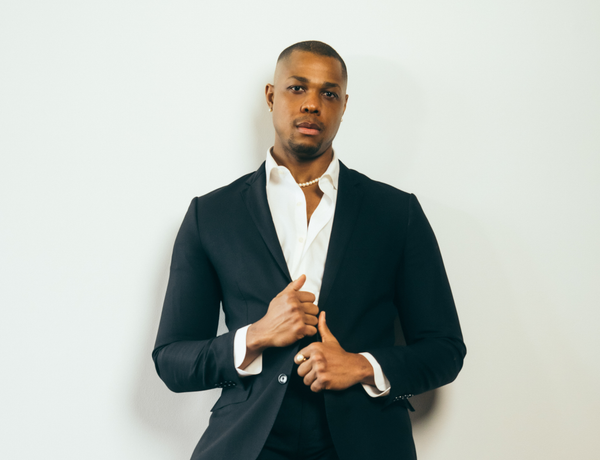
Full programme
- Haydn, Symphony No.44 (Mourning) (22mins)
- Carlos Simon, Amen (12mins)
- Davóne Tines, Concerto No. 3: MASS (45mins)
Performers
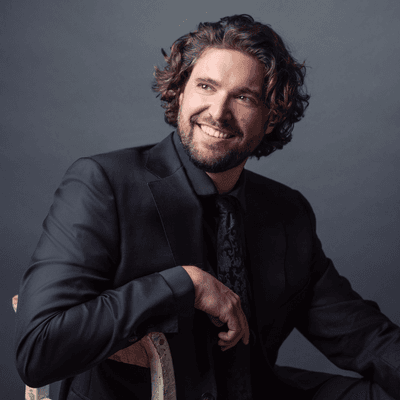
Christian Reif
Conductor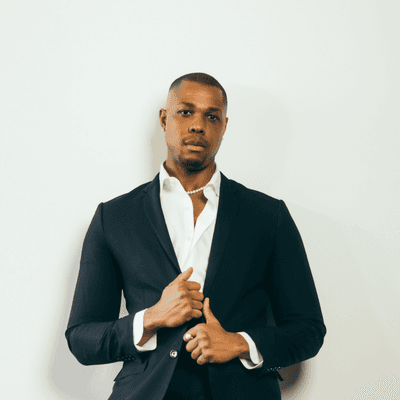
Davóne Tines
Baritone
Introduction
I approached the recital situation with a sort of a phobia, or an allergic reaction to doing what I've seen many singers do: programme something based off of a model that they aren't fully engaged in, and filling in the template with music that checks boxes rather than articulating their own feelings and experiences in an explicit way. I think this idea of explicit context is critical; in order to perform well, the personal impetus for choices in repertoire and interpretation need to be in the front of your mind, for every single note.
As a child, singing was all religious or liturgical and all in a choral setting with close family and friends. The urge to sing works like Beethoven’s Ode To Joy followed by Lauryn Hill’s rendition of Joyful, Joyful, We Adore Thee is a reflection of my actual lived and multivalent experience with liturgical music. It’s composed of so many things: early classical music, folk song, Bach, contemporary gospel, spirituals, new music, and beyond. When you put these pieces from seemingly different cultures and perspectives together and acknowledge their connections, you have to acknowledge that there’s something profound shared among them, and thus there's something profound shared among all people. This recital is an opportunity for me to marry all of those flavours together and have the conversation of cohesive juxtaposition in front of people.
The other wonder of these juxtapositions is the opportunity to have the pieces alchemically react to and change one another. Therefore, I endeavour to realize these pieces in aesthetics not concealed within the potential coffins of various assumed performance practices. I’m asking you to invite interpretations outside of your own conception. I ask you to let me be all the things I am at once.
The order of the mass I'm using here, and which Caroline Shaw has followed in her miniature mass, accords with my own understanding of a spiritual journey. It’s a very personal journey about crying out for release from pain (Kyrie); making and holding space for the cause of the pain to be engaged (Agnus Dei); allowing the power of your conviction to destroy that cause (Credo); exalting in the release (Gloria); and transferring the energy of the destruction into the fuel for rebirth (Sanctus).
The text of the last piece in the Sanctus section is "Where there is darkness, we’ll bring light." That's the entire recital right there: present the darkness and show the hard-won change into light.
Davóne Tines
Baritone
Programme Notes
This inspiring concert will invigorate the senses and move the spirit. Haydn’s turbulent Symphony No.44 (subtitled ‘Mourning’) is part elegy, part whirlwind – stormy and tender by turn. Simon’s Amen, written two and a half centuries later, evokes the exuberant experience of worship in African American Pentecostal churches. It ultimately reaches – as Simon puts it – a ‘frenzied state’. For baritone Davóne Tines, music can change the world – if we let it. “You have to try to model the world that you want to live in” he says, and tonight he curates and performs in the first Birmingham performance of Concerto No.3: MASS, the orchestrated version of his Recital No.1 - which weaves music by Bach into an urgent, multi-voiced exploration of musical America as it is and as it might be.
Symphony no.44 (Mourning)
Joseph Haydn (1732-1809)
Haydn composed his 44th Symphony around 1771 while working as Kapellmeister (master of music) for the Prince of Esterházy, and it would have been performed by the court’s in-house orchestra. It is for fairly small ensemble, with just oboes and horns alongside the strings, but it packs a hefty punch. A few years earlier, the author of a short article on Haydn had found his music ‘charming’ and ‘ingratiating’; by the early 1770s the writer would have needed a different bunch of adjectives. The ‘Mourning’ symphony belongs to Haydn’s ‘Strum und Drang’ phrase, a term which is often translated as ‘Storm and Stress’. These symphonies are characterised by a much darker emotional palette and – as Haydn scholar James Webster has suggested – they are considerably more daring than the earlier, more obviously ‘charming’ works.
No.44 opens with a sparse and stern motif: a three-note declamatory climb, concluding with a semitone drop. This recurs variously throughout, along with an anxious, scurrying melody, both of which give the opening movement an unsettling and suspenseful character. The opening of the Minuet is in a quasi-canon, with the lower strings acting as a sombre shadow to the violins’ main theme. The central Trio has a graceful warmth to it, especially in the context of the surrounding ‘Sturm’, and includes some exquisite writing for the French horn. In the beautifully, slightly grave Adagio, the strings are muted – something Haydn frequently instructed in his slow movements of this period – allowing the solo spots for oboe and horn to shine through. In the finale the mood returns to that of the start, but is even more turbulent, with some atmospheric ‘shuddering’ in the strings, and hectic rhythms for the woodwind. It ends in an uncompromisingly austere minor key. The work’s ‘Mourning’ subtitle might seem self-evident, though it has caused much speculation among Haydn scholars, some suggesting Haydn requested it for his own funeral, others that it was added years later at a memorial service for the composer. Whatever the reason, Symphony No.44 has an overall atmosphere of solemnity, suitable enough for mourning – or for any period of ‘Drang’.
Amen
Carlos Simon (b. 1986)
The string section takes a breather for Carlos Simon’s Amen, which is scored for ‘symphony band’ including a starring role for trombones. In its three movements it evokes the exuberant experience of worship in African American Pentecostal churches, ultimately arriving at – as Simon put it – ‘a frenzied state’. The opening section is a jazzy call and response, as if between Gospel choir and congregation during a service, occasionally called to attention by the trombones and saxophones. The sultry middle movement is based on the gospel song ‘I’ll Take Jesus for Mine’, and features a gorgeous solo for trombone. In the finale, the ‘frenzy’ really gets going. From a rumbling, muttering opening, and some fireworks from the xylophone, the increasingly frantic texture is the result of rising ‘Amen’ cadences (the chords of IV-I for those who recall their Grade 5 theory tests) building to a spectacular display of collective exuberance.
Concerto no.3: Mass
Davóne Tines (b. 1986) / Caroline Shaw (b. 1982)
For baritone Davóne Tines, music can change the world – if we let it. His Concerto No.3: Mass (arranged from the earlier Recital No.1: Mass) comprises a series of creative juxtapositions, which are not only fascinating in a musical sense but represent a fundamental and aspirational connection across styles and languages: it is a multi-voiced exploration of musical America as it is, and as it might be. The music of Bach and Handel shares space with movements of Caroline Shaw’s solo Mass, a Sam Cooke song and arrangements of spirituals, yet they are not presented in opposition to each other. Rather, as Tines puts it in a New Yorker interview, ‘When you put these pieces from seemingly different cultures and perspectives together and acknowledge their connections, you have to acknowledge that there’s something profound shared among them, and thus there’s something profound shared among all people.’
Tines’ Mass is also in dialogue with a significant group of works from the last 80 or so years which expand, comment on, or sometimes subvert liturgical texts. Britten’s War Requiem is one of the larger-scale examples of this kind, interweaving Wilfred Owen’s poetry with movements of the Mass. Tippett’s A Child of Our Time is structured like a Passion, interspersed with spirituals rather than biblical verses. Bernstein’s Mass embraces meditations and poems within its genre-busting blend of polyphonic, acid rock and Broadway musical styles. Concerto No.3 outlines a very personal journey and – in common with these other interdisciplinary masses – expresses much of its power through its thought-provoking musical and spiritual time travel.
After a contemplative Introit, we hear a moving rendition of Sam Cooke’s Lost and Lookin’, a searing cry of loneliness. Indeed, throughout this work Tines does not shy away from pain but rather respects both the anguished circumstances under which some music was composed, and the dignity of its continued place in performance. The spirituals, which as Tines has noted, can be perceived as happy songs are often full of anguish, and as expressive of suffering as Lutheran chorales or cantatas. In between are the movements of Shaw’s Mass which, in a subtle rearrangement of its movements, travels towards the light – and encourages its listeners to hope.
© Lucy Walker
Featured image © Noah Morrison