Brahms & Rachmaninoff
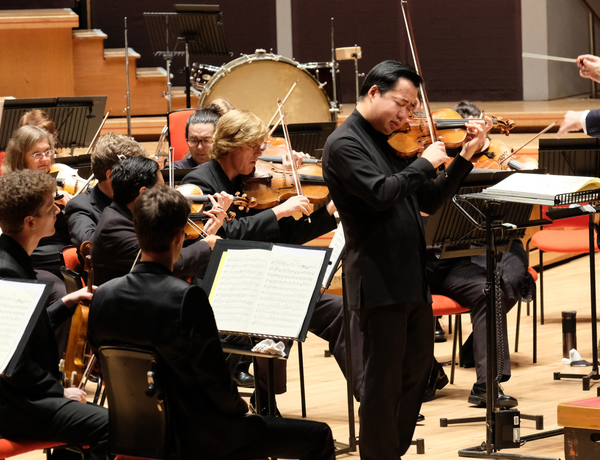
Full programme
- Brahms, Violin Concerto (45mins)
- Rachmaninoff, Symphony No.1 (41mins)
Performers
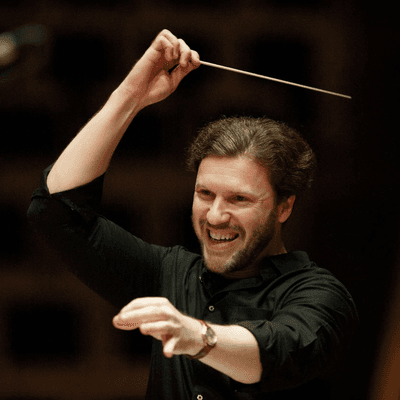
Stanislav Kochanovsky
Conductor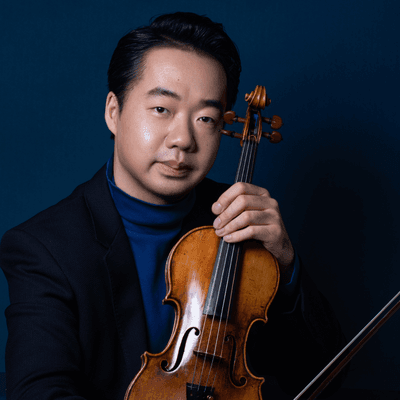
Ning Feng
Violin
Programme notes
You are invited to a concert of breathtaking orchestral pieces. When music is as beautiful as this, it’s impossible to believe the composers struggled to write it. Brahms sweated over every bar of his gorgeous Violin Concerto, but you would never guess on hearing it. Soloist Ning Feng will sweep you along in its soaring melodies and Hungarian dances. Rachmaninoff’s First Symphony was such a disaster at its premiere that it took three years of psychotherapy for the composer to recover. But this masterly work will hold you in its powerful grasp from beginning to end. The CBSO is led here by the brilliant Russian conductor Stanislav Kochanovsky.
Violin Concerto
Johannes Brahms (1833-1897)
The history of Brahms’s Violin Concerto is a tale of a particular person – and a particular place. "I only wanted to stay there for a day” wrote Brahms to Clara Schumann in May 1878. “But the first day was so beautiful that I was determined to enjoy another - and now I intend to stay for quite a while. If on your journey you have interrupted your reading to gaze out of the window, you must have seen how all the mountains around the blue lake are white with snow, while the trees are covered with delicate green”. “There” was the resort town of Pörtschach, by the Wörthersee in Austrian Carinthia. Brahms had discovered Pörtschach the previous year, and he’d loved it. Pörtschach was Brahms’s great escape: “I’m continuing to bathe in the warm lake-water” he told another friend, “and in the warmth of the Austrians – called gemütlichkeit”. It’s impossible to miss that warmth in the work that occupied Brahms’s second summer in Pörtschach; the Violin Concerto.
For Brahms, in the 1870s, a piece for violin could be meant for only one man – his long-term friend and collaborator, the Hungarian violin virtuoso Joseph Joachim. Brahms was no violinist, and he tested the water with care: “I’d like to send you a few violin passages” was his first hint, in a letter of 21st August 1878. Joachim’s response was instant: “To me, it’s a great, genuine joy that you’re writing a violin concerto (in four movements, no less!)…any chance that we might get together for a couple of days?”
Brahms knew precisely what he had in mind; and while he asked Joachim to suggest alternatives for the trickier violin passages, he reserved the right to disregard them. But he revelled in Joachim’s skill: the concerto is full of the juicy double-stopped chords at which Joachim excelled, but which rendered this concerto almost unplayable for other contemporary players – so much so that one of them, Josef Hellmesberger, declared it a concerto “not for, but against the violin!”
But from the very start of the concerto - a warm, swinging opening melody that introduces a string of successively lovelier themes, none a million miles from a waltz – the music unfolds at a leisurely pace. It’s almost a jolt when the violin makes its dramatic entrance - the other extreme of the concerto’s expressive world. Brahms’ genius lies in the way he puts the violin through its paces without making the solo part sound like anything other than a spontaneous, expressive improvisation. In the traditional place, just before the end of the first movement, Brahms leaves the violinist space to improvise their own unaccompanied cadenza – and then brings the orchestra back in with a stroke of pure, hushed magic.
Brahms feared that his Adagio might sound too modest after such an expansive opening movement; but its opening – in which the violin spins a Bach-like song over a gentle wind serenade – could scarcely provide a better contrast. Measured, inward and quiet, the evening colours of its closing bars give no hint of what is to come in the Finale, where the solo violin launches a brilliant gypsy-rondo – an affectionate tribute to Joachim’s Hungarian roots. With its swaggering themes and glittering runs, this is entertainment-music of the most open-hearted kind; and it ends in all-out comedy. Brahms could be serious, but he was never self-important. When Joachim premiered the concerto, in Leipzig on New Year’s Day 1879, Brahms was nearly late. He turned up to conduct in the nick of time – braces unbuttoned, shirt untucked, and wearing a creased pair of grey everyday trousers.
Symphony No.1
Sergei Rachmaninoff (1873-1943)
Sergei Rachmaninoff’s career as the rising star of the Moscow Conservatoire came to a shocking end in St. Petersburg on the evening of 27th March, 1897. The première of his First Symphony was an unmitigated disaster: Rachmaninoff left the auditorium in despair even before the performance had ended, and sat on the steps leading to the balcony. “He could not understand what had gone wrong” a friend recalled, later. “From time to time he pressed his fists against his ears to stop the sounds that were torturing him. At the end, he ran out into the street, trying to calm down…”
Meanwhile the St Petersburg critic César Cui – always keen to put a Moscow composer in his place – dipped his pen in acid to deliver one of the all-time great critical maulings. “If there was a conservatoire in Hell, and one of its gifted pupils should be given the task of writing a symphony about the Seven Plagues of Egypt, and he had written a symphony like M. Rachmaninoff’s, he’d have fulfilled his commission brilliantly – and delighted the inmates of Hell”.
Rachmaninoff fell into a deep depression and the Symphony was never performed again in his lifetime. He left the score in Russia when he went into exile in 1917 and believed that it had been destroyed or lost in the Revolution. Only after his death was a set of orchestral parts for the First Symphony rediscovered and the score reconstructed. When it received its second performance, in Moscow in October 1945, the consensus was immediate: it was a masterpiece – possibly the most original symphony by a young Russian composer between Tchaikovsky and Shostakovich.
It’s unmistakably the music of a young man - a headstrong new talent of (until then) unstoppable ambition. That explains its size, its rough edges, and its grand manner. But what about the emotions that surge through its pages - the aching melancholy and epic sorrow? It’s been rumoured that Rachmaninoff was in the grip of unrequited love for the wife of a friend; Anna Lodyzhenskaya, a woman of Romani ancestry. The symphony is dedicated to Anna, and it’s been suggested that the sinuous, yearning line of the first movement’s second subject and the rattling tambourine and hot-blooded dance rhythms of the finale are an oblique reference to Rachmaninoff’s hopeless longing.
Certainly, he headed the score with a blood-curdling quote from the Bible: “Vengeance is mine, I will repay; sayeth the Lord.” That same quote heads Tolstoy’s Anna Karenina – a tale of another Anna trapped in a destructive love-triangle. Co-incidence – or (like the Symphony’s opus number) a truly epic way to tempt Fate? The symphony opens with a snarl, and a thunderous, doom-laden motto-theme that reappears in all four movements. The first movement is tempestuous, but also yearning: Russian Orthodox chants stride menacingly through the texture, finally blazing out in glittering triumph. The battle-lines have been drawn; a lonely (possibly illicit) passion against the full power of Fate and its (possibly religious) agents.
The second movement is a ghostly, sinister scherzo – like a nocturnal gallop – that hurtles past in muted tones, as dark shapes loom up and flash by. The slow movement sings of desolation and of longing: the violins rock uneasily and the motto-theme echoes balefully in the distance before the music fades into silence. And then rocketing fanfares light up the sky as the orchestra hammers out a triumphant new version of the motto-theme (this is the section that once served as the signature tune for BBC’s Panorama). It sounds like triumph – but shouldn’t that come at the end of the finale, not the beginning? There’s grandeur, turmoil and soaring emotion before a deadly gong-stroke halts the music in its tracks. Decide for yourself if the apocalyptic final pages bring tragedy, or triumph.
© Richard Bratby
Hyun Jung Song: Settling in to the orchestra so far
Hyun Jung has been part of the CBSO family for nearly six months now, so we asked her a few questions about her time in the orchestra so far and how she has been settling in.
How has it been settling into the orchestra?
I’ve settled in really well, and I’ve started to really enjoy learning new repertoire every week.
Has anything surprised you since joining, perhaps about the orchestra or as a musician yourself?
I’ve been surprised by how quickly the orchestra need to read music in such a short amount of time. I still don’t know how everyone manages to read the score so fast!
What have been your highlights from playing in the orchestra so far?
There have been so many special moments, but the biggest highlight so far has been Mahler's First Symphony. It was the first performance that really gave me confidence in my position.
If you could swap seats with anyone in the orchestra, who would it be and why?
I think it would be really cool to swap with Matt Hardy, Section Leader Timpani and experience what it’s like to help control the orchestra from the back.
What advice would you give to someone new joining the orchestra?
Whatever kind of music you want to make, you’ll find a supportive and welcoming community at the CBSO. So enjoy it!
Behind the scenes
Get a backstage pass to see what your orchestra is up to at cbso.co.uk/news
Featured image © Hannah Fathers