Haydn's Nelson Mass
Full programme
- Beethoven (arr. Hough), Piano Concerto No.3 (40mins)
- Haydn, Nelson Mass (40mins)
Performers

Omer Meir Wellber
Conductor & Play/Direct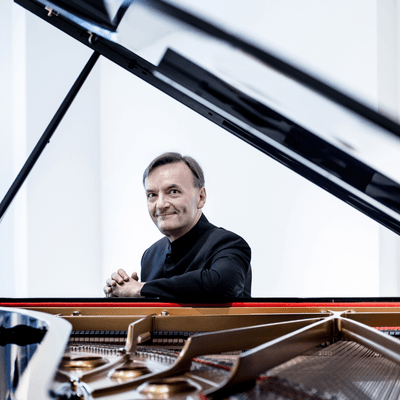
Sir Stephen Hough
Piano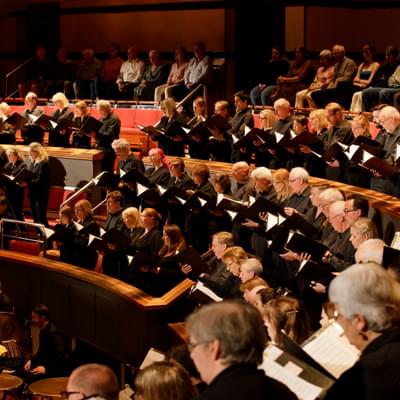
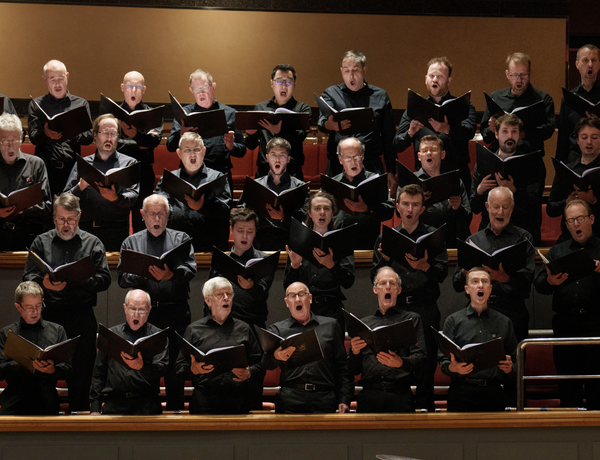
CBSO Chorus
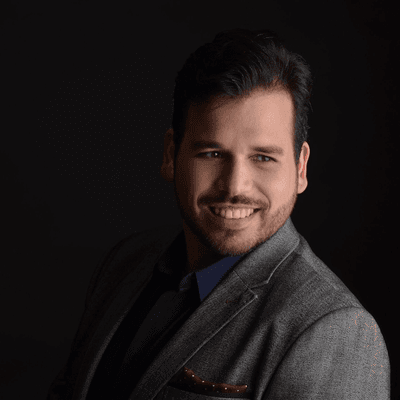
Luis Gomes
Tenor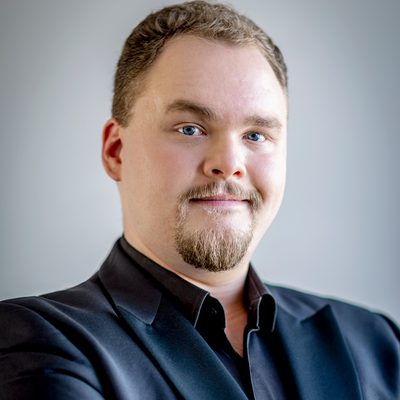
Alexander Grassauer
Bass
Georgia Mae Ellis
Mezzo Soprano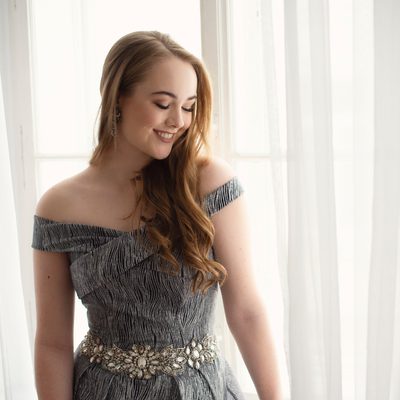
Lauren Urquhart
Soprano
Introduction
My last concert with the CBSO was in March 2020. We were supposed to go on a tour… and all was cancelled in several hours. In the last years when I was music director of the BBC Philharmonic in Manchester, we just could not find the right moment to meet again and make music together. So at last, we are here and I am greatly looking forward to reuniting with this orchestra. I remember very fondly some of our past concerts in Birmingham and on tours abroad, and I am very happy to be back and see colleagues, old and new.
I am particularly excited to play the fortepiano in Haydn’s Nelson Mass. The mass is not normally performed in this way: I will conduct from the fortepiano and personally I find this one of the best ways to communicate and have fun on stage – it is as close as we can get to achieving a chamber music quality whilst performing
in such a large orchestration.
It will be a very interesting experience for everybody involved, orchestra, soloists and chorus, as we won’t have a conductor on the podium like we would in usual circumstances and so we will need to think, anticipate and breathe together. In recent years I've found myself going deeper and deeper into Haydn's music and music-making. I’d recommend to the audience to really listen out for the flexible change of character and the very wide space for improvisation and spontaneity immersed in this masterpiece – it highlights all the best traits of Haydn: humour, lightness, heaviness with both strong and beautiful moments.
We will also perform Beethoven’s Piano Concerto No.3 in this concert, which will feature Sir Stephen Hough and his “rewriting” of the second movement. We first performed this composition in Hamburg together in my opening season concert as music director of the Hamburg State Opera and the Hamburg Philharmonic Orchestra last September. The relationship between living and dead composers is a theme we are exploring throughout the season in Hamburg, experimenting on how we can rework programmes to better integrate new music into the concert hall.
Stephen’s new second movement will be encompassed by the original first and third movements by Beethoven. We wanted to create a dialogue between the old and the new with quotes, ideas and variations from the original music but while also creating an element of surprise, not knowing what is to come from a piece we all know so well.
It will be a concert full of experiment and surprise – I hope you enjoy this different way of approaching music we know and love so well.
Omer Meir Wellber
Conductor and Play/Direct
Programme Notes
Immerse yourself in two journeys of discovery and transformation, led by conductor Omer Meir Wellber. You can practically hear Beethoven’s style evolving in his third piano concerto: from graceful opening, to soulful middle movement, to dark and stormy finale. Soloist Sir Stephen Hough brings his inimitable creative spirit to the party, with his arrangement of the second movement. Haydn wrote his Mass in a state of high anxiety: his homeland of Austria was increasingly alarmed by the threat of Napoleon’s army. You can hear it all in the turbulent opening movement. By the time of the premiere Nelson had defeated the French Emperor – the Mass’s triumphant conclusion became forever linked to Nelson’s.
Piano Concerto No.3 in C minor
Ludwig van Beethoven (1770-1827)
The young Beethoven wasn’t entirely a revolutionary. He might have rebelled against his teacher Haydn, but when it came to Mozart, his attitude was more like hero-worship. After listening to a performance of a Mozart piano concerto, he turned to his young pupil Ferdinand Ries and said “The likes of us will never be able to do anything like that”.
But Beethoven was never the type to refuse an artistic challenge – even one of his own. The Mozart concerto they’d heard was No.24 in C minor, and between 1797 and 1800 Beethoven composed his own C minor piano concerto. And since Mozart begins his concerto with a low, unison phrase for strings, so does Beethoven. The musically-literate audience that heard him give the first performance at Vienna’s Theater an der Wien on the night of 5th April 1803 would have spotted the resemblance immediately.
And yes, it’s an act of homage. But it’s anything but an imitation. Beethoven’s vision was very different from his hero’s; but it shows itself in quiet poetry rather than barnstorming heroics. Mozart always finished his first movements with the orchestra alone; but Beethoven allows the piano a few last words, to magical effect. And at the end of the finale he switches both key and time signature, to dazzling effect. It’s nothing like Mozart – and that’s the highest compliment Beethoven could have paid him.
A new perspective…
The challenge of how to engage with a great creative imagination never goes away, and it takes on a new dimension when a performer is themself a gifted composer. Two-and-a-bit centuries later, Stephen Hough takes up the story:
I was intrigued when I was asked if I'd like to take part in a composers’ project curated by the conductor, Omer Meir Wellber: to write a movement to replace a movement in one of the core repertoire works. As I wanted to play as well as write, I chose the second movement of Beethoven's 3rd Piano Concerto.
Writing one's own cadenza for a classical concerto was common until the mid-20th century, but that was like hanging a picture on a wall. This was more like building a whole new wall. And what do you put between the two dramatic utterances which are the first and third movements of this masterpiece? Not only are you replacing a creation of unutterable sublimity but how do you keep the balance of the whole work? Too strong a flavour or large a footprint and you rob those two outer movements of their power; too flimsy or superficial and you create a strange, uneasy vacuum in the middle. Beethoven's solution was twofold: a shockingly distant key, and a mood of rapturous lyricism. Literally another world.
I decided to keep the exact instrumentation of the Beethoven original, but should I write something in his style? This is a question which comes up in reference to cadenzas: do we try to keep them in the same musical language as the composer or use our own voice? I felt it would have been pointless to write faux-Beethoven for this project, but I did want to use some of his original material as a starting point. I transformed the opening piano solo of the original into an orchestral chorale, stripped of its decoration and rhythm, and used it to underpin expressive, yearning figures in the piano, based on the first three notes of Beethoven's third movement. A triplet motive from the original slow movement propels the music to a climax when the first movement's main theme enters at the start of a cadenza. After a reprise of the opening, followed by increasing agitation, the three-note yearning figure multiplies, ascends and tumbles back into ... Beethoven.
Missa in angustiis (Nelson Mass)
Franz Joseph Haydn (1732-1809)
On 1st May 1761 the 29-year old Joseph Haydn signed a contract that made him Vice-Kapellmeister (music director) to the fabulously wealthy Hungarian nobleman Prince Paul von Esterházy. It would turn out to be the job of a lifetime. Haydn remained in the Esterházys’ service for more than four decades, directing the Prince’s private orchestra and opera house, playing chamber music with Prince Paul’s successor Nikolaus (known as “the Magnificent”) and writing a continual stream of new music for his supremely civilised employers. In time, the Esterházys came to realise that they had an international celebrity on their staff, even if – under Nikolaus’s successor Nikolaus II – it proved impossible to maintain music-making on quite the same scale.
So Haydn stayed on the payroll, but from 1796 onwards his only major duty was to compose a Mass each year for the name-day (in September) of Princess Maria Hermengild, the Prince’s music-loving wife. The Mass for 1798 had a revealing title: Missa in angustiis – “Mass in Troubled Times”. The previous October, Napoleon’s armies had forced Austria and its empire into a humiliating peace. More immediately (for Haydn), with the European economy in chaos, the Prince had been forced to dismiss his remaining woodwind players, leaving Haydn with an orchestra of strings and a handful of brass instruments.
Haydn, as ever, took the limitation as a creative challenge. With its slimmed-down orchestra of strings, organ (which Haydn himself played), timpani and three trumpets, the Missa in angustiis is taut, dark and intensely dramatic. Haydn was well abreast of current affairs, and the European war was an unignorable reality (in fact when Napoleon besieged Vienna in 1809, Haydn’s suburban townhouse was literally in the line of fire. A cannonball landed in his back garden, and can still be seen today). But he was also a devout Catholic. He’d known and believed the words of the Mass since childhood, and as a skilled opera composer he was aware that they told their own story – a spiritual and emotional journey from fear and repentance (Kyrie) through an affirmation of faith (Credo) to a final, redemptive peace (Agnus Dei).
So in the Missa in angustiis, the four solo singers convey an almost operatic passion - and the drums and trumpets of war cut repeatedly through the texture of the music, even while it follows the sacred text’s alternating patterns of repentance, affirmation and praise. And Nelson? When the Mass was first performed, on 23 September 1798, news had just reached Austria that the Royal Navy, under Admiral Nelson, had inflicted a crushing defeat on the hated Bonaparte at Aboukir Bay in Egypt – a victory now remembered as the Battle of the Nile. Haydn hadn’t been aware of the victory when he wrote the Mass, but he loved England, and regarded any enemy of Napoleon as a friend. This urgent and stirring Mass setting quickly suddenly seemed powerfully relevant.
And two years later, when Nelson and his glamorous lover Emma Hamilton were the honoured guests of Prince Esterházy, Haydn directed the music for their four day stay, which might (though no-one is quite sure) have included the Missa in angustiis. By all accounts the victorious admiral and the veteran composer hit it off, and Haydn himself (then 62) was flattered by the attentions of the beautiful “Melady Hamilton” – who sang one of his songs, to Haydn’s own accompaniment. Nelson asked for one of Haydn’s old quill-pens as a souvenir, and the Missa in angustiis has been known as the Nelson Mass ever since.
© Richard Bratby
Featured image © Andrew Fox