Kazuki conducts Mahler's 2nd Symphony

Full programme
- Mahler, Symphony No.2 (Resurrection) (87mins)
Performers
Kazuki Yamada
Conductor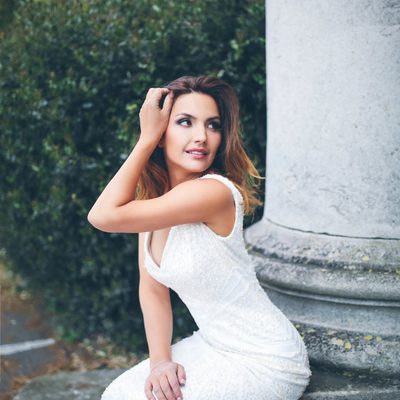
Anna Patalong
Soprano
Jess Dandy
Contralto
Julian Wilkins
Conductor of CBSO Youth Chorus / Associate Director, CBSO Chorus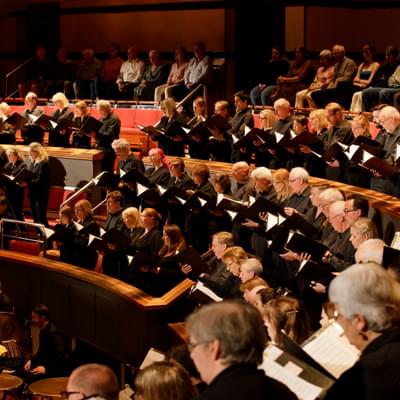
CBSO Chorus
Soloist change
We are sorry to announce that soprano Eleanor Lyons has had to withdraw from this performance at short notice due to illness. We are very grateful to Anna Patalong who will take her place.
Introduction
Welcome to Symphony Hall and the opening concert of our 2026–27 season.
As Kazuki Yamada continues his exploration of Mahler’s symphonies, we arrive at one of the most extraordinary works in the orchestral repertoire: the mighty Symphony No.2, the ‘Resurrection’. Epic in every sense, it calls for a vast orchestra, organ, chorus and soloists in a powerful musical journey that confronts life’s biggest questions before arriving at a vision of hope and renewal.
We are delighted to welcome soprano Eleanor Lyons and mezzo-soprano Jess Dandy, renowned interpreters of Mahler’s music, for this special performance. It is also a landmark evening for the CBSO Chorus as it celebrates its 1,000th performance, a remarkable moment in the Chorus’ story and a testament to its enduring contribution to the life of the CBSO.
There could be no more inspiring way to open a new season, and I hope you enjoy sharing this extraordinary experience with us.
Emma Stenning
Chief Executive
Programme notes
Symphony No.2 in C minor (Resurrection)
Gustav Mahler (1860-1911)
The keeper of souls
In October 1907 Gustav Mahler was sitting down to lunch at the Hotel d’Angleterre in St Petersburg when he was interrupted by an elderly lady. He had seen her once before, on a previous visit to Russia in 1902; but this time she was determined to speak with him and insisted he join her at her table. “Although I was very hungry and not in the mood for conversation, she would not be put off”, he wrote to his wife Alma:
“She regarded me as a keeper of souls; seems to be afraid of death and would like very much to know what comes after…she said that she had found something so original in my Second Symphony and that it has made an abiding impression upon her.”
Alma inferred from this that the old lady had been so moved by the Second Symphony that she had drawn the only possible conclusion – that its composer was in possession of privileged information about the afterlife. It’s an experience that will be familiar to anyone who knows and loves this symphony. Even now, it can be hard to believe that a work that proceeds with such monumental grandeur and conviction to such an overwhelmingly moving conclusion was not conceived in one mighty revelation.
Nothing like music
The truth is more human. Mahler seems to have conceived the symphony as a sequel and extension to his First Symphony of 1888, and by 1891 he’d completed the first movement, which he saw as a symphonic poem in its own right. He called it Todtenfeier – “Funeral Rites” for the young hero of the First Symphony. That presented its own problem: what can come after a funeral? As Mahler toyed with ideas – conceiving two further movements to serve as a respite or a commentary on that tragic beginning – his career as a conductor was gathering momentum. In 1891, shortly after taking up a post at the Hamburg Opera, he played Todtenfeier to one of Germany’s pre-eminent living conductors, Hans von Bülow.
Neither of them could have guessed, at that moment, that Bülow would unwittingly unlock the rest of the symphony. Bülow died, unexpectedly, in February 1894 and Mahler attended his memorial service in Hamburg the following month. A mutual friend was there too, and recounted the story. “Mahler and I were present at the service, but the church was overcrowded and we couldn’t see each other” he recalled:
“The strongest abiding impression was the children’s choir; the innocence of their pure sounds in Klopstock’s profound poem….by the afternoon I could not contain my restlessness and hurried to Mahler’s house. I opened the door and saw him sitting at his desk, head bent and his hand holding a quill over music paper. As I stood there, Mahler swung round: ‘My friend, I’ve got it!’”
What he’d “got” was the hymn Die Auferstehung (Resurrection) by the poet Friedrich Klopstock (1724-1803) – the hymn that the children had sung at the service that morning, and which had now shown him the path to the end of his unfinished symphony. He completed the symphony in the summer of 1894 in the lakeside hut of his new villa on Lake Attersee, in the Salzkammergut. His sister Justine recalled that his only company as he worked was a pair of kittens; local children were bribed with small change to stay quiet within earshot of the hut. The symphony was performed for the first time by the Berlin Philharmonic, on 13th December 1895.
Beyond words
The new symphony was on a scale beyond anything that Mahler had conceived before. From that opening “Funeral Rite” it had grown into a full-scale spiritual and emotional music drama, culminating in a colossal symphonic depiction of the apocalypse, and the Resurrection to follow. That called for quadruple woodwind, ten horns and ten trumpets (onstage and off) two harps, organ, soprano and mezzo soloists and a percussion section that included two sets of timpani, two bass drums and a wide range of tuned and untuned extras.
And, of course, a full mixed-voice chorus. Mahler disapproved, in principle, of putting the contents of music into written words. A programme, he wrote to Alma, “gives only a superficial explanation of any musical work, let alone this one, which is so much of-a-piece that it can no more be explained than the world itself.” In practice, however, he wrote several descriptions of the narrative behind the Second Symphony: this one comes from a performance conducted by Ernest von Schuch in Dresden in December 1901:
1. Allegro maestoso
“We are standing by the grave of a beloved human. His whole life, his struggles, his sufferings and his accomplishments on earth pass before us. And now, in this solemn and deeply stirring moment, when the confusion and distractions of everyday life are lifted like a hood from our eyes, a voice of awe-inspiring solemnity chills our heart, a voice that, blinded by the mirage of everyday life, we usually ignore: ‘What next?’ it asks. ‘What is life and what is death? Will we live on eternally? Is it all an empty dream or do our life and death have a meaning?’
We must answer this question, if we are to go on living. The next three movements are conceived as intermezzi.”
(Mahler requested that conductors pause for at least five minutes before proceeding)
2. Andante moderato
“A happy moment in the dear departed’s life, and a sad recollection of his youth and lost innocence.”
3. In ruhig fliessender Bewegung
“A spirit of disbelief and negation has seized him… Utter disgust for every form of existence seizes him in an iron grasp, and torments him until he utters a cry of despair.”
(This central scherzo quotes Mahler’s song Des Antonius von Padua Fischpredigt – a parable of St Anthony preaching to the fishes, who swim heedlessly away).
4. Urlicht (Primal Light)
“The words of simple faith sound in his ears:
‘I am from God, and will return to God.’”
5. Im Tempo des Scherzo
“Once more we must confront terrifying questions, and the atmosphere is the same as at the end of the third movement. The end of every living thing has come, the Last Judgement is at hand and the horror of the Day of Days is upon us. The earth trembles, the graves burst open, the dead arise and march forth in endless procession…
The last trumpet sounds. In the eerie silence that follows, we can just barely make out a distant nightingale - a last fragile echo of earthly life. The gentle sound of a chorus of saints and heavenly hosts is then heard: ‘Rise again, yes, rise again!’ Then God in all His glory comes into sight. A wondrous light strikes us to the heart. All is quiet and blissful, and behold: there is no judgement, no sinners and saints, no great and no small; there is no punishment and no reward. A feeling of overwhelming love fills us with blissful knowledge, and illuminates our existence.
‘Did Mahler really believe, in the deepest religious sense?’ asked Ferdinand Pfohl, who was acquainted with Mahler during the composition of the Second Symphony. ‘I would have to say that he did. Heaven, God’s realm, was more to him than a beautiful dream. It was an essential need - his entire art is a cry for this belief. Music, above all his own music, was simultaneously a drug, a vision and an act of asceticism…it was a balsam to his wounds’.”
Programme notes by Richard Bratby.
Meet the CBSO
Violin I
Eugene Tzikindelean*#
Jonathan Martindale*
Jane Wright*#
Nathan Bomans*
Richard Thomas*
Julia Aberg*#
Victoria Farrell-Reed*
Colette Overdijk*#
Vera Beumer
Iryna Glyebova
Bethan Allmand*
Mark Robinson#
Cleo Annandale
Wendy Quirk
Kath Gittings
Cathy Chambers
Olivia Jago
Violin II
Lowri Porter*
Moritz Pfister#
Amy Jones#
Becky Kao
Charlotte Skinner#
Tim Birchall*#
Tam Mott
Camille Said
Yuriko Matsuda*
Gabriel Dyker*#
Georgia Hannant*#
Bryony Morrison*#
Amy Littlewood
Adam Hill
Zhivko Georgiev
Viola
Chris Yates*#
Adam Römer*#
David BaMaung*#
Michael Jenkinson#
Sarah Malcolm*
Isobel Doncaster*
Jessica Tickle*#
Amy Thomas*#
Helen Roberts
Abbey Bowen
Daichi Yoshimura
Abi Hammett
Cello
Leo Popplewell
Arthur Boutillier
Kate Setterfield*#
Miguel Fernandes*#
Helen Edgar*#
Jacqueline Tyler*#
Catherine Ardagh-Walter*#
Philippa Schofield
Alessandro Sanguinetti
Wallis Power
Double Bass
Anthony Alcock*#
Julian Atkinson*#
Jeremy Watt*#
Julian Walters*#
Daniel Vassallo*
Mark Goodchild#
Maitiú Gaffney
Tom Neil
Flute
Marie-Christine Zupancic*#
Elizabeth May
Piccolo
Kathleen Stevenson
Lucy Driver
Oboe
Hyun Jung Song*
Emmet Byrne*#
Cor Anglais
Rachael Pankhurst*#
Ilid Jones
Clarinets
Oliver Janes*#
Jernej Albrecht
Bass Clarinet
Mark O’Brien#
E flat Clarinet
Jo Patton*#
Jill Allan
Bassoon
Nikolaj Henriques*#
Tony Liu
Michael Elderkin
Contrabassoon
Margaret Cookhorn*#
Horn
Elspeth Dutch*#
Neil Shewan
Mark Phillips*#
Jeremy Bushell*#
Alex Harris
Martin Wright#
Henry Ward
Offstage Horn
Mark Vines
Dan Hibbert
Tomasso Rusconi
Sarah Pennington
Trumpet
Matthew Williams
Gideon Brooks
Jonathan Quirk#
Stuart Essenhigh
Ben Jarvis
Emily Ashby
Tim Barber
Offstage Trumpet
Christian Barraclough
Juliette Murphy
Martin Rockall
Steve Walton
Trombone
Richard Watkin#
Gemma Riley
Ed Hilton
Bass Trombone
David Vines*#
Tuba
Daniel Trodden*
Timpani
Matthew Hardy*#
Toby Kearney*#
Percussion
Andrew Herbert#
John Melbourne
Rachel Gledhill
Aidan Hammond
Jonathan Phillips
Alex Henshaw-van den Bos
Iris van den Bos-Henshaw
Harp
Katherine Thomas*#
Alex Rider
Organ
Julian Wilkins
# Recipient of the CBSO Long Service Award / * Supported player
Meet the CBSO Chorus
Soprano
Sally Bateman*
Monika Bell
Isabel Clarke
Isobel Edgar**
Elizabeth Haines
Robyn Jennings***
Catherine Lander*
Stephanie Lau
Alexandra Lewis*
Jieyi Li
Tiffany Lui
Catherine Mason***
Ros Mortimore*
Naomi Murphy
Clare Noakes**
Sarah Padmore
Jennifer Scholes***
Olivia Skellern
Martha Skerry
Helen Tunnicliffe
Emily Williams
Elizabeth Yeats
Rachael Baylis*
Sarah Beedle*
Di Charles***
Kate Dodds
Catherine Foster***
Catherine Gardom
Emma Hancox
Prue Hawthorne****
Gillian Machin**
Eluned Mansell*
Sarah McNeill
Janet Michalowski
Melissa Morris
Alison Needham
Emily Pinching
Nicole Plowman
Saffron Pougher
Kate Riemer
Sarah Russell****
Marion Scholey***
Jean Scott****
Patrycja Slezak
Helen Smallwood***
Sarah Tambling
Allison Taylor*
Claire Tilling
Karen Wilson-de-Roze
Alto
Johanna Ahrberg-Jackson
Christine Chadwick***
Helen Chamberlain**
Louise Davis
Rebekka Dickinson
Caitlin Duff
Naomi Goldsworthy-Linnell
Rosalind Hobson
Isabel Jaquet
Eva Landsberg
Clare Langstone**
Val Lewis*
Joan Lilburn
Wendy McGregor
Moyra Morton*
Elizabeth Parkin**
Helena Robertson
Diane Todd****
Rosemary Watts**
Jeanette Wong
Catherine Duke***
Sarah Ennis****
Gill Fletcher*
Sylvia Fox****
Judy Frodsham****
Hazel Hughes****
Josephine Mesa Bandrés**
Natalie Page
Anna Parker*
Jan Sterling
Sarah Trinder***
Belinda Wadsworth
Rachel Wilks
Toni Wright***
Alison York***
Tenor
Charles Barwell**
Richard Cook
Paul Glossop****
David Gregory
Derrick Jones
David Lewis
Robin Lewis***
Harpreet Sandhu*
Ed Sykes
Hugh Thomson**
Jonathan Winfield
Chris Bryan
David Fletcher*
Matt Friend
Tom Ho
Peter Holmes
Guy Johnson
Allen Roberts*
Luke Turnbull
David Young**
Bass
Isaac Boothman
Richard Cowley
Dom Edgar
Andrew Halstead*
Hugh Houghton**
Damon Huber
John Keast***
Fraser Lewis
Phillip Matty
Chris O’Grady**
Tom Parker*
Andrew Parker**
Phil Rawle*****
Calum Robarts**
Ben Smallwood
James Sutton
Lawrence Bacon****
Josh Cahm
Tom Considine*
Dominic Danks
Steve Gibbs***
Mike Hartley**
Peter Leppard
Andrew Packer****
Neil Parker
Will Roberts
Alan White
*10 years service with the CBSO Chorus
Special thanks for our German Language Coaches:
Norbert Meyn
Rebekka Dickinson
Biographies
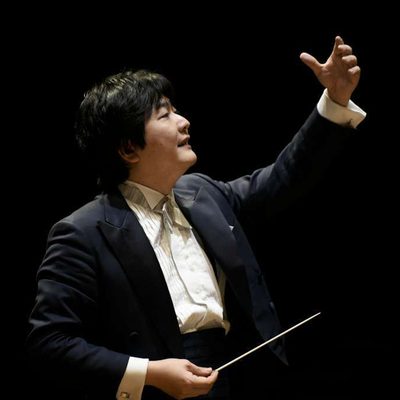
Kazuki Yamada, Conductor
Kazuki Yamada is Music Director of the City of Birmingham Symphony Orchestra (CBSO), Chief Conductor and Artistic Director of Deutsches Symphonie-Orchester Berlin (DSO) and Artistic Director of the Music Division at Tokyo Metropolitan Theatre. Time spent with Seiji Ozawa underlines the importance of Yamada’s “Japanese feeling” for music. Born in Kanagawa, Japan, he continues to work and perform in Japan every season. The 2026/27 season includes returning to the BBC Proms with the CBSO, before embarking on another European tour with the orchestra featuring Britten’s War Requiem. He opens his tenure as Chief Conductor and Artistic Director of the DSO and makes his debut with Symphonieorchester des Bayerischen Rundfunks and The Koninklijk Concertgebouworkest. He returns to The Boston and Chicago Symphony Orchestras, The Cleveland Orchestra, The BBC Symphony Orchestra, Orchestre Philharmonique de Radio France, Orchestre National du Capitole de Toulouse and Swedish Radio Symphony Orchestra to name only a few. Yamada appears annually as a guest artist at the Seiji Ozawa International Academy Switzerland and is actively involved in the CBSO’s outreach programme. He first achieved international attention upon receiving first prize in the 51st International Besançon Competition for Young Conductors in 2009.
Anna Patalong, Soprano
Anna Patalong's recent and future engagements include her critically acclaimed portrayal of the title role in Miss Julie (BBC Symphony Orchestra with Sakari Oramo at the Barbican, recorded for Chandos), Desdemona Otello, title roles Madama Butterfly and Tosca (Theatr Wielki, Lodz, Poland), Fata Morgana The Love for Three Oranges (Saarlandisches Staatstheater, Saarbrücken), Brigitta Iolanta (Opéra National de Paris), title roles Tosca and Suor Angelica (Opera Holland Park)‚ Violetta La Traviata (Festival Opera New Zealand)‚ Nedda i Pagliacci (Scottish Opera)‚ Fiordiligi Cosi fan tutte and Violetta (Longborough Festival), Mimi La Bohème (Opera Holland Park‚ Opéra de Rouen and Theater Lübeck)‚ Woglinde Das Rheingold (Ruhr Triennale Festival)‚ Manon Lescaut, Marguerite Faust and Tatyana Eugene Onegin (Dorset Opera Festival)‚ Liu Turandot (Northern Ireland Opera) and Ino Proserpine (Spoleto Festival). Anna sang with Robbie Williams on the song Millennium for his latest album XXV and appears frequently on BBC and in concert throughout UK. She is also Chief Executive of British Youth Opera.
Jess Dandy, Contralto
Cumbrian-born Jess Dandy is widely regarded as the foremost British contralto of her generation. Winner of the 2025 Critics’ Circle Award for Female Voice, she studied Modern and Medieval Languages at Trinity College, Cambridge, before training at Guildhall School of Music & Drama, where she graduated with distinction and was awarded a fellowship. The 2026/27 season sees Jess make her Royal Ballet and Opera debut as Dritte Dame in Die Zauberflöte. Concert debuts include the Hong Kong Philharmonic in a concert celebration of Beethoven, Hamburg Philharmonic in Mahler’s Symphony No. 2, Danish National Symphony Orchestra in Elgar’s The Dream of Gerontius, BBC National Orchestra of Wales in Widmann’s Cantata in tempore belli, and the National Symphony Orchestra of Ireland in Bach’s St Matthew Passion. She also returns to the BBC Philharmonic, Royal Liverpool Philharmonic Orchestra, and City of Birmingham Symphony Orchestra. Recent highlights include debuts at the Salzburg Easter Festival with the Berliner Philharmoniker under Kirill Petrenko, Bayerische Staatsoper, and The Grange Festival. Jess is co-founder of SongPath and an artist in residence at Brantwood, Cumbria.
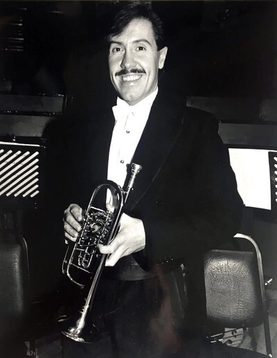
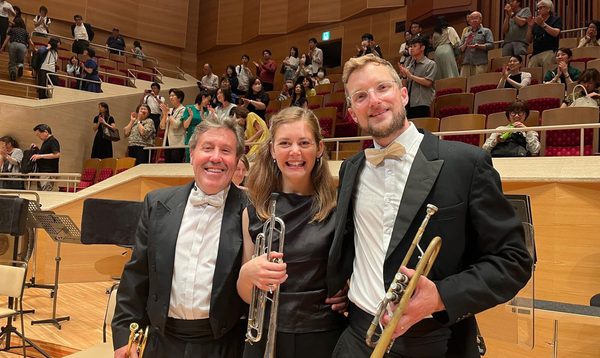
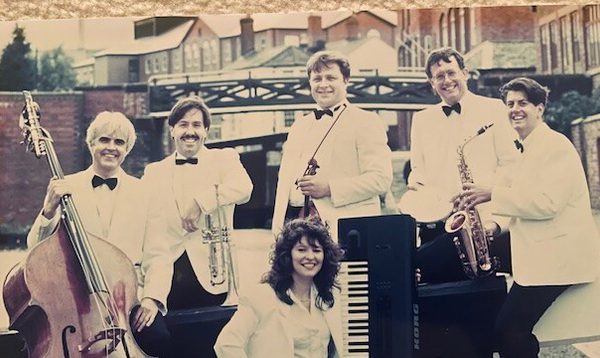
Jonathan Quirk: Farewell after 40 Years!
This evening’s concert marks the end of Jonathan Quirk’s time as CBSO Principal Trumpet. Mahler’s 2nd Symphony has long held a very special place in his heart and it is no accident that he has chosen tonight’s concert to be his last as a member of the orchestra.
Jon comes from the Isle of Man from a musical family and his journey to us started on the cornet at the age of 5, followed by a musical childhood in Salvation Army bands and then professional training at the Royal Northern College of Music. He joined the CBSO more than 40 years ago in April 1986 and he has been a very important member of the orchestra, contributing greatly to its artistic success under five successive Music Directors, from Sir Simon Rattle to Kazuki Yamada. Throughout his career the trumpet section has been of a terrific standard and he has been surrounded by brilliant players, who have all hugely appreciated his musicianship and contribution to the section and to the orchestra.
Jon’s formal position has been 3rd Trumpet and Principal Cornet, but he has played every role in the trumpet section with distinction. He has played numerous significant cornet solos within orchestral pieces. For example, the delicately woodwind-like solos in Prokofiev’s Romeo and Juliet, or the obbligato which Berlioz added to the ‘Un Bal’ movement of his Symphonie Fantastique after he had heard and been inspired by the 19th Century cornet virtuoso Monsieur Arban. Jon’s performances of these solos will live long in the memories of colleagues and of audiences, not just in Birmingham but around the country and the globe.
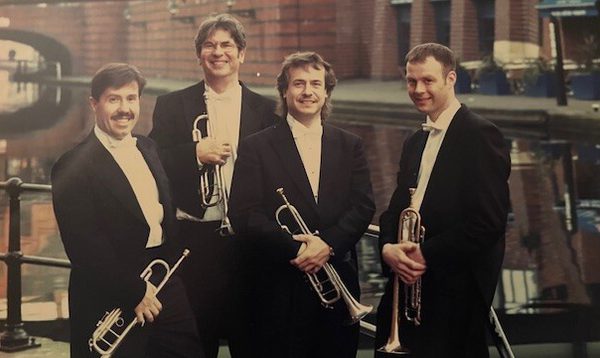
Jon’s musical contribution to the CBSO has gone well beyond the full orchestra. He was a member of The Little Big Time Band, a symphony orchestra in microcosm, and he has performed in numerous other small ensemble formations, brass quintets included.
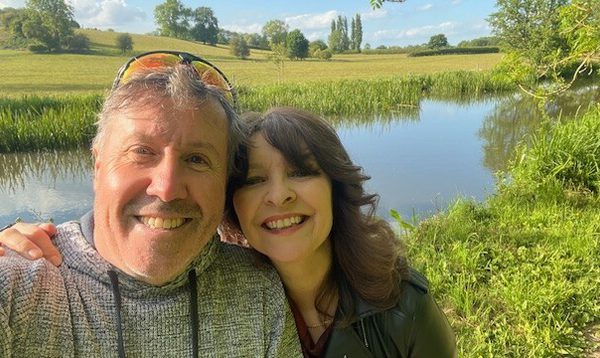
Jon met his wife Wendy in 1991 when she joined our First Violin section, and she is playing with us tonight. Their adult son, Christopher, is also a fine musician.
Jon has always enjoyed his free time actively. He loved being captain of the successful CBSO football team, and he is a keen golfer, skier and swimmer, so it is unlikely he will be short of things to do in future. He has a strong affinity with his birthplace, the Isle of Man, where he and Wendy hope to spend more of their time. However, he is assuredly not hanging up his trumpet, so you may well see him back on stage with us quite soon as a guest player.
All of us at the CBSO thank Jonathan for 40 years of excellent service and wish him the very best for the future.
Comments from colleagues:
“Congratulations, Jon! You have been an incredible long-surviving talent for the section. Your adaptability in being superb on so many different parts in the section is amazing, having excelled on 1st, 2nd, 3rd, 4th trumpet, 1st cornet and some memorable off-stage parts. I’ll never forget your performance of the off-stage post horn solo in Mahler’s 3rd Symphony – listening to the recording still sends shivers down my spine. I wish you all happiness in your future.”
“Thanks for so many amazing memories all around the world. Tremendous player, particular fond memories of the Mendelssohn recordings we did as a pair and getting the first stand up playing the natural trumpets!”
“I couldn’t have wished for a better section partner. We worked perfectly together.”
“Thank you so much for the best time. I love your company and loved being in a section with you.”
“It was a great honour to be in the section with you, an absolute legend and one of a kind.”
"Cheers Quirky, here's to you! It has been an absolute privilege to work with you and to listen to your wonderful sound and playing everyday. We will miss you very much!"
Image gallery