Puccini in Rome
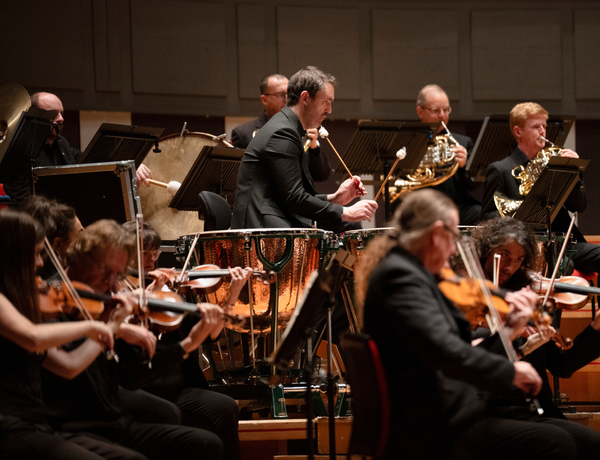
Full programme
- Puccini (arr. Rizzi), Tosca: Symphonic Suite (20mins)
- Respighi, The Sunset (17mins)
- Puccini, (arr. Rizzi), Madam Butterfly: Symphonic Suite (18mins)
- Respighi, Pines of Rome (23mins)
Performers
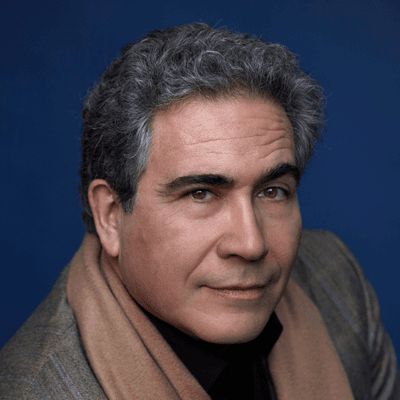
Carlo Rizzi
Conductor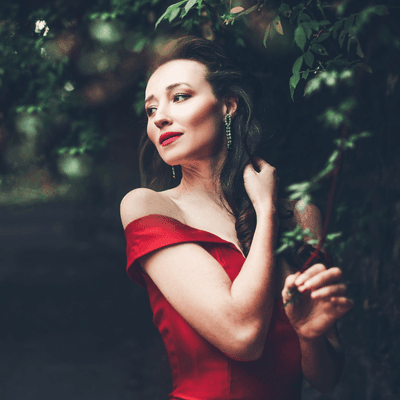
Fleur Barron
Mezzo Soprano
Introduction
Welcome to this concert where we explore two of the most important Italian composers: Puccini and Respighi.
Different composers but each of them with a very personal orchestral sound. While Respighi is known as a master of orchestration, using the complete palette of the orchestra to create effects, atmospheres and feelings that go from the shimmering to the explosive, Puccini is known as a composer that wrote some of the most beautiful and recognisable arias in the operatic world.
So, Respighi equals orchestra and Puccini equals voices… or not? Ever since I first heard Puccini's operas, this was the question that has been in the back of my mind. While studying Puccini’s operas, I was struck by the sophistication of his orchestration and the innovative use of the instruments.
Who would have thought, for example, that the use of two notes, played by the piccolo and the bass clarinet five octaves apart, would be so poignant and effective in describing the moment when the dead body of Liù leaves the stage in Turandot?
Or that a repeated fifth on the timpani played independently from the rhythm of the rest of the orchestra, could describe so powerfully the moment when Butterfly decides to take her life? This is why during the pandemic I decided to create these two “Symphonic Suites” from Tosca and Madama Butterfly, to show that the artistry of Puccini is much more than “nice melodies”.
The suites are all Puccini’s music, with the original orchestration; nothing is added, nothing is taken away. There are no “karaoke” moments where I gave the line of the singer to an instrument: the orchestra is enough to be the “voice” of Puccini.
Tonight I am very happy to be able to offer you this wonderful music together with the great musicians of the CBSO. I hope you will enjoy the concert.
Carlo Rizzi
Conductor
Programme Notes
Come and enjoy a sumptuous celebration of Italian orchestral music and a look ‘under the bonnet’ of two famous operas. While Puccini is rightly famous for the glorious vocal lines in Tosca and Madam Butterfly, his writing for orchestra has always been equally sublime. Conductor Carlo Rizzi’s Suites from the operas reveal the orchestral colour in all its shimmering beauty. Respighi, meanwhile, was giving Puccini a run for his money in his beautifully evocative depictions of Rome – here sung with her customary opulent flair by Fleur Barron.
Tosca: symphonic suite
Giacomo Puccini (1858-1924)
At the heart of Italian opera is the human voice, and the art they call bel canto: literally, “beautiful singing”. But by the start of the twentieth century, the tradition was evolving, and in the operas of Giacomo Puccini the orchestra is almost a character in its own right. Few conductors understand that better than Carlo Rizzi, and after a lifetime in the world’s great opera houses, the lockdown of 2020 set him thinking. “While conducting the orchestral suite from [Richard Strauss’s] Der Rosenkavalier, I found myself reflecting on the fact that in Strauss’s operas the orchestra is always deeply embedded” he recalls.
My mind quickly started to play with the idea of how some of Puccini’s greatest works might be re-imagined in a purely orchestral version, in their own right… As I studied the scores in detail, I was guided by what had always been clear in my mind from the beginning - that, after all my re-imagining, selecting and arranging, the final works must be completely pure and faithful to Puccini’s original orchestration alone, with nothing added to “cover” any perceivable lack of vocal line.
Again I found the answers in the sheer brilliance of Puccini’s original music. These are, after all, his masterpieces in another form. I also hope that those who already love Tosca and Butterfly will enjoy the opportunity to focus wholly on the orchestra as they listen.
With Tosca (premiered in Rome in January 1900), Puccini took a play by the French dramatist Victorien Sardou (1831-1908) and gave it the pace and punch of an action movie. The setting is Rome, in June 1800: a revolution has failed and the forces of repression are hunting down its survivors. Amid the terror, the young artist Mario Cavaradossi is going about his business of painting saints, and soothing the jealousy of his beautiful and passionate lover, the opera singer Floria Tosca. But Cavaradossi has revolutionary sympathies, and the sadistic police-chief Baron Scarpia – consumed with lust for Tosca – is weaving a web that will trap both lovers.
Scarpia arrests and tortures Cavaradossi, and Tosca strikes a bargain – her virtue for his life. Scarpia agrees; he will arrange a mock execution, and then the two lovers will be free to go. But instead of surrendering her body to Scarpia, Tosca stabs him and escapes to witness the mock-firing squad that will restore Mario to her. Dawn breaks over the towering Castel Sant’Angelo and the soldiers take aim - but Scarpia has planned a final trick from beyond the grave. Cavaradossi falls dead and as the cry goes up for Tosca’s arrest, she leaps from the battlements, defiant to the last.
Il Tramonto (The Sunset)
Ottorino Respighi (1879-1936)
In the early summer of 1914, the composer Ottorino Respighi sought relief from the bustle of Rome and returned to his home town of Bologna. “I was weary of the city noise” he wrote to a friend. It was at this time (according to his wife Elsa) that he turned to the English poet Shelley, and wrote Il tramonto – a “little poem” for soprano and strings based on Shelley’s poem The Sunset (1816). He’d discovered it through a translation, Poesie di P.B. Shelley, published in 1905 by the Italian writer Roberto Ascoli. The poet imagines two lovers who walk through a wood at sunset but never glimpse its glory. That night, the young man dies without explanation leaving his beloved to a lifetime of mourning.
Respighi responded with a one-woman mini-opera, retelling the story of the poem in music of uninhibited honesty and beauty. He opens in a surge of lush emotion: a radiant vision of the unseen sunset that might have been imagined by his older contemporary Puccini. As the glory fades, the singer starts to tell Shelley’s doomed romance. Respighi had conceived the piece for the mezzo-soprano Chiara Fino Savio, who sang the world premiere in February 1918, and he shaped its melodies to her “even, smooth” voice.
At first, as the two lovers walk together, the music glows with quiet rapture, backed by swelling, rustling strings. But as the fatal moment strikes the mood turns darker and more chilly, even as the strings cry out in anguish. The singer seems to chant – as if numbed – until Respighi reaches the poem’s final blessing and the music opens out once more into peace, before sinking tenderly into the night.
Madama Butterfly: Symphonic Suite
Giacomo Puccini (1858-1924)
Premiered in February 1904 at La Scala, Milan, Madama Butterfly is set in the Japanese port of Nagasaki in what was then the present day. Cio-Cio San, a 15-year old Japanese girl, is about to marry Lieutenant Pinkerton, an American naval officer. Her relatives’ objections only make her more determined: “Be careful, she trusts you” warns the American consul, Sharpless, as Pinkerton and Cio-Cio San go through a traditional Japanese wedding ceremony – severing all ties with her disapproving family.
But she’s certain that her new husband loves her, and is proud to be mistress of an “American home”. When we rejoin her three years later she has a young son, known as “Sorrow”, but Pinkerton has long-since sailed. Cio-Cio San is sure that their parting is only temporary and assures her devoted maid Suzuki that “one fine day” he will return. And so he does, with his new American wife close behind him. They’re here to take the child away with them. For Cio-Cio San, robbed of all illusions, Japanese tradition - and the ceremonial dagger that the Emperor sent to her disgraced father - offers a final escape for her broken heart.
The Pines of Rome
Ottorino Respighi (1879-1936)
Respighi grew up in Bologna, and he felt distinctly intimidated by Rome when he moved there in 1913. He got to know the city through music. In September 1916 he completed a brilliant symphonic poem inspired by Rome's magnificent baroque fountains, and scored an instant hit. The Fountains of Rome astonished audiences around the world.
The sequel came seven years later. By now Respighi was in love both with Rome and his new (Roman) wife Elsa. This time he decided to take his inspiration from a more intimate side of Roman life; the parks and ruins shaded by Rome's rustling, scented pine trees. The Pines of Rome was even more vivid and dazzlingly orchestrated than its predecessor, and there were nearly riots at its Roman premiere, in December 1924. Respighi wasn't bothered: "Well, let them boo - what do I care?" The next performance sold out.
The four scenes play without a break. With a blaze of morning sunlight, we're in the gardens of the Villa Borghese, Rome's great public park. Elsa Respighi taught her husband the nursery-tunes that she and her friends sang as children, while playing around the Villa. With a sudden hush, the scene moves to the Catacombs, the ancient tombs beneath Rome, for a solemn meditation. These were the refuge of the early Christians, and the wind instruments echo their Gregorian chants.
A gentle breeze shakes the pines (piano) and we move to a warm night on the Janiculum hill, with its fragrant gardens. Romance is definitely in the air now, and with touch of very modern orchestral magic, Respighi has a recording of a nightingale played over the final bars. The mood shifts again, and now we hear a slow, distant march rhythm. It grows ever louder and closer until, trumpets blazing, the full might of an Imperial Roman legion thunders down the Appian Way, marches through the Porta San Sebastiano and triumphantly enters the Eternal City.
© Richard Bratby
Featured image © Andrew Fox