Strauss & Wagner
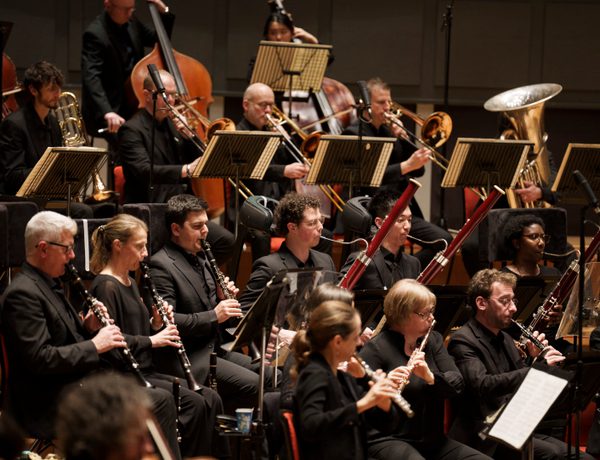
Full programme
- Wagner, Tristan and Isolde: Prelude and Liebestod (17mins)
- Strauss, Amor (3mins)
- Strauss, Das Rosenband (3mins)
- Strauss, Ständchen (2mins)
- Strauss, Freundliche Vision (2mins)
- Strauss, Muttertändele (2mins)
- Strauss, Wiegenlied (5mins)
- Strauss, Heimliche Aufforderung (3mins)
- Strauss, Morgen (3mins)
- Strauss, Don Juan (17mins)
- Strauss, The Woman Without a Shadow: Symphonic Fantasy (20mins)
Performers
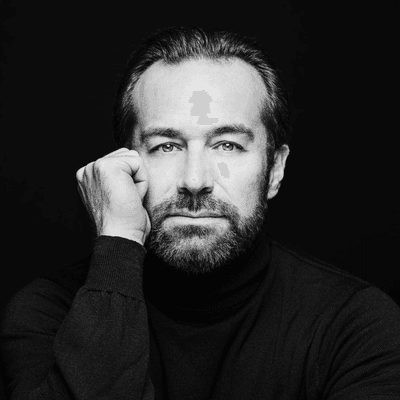
Fabien Gabel
Conductor
Nikola Hillebrand
Soprano
Introduction
There is a quote often attributed to Strauss that ‘the human voice is the most beautiful instrument of all’. Certainly, he adored writing for voice and it was the soprano voice he loved – and understood – above all others.
The first Strauss I heard live was a performance of Elektra, an opera I found so overwhelming I remained shattered by its power long after the curtain had come down. Strauss does that. His music is imbued with such richness, depth, and sheer emotional intensity - it is impossible not to be moved.
Since that first encounter, I have got to know and perform his music both in the opera house and concert hall. The operas hold a special place for me. I arrive here in Birmingham fresh from making my debut in Berlin and Vienna as Sophie in Der Rosenkavalier, a role I have been performing for more than a decade. I never tire of it though; the final trio is perhaps one of the most sublime passages ever written for female voices.
As a Lieder composer, Strauss transports you immediately to a mood/ a feeling/ a state. In but a few minutes he seems able to capture what it means to be human, what it means to experience love and loss. This evening I am singing mostly about love: longing for love, falling in love, the experience of being in love, and even the love of a parent and child (in ‘Muttertändelei’). The music ranges from impassioned and radiant to poignant and even playful.
When I sing Strauss I am struck by his gift for text setting. His vocal lines not only tell the story, they also perfectly fit the contours and gestures of German as it is spoken. It never ceases to amaze me how he incorporates the nuances of language amid ravishing melodies that sit so beautifully for the voice – and it is one of the many reasons they are such a joy to perform.
It is probably clear that Strauss is a composer dear to my heart, and it is a real privilege to make my debut with this orchestra, in this hall, in this city, with songs that mean so much to me.
Nikola Hillebrand
Soprano
Programme notes
In the mood for high romance? This beguiling programme explores love in all its forms, from seduction to passion to spiritual transfiguration. Wagner’s monumental opera Tristan und Isolde opens with a breathtaking Prelude and ends with the devastating Liebestod: the ultimate resolution of love in death. Don Juan, meanwhile, swashbuckles his way through seductions before losing his life in a duel. Love of a more mysterious kind can be found in Strauss’ fantasy from his opera Die Frau ohne Schatten, a fable of love, sacrifice and missing shadows. Soprano Nikola Hillebrand sings some of Strauss’ most ardent songs, sensitively led by Fabien Gabel.
Tristan and Isolde: Prelude and Liebestod
Richard Wagner (1813-1883)
Wagner’s 1865 opera Tristan und Isolde is, among its many other qualities, a five-hour suspended chord. The well-known ‘Tristan’ chord appears in the first bars of the Prelude, part of a sequence that seems to be climbing towards something, but never arriving. It takes three acts and much in the way of deferred pleasure to finally conclude at the end of the shattering Liebestod. Translated directly into English, ‘Liebestod’ means ‘love-death’: achieving both is the principal motivation of the lead characters. Act I of the opera relates their complicated backstory, in which Isolde brought Tristan back from the dead only to realise he was the murderer of her fiancé. At the start of the action, Tristan is sailing Isolde to Cornwall to marry King Marke; still furious with him, Isolde prepares poison for him to drink. Her maid substitutes it for love potion – yet Tristan and Isolde were both prepared to drink a deathly potion. At the end, Tristan has been murdered, and dies with Isolde’s name on his lips. She sings her Liebestod over his body, transfiguring herself into death through sheer force of will.
Heard together, the Prelude and Liebestod comprise a pithy musical summary of the whole opera. Wagner’s sumptuous scoring is characteristic of the opera’s deliriously romantic nature, while its questioning central motif speaks to the story’s fundamental mysteries. In the Liebestod Isolde’s words comprise a series of questions, then become increasingly fragmented, ultimately losing themselves in ‘Höchste Lust’ ‘highest bliss’ in death and in union with Tristan, whose music finally finds peace.
Lieder
Richard Strauss (1864-1949)
Strauss wrote songs throughout his long life, from early experiments at school to the astonishing Four Last Songs in his ninth decade. This particular group, chosen from across some twenty or so years, include some of his most ardent, ranging in mood from extroverted to erotic to almost reverential, and all on the subject of love. At the more sparkling end of the scale is ‘Amor’, written in 1918 for the soprano Elisabeth Schumann, and in tribute to her incredible ‘coloratura’ (highly virtuosic) technique. The earlier ‘Ständchen’ (1886) is one of Strauss’s most popular songs, with its breathless and exhilarating vocal line over a fluttering accompaniment; while the playful ‘Muttertändelei’ (1899) depicts a besotted mother, delighting in the charms of her child. In a more contemplative mood is the sweetly lyrical ‘Das Rosenband’ (1897), with some thrillingly ardent swooning at its centre, and the serene lullaby ‘Wiegenlied’ (1899), possibly inspired by Strauss’s wife Pauline settling their baby son for the night. ‘Freundliche Vision’ (1900) is an ecstatic dream of absolute beauty and love. ‘Heimliche Aufforderung’ (1894) sets a passionately erotic text to a series of swooping, soaring melodies, and was one of four songs dedicated to Pauline at the time of their marriage. ‘Morgen’ (1894) is from the same group, and is rightly celebrated for its beautiful, long-breathed melody. The voice arrives as if halfway through a thought, then finally falls into ‘speechless silence’ as the piano concludes, as if such depth of feeling is inexpressible in words.
Don Juan
Richard Strauss (1864-1949)
Don Juan has been womanising, swashbuckling and contemplating the meaninglessness of his own existence since the seventeenth century (the extent of these activities depending on the era). He emerged as a literary figure in 1630, depicted as more of a devil than a lover. Lord Byron, perhaps inevitably, put him at the centre of his most famous poem in the 1820s. In the twentieth century, again perhaps inevitably, he was played by Errol Flynn in a 1930s film, and existentialist author Albert Camus portrayed him as an ‘absurd hero’. Musically he is the doomed lead, as Don Giovanni, in Mozart’s 1787 opera, and in 1888 Strauss treated him to a gloriously uninhibited instrumental portrait, albeit one which ends in tragedy.
Strauss’s tone poem was based on an unfinished verse drama called Don Juans Ende, by the poet Nikolaus Lenau. In this version Don Juan is not womanising for the sake of it, but as part of a feverish search for the ‘ideal woman’. This is ultimately doomed: exhausted by the perpetual chase, Don Juan agrees to a duel, and dies. The piece follows his trajectory from exhilaration to disillusion. After a thrilling rush of adrenalin at the start – scurrying strings, sparkling percussion and an infectiously joyful melody – Don Juan pauses briefly to flirt, but then rushes onwards. Harp and solo violin draw our attention to his first major amorous episode, after which, caddishly, he does not linger, but gallops off to the tune of his opening theme. Muted horns, sliding suggestively down the scale, introduce an utterly beautiful song for oboe in the next romantic interlude, followed by an unequivocal statement of swaggering machismo: Don Juan’s own theme, blasted from the horn section. This theme seems set to triumph over the second half of the piece, but – even with a few minor key portents of doom – our hero comes to a shockingly abrupt end. After a silence, high trumpets ‘stab’ the string texture, reducing the piece to a shuddering conclusion. The piece was premiered in Weimar in 1889, a brilliantly brash calling-card for the 25-year old Strauss.
The Woman Without A Shadow: Symphonic Fantasy
Richard Strauss (1864-1949)
Strauss’s seventh opera, The Woman Without a Shadow (Die Frau Ohne Schatten) was completed in 1919. It was the first of what Strauss scholar Bryan Gilliam has called his three ‘marriage operas’ (the other two were Intermezzo and Die ägyptische Helena). Strauss was fascinated by marriage, his own decades-long union with soprano Pauline de Ahna, providing much inspiration – indeed Strauss is reported to have said he would happily write ten operas about his wife. ‘Shadow’ is a complicated exploration of two marriages, one magical, one earthbound. It is half fairy-tale, half German folk story, with a touch of Goethe’s Faust thrown in for good measure. The central ‘Frau’ is the Empress, daughter of Keikobad, who was captured as a gazelle by the Emperor and made human. She has no shadow, which in this opera symbolises her inability to bear children. Her father instructs her to obtain a shadow within a year, or she will have to return to his Kingdom and the Emperor will be turned to stone. She attempts to buy the shadow of The Dyer’s Wife with promises of sparkling riches, represented musically by some deliciously tempting orchestral effects early on in the Fantasy. Many plot machinations follow, but the result is a happy ending: the Dyer’s Wife, complete with shadow, is reunited with her husband, while the Empress acquires her own through her willingness to sacrifice herself for others.
The opera is considered by some to be Strauss’s best score, but given its opulent orchestration and staging complications it struggled for performances in war-ravaged Germany after World War I. Nearly three decades later, in the aftermath of yet another war, Strauss adapted some of the music for a Symphonic Fantasy (1946) based on themes from the opera. It opens with Keikobad’s stern, downward theme, before segueing into the evocative display of riches noted above. Generally speaking, the romantic, rhapsodic elements of the opera are to the fore here, sounding at times like a soundtrack to an extravagant Hollywood love story; the Empress’s Nurse conjures up a potential lover for the Dyer’s Wife in a particularly soaring moment. A solo trombone takes the part of the Dyer, from the Act III duet with his wife, and the final moments of the Fantasy are a celebratory hymn to transformation and self-realisation. Strauss perhaps felt this was what audiences needed in the year after the war. But above all the Fantasy is, like the opera, a grand celebration of marriage: by 1946, Strauss and Pauline had made it to 52 years.
© Lucy Walker
Featured image © Andrew Fox