Stravinsky's Rite of Spring
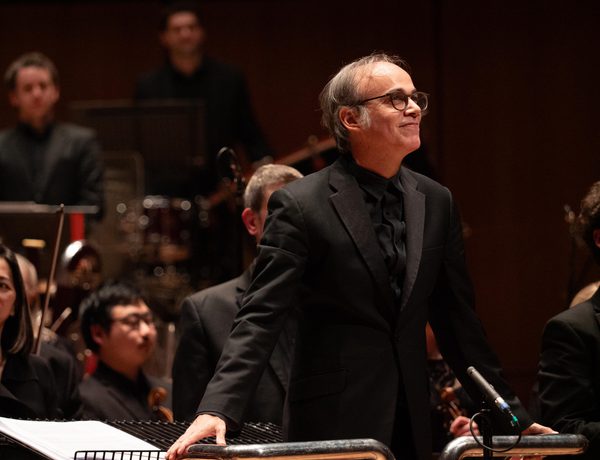
Full programme
- Frescobaldi, Gagliarda Seconda (4mins)
- Purcell, Dido’s Lament (5mins)
- Debussy, The Sunken Cathedral (8mins)
- Mussorgsky, Boris Godunov: Coronation Scene (8mins)
- Bach, Toccata and Fugue (11mins)
- Stravinsky, The Rite of Spring (40mins)
Performers
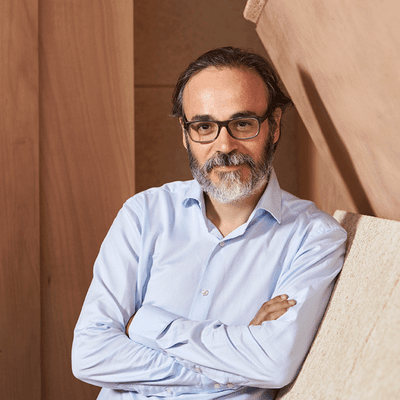
Ilan Volkov
Conductor
Introduction
It is so good to be back with CBSO, it's been too long! I am so honoured so start my position as Principal Guest Conductor with the orchestra next season.
When I was asked by the orchestra's artistic team to return to the Rite of Spring with a mix of Stokowski arrangements, I was pretty excited, I must say. The last time we did Sacre was in 2011 with a digital 3D dance version by Klaus Obermaier. Every time I come back to this piece I find new things.
I usually read, for the hundredth time, the hilarious and fascinating reviews that Stravinsky himself did of 6 different recordings of the piece (including his own which he complains about quite bitterly). Many details that he discusses there are worth remembering. I might even go back to the facsimile of the original score that came out on the 100th anniversary of the piece. The score we know is actually a revision and the original score was even more complicated.
I was able to choose 30 minutes of Stokowski arrangements to go alongside the Rite of Spring, which meant I could go back and listen to everything he arranged and performed. It is mind-blowing music and especially interesting to see how much early music he used, quite a few are pretty unknown. The only other arranger that I find as interesting as Stokowski is Percy Grainger and of course, Stokowski knew his arrangements and stole some of his ideas too.
Stokowski performed so much new music before the Second World War in the US: Ives, Varese. His programmes were original and diverse - I tried to choose a broad mix of pieces that show his ability to use a vast orchestra with tons of colours and virtuosity.
Sometimes thought of as a charlatan, I find his own performances as a conductor fascinating, inspiring and mainly unpredictable - all things that can be said on his arrangements too.
I hope that by hearing the various short pieces before Rite of Spring, the audiences’ ears will be tuned and aware of the new sounds and ideas that can still be found in that old, magic piece.
Ilan Volkov
Conductor
Programme Notes
Stravinsky’s The Rite of Spring revolutionised classical music and we’re still reeling from the shockwaves. But then, there’s always a buzz when Ilan Volkov conducts the CBSO and today he celebrates another 20th century legend: the maverick conductor Leopold Stokowski, who took orchestral favourites and drenched them in fabulous, full orchestral colour. Savour those tunes and feel the air shake.
“Bessie let her hair grow, now she’s playing with Stokowski!” A line from Some Like It Hot (1959), directed by Billy Wilder.
Leopold Stokowski
In 1940 Leopold Stokowski declared ‘The beauty and inspiration of music must not be restricted to a privileged few but made available to every man, woman and child’. It was part of an introduction to Walt Disney’s animated film Fantasia, the music of which Stokowski conducted (and which included some of his arrangements), and he went on to add that ‘motion pictures’ made this aspiration even more possible. Yet even without the help of the movies, introducing classical music to as many people as possible was Stokowski’s lifelong preoccupation. He was very successful at it too, partly through the strength of his own personality, described variously as ‘charismatic’, ‘seductive’, and even ‘magical’ in terms of his effect on both audiences and orchestras. But he also was a highly effective and innovative concert programmer. As well as lovingly arranging lesser-known (at the time) music from the baroque period, he was a tireless champion of contemporary works, conducting countless American premieres by composers from Shostakovich to Berg to Varèse.
Something of a maverick, Stokowski could play fast and loose with older symphonic scores, which at times caused a certain amount of critical pearl-clutching. He did not revere the western canon to the exclusion of other music, nor did he believe that ‘canonical’ works couldn’t be bettered by a little Stokowski sheen. This concert contains a typically eclectic roster of Stokowski’s tastes, from 17th century Italy and England to twentieth century Russia and France via perhaps his most famous arrangement, that of Bach’s Toccata and Fugue. It concludes with The Rite of Spring, which Stokowski premiered in the US in 1922.
Frescobaldi’s Gagliarda Seconda was arranged for an album of early Italian music. It is a graceful, somewhat melancholy work, originally for harpsichord, rendered beautifully elegiac in Stokowski’s orchestral version. Dido’s Lament, from Purcell’s Dido and Aeneas is one of the most tragically exquisite songs in the English language. In the original opera, Dido is preparing for her own death and sings over a falling ‘ground bass’ which accompanies her fateful procession. Stokowski arranged the aria for soft strings, including a soulful ’verse’ for solo cello.
The Sunken Cathedral (or ‘La Cathédral a Engloutie’) is one of Debussy’s piano preludes, originally written in 1909-10 and based on a Breton myth of a cathedral submerged underwater, still sounding its bells, organ and chanting priests years later. Atmospheric and mysterious in its outer sections, the middle passage of Stokowski’s arrangement tolls and rumbles in a spectacular manner. There are more bells in Stokowski’s sumptuous ‘synthesis’ of the Coronation Scene from Mussorgsky’s opera Boris Godunov. Triumphant blasts from the brass and sparkling woodwind lead to a radiant, hymn-like chorale (somewhat resembling Mussorgsky’s ‘Promenade’ theme from his Pictures at an Exhibition).
Stokowski’s transcription of Bach’s Toccata and Fugue (originally for organ) kicks off Disney’s Fantasia, with animation that is as educational in spirit as his public statements on the matter. As in Britten’s Young Person’s Guide to the Orchestra, Stokowski’s ‘Toccata’ introduces each section of the orchestra; in Fantasia, this is further illustrated by silhouettes of the players. In the Fugue, a more imaginative ‘fantasia’ begins, with dismantled pieces of instruments – strings, bows, bridges etc - flying across the screen to the increasingly effervescent score.
The Rite of Spring
Igor Stravinsky (1882-1971)
Stravinsky’s ballet The Rite of Spring famously caused a riot at its premiere. While this was possibly engineered, at least initially, by the ballet’s promoter Sergei Diaghilev, it got increasingly out of hand. The audience and critics were partly disturbed by the unconventional costumes and stamping, angular dancing, but also by the radical sounds and rhythms emerging from the orchestra. While sometimes still performed as a ballet, the Rite is more commonly found on the concert platform and has become one of the most influential pieces of classical music ever written. Stravinsky’s associate Robert Craft has suggested that The Rite of Spring was the ‘prize bull’ that inseminated modernism in music; Gillian Moore adds that this ‘insemination’ applies to film scores and jazz as well as concert music – saxophonist Charlie Parker riffed on the opening bassoon melody during a 1949 performance of Salt Peanuts. And it makes a striking appearance in Disney’s Fantasia, accompanying nothing less than the creation of earth itself, complete with erupting volcanoes, and a fight for survival among the dinosaurs.
Stravinsky often told the tale of the ‘vision’ which inspired The Rite: his dream of a girl dancing herself to death in front of a crowd of elders in order to propitiate the Sun-God and ensure the arrival of spring. He brought this vision to the artist Nikolai Roerich, who identified as a ‘Scythian’, a mythical race of Russian people believed to be especially in touch with the earth. Between them they concocted a scenario for a ballet that would culminate in the sacrificial dance. The dancer Vaslav Nijinsky joined them to devise the choreography.
The piece is in two parts. In the original ballet, the first comprised a series of ritual dances intended to celebrate the arrival of spring; the second the process of choosing a girl to sacrifice, and her dance to the death. The original collaborators took some care to render the rites of The Rite as ethnographically authentic as possible, though the sacrifice of a young maiden seems to belong more to the tradition – in ballet, as well as in opera – of a female character dying at the end (there were no such actual rituals in the Russian tradition). As some have suggested, there is both a primitive quality to The Rite and a unflinching, modernist element. Both combine to unsettling effect in the violent conclusion.
The piece opens with a high, notoriously difficult bassoon solo, based on the Lithuanian folk song ‘Tu, manu seserėlė’ (you, my little sister). It is followed by a series of intertwining, irregular woodwind melodies, depicting what Stravinsky called ‘the awakening of nature, the scratching, gnawing, wiggling of birds and beasts’. Other instruments gradually join, the bassoon briefly quietens everything down, then – as the curtain rose in the original production – there is a dramatic change in atmosphere: heavy, repeated ‘stamping’ in the strings, punctuated by stabs from the horn section.
Part One comprises further startling juxtapositions, as well sustained passages of momentum-building, sometimes culminating in roof-shaking explosions for the full ensemble. About halfway through the first part, a flute trill heralds the start of ‘Spring Rounds’, a less hectic section, mainly characterised by repetitions of a grinding figure in the low instruments. Again, this builds to a mighty wall of sound, bristling with dissonance. The remainder of Part One continues the pattern of build-explode-recede until it reaches the ‘Procession of the Sage’, a series of noisy call-and-answer figures between brass and horn sections. It concludes with the exhilaratingly rhythmic ‘Dance to the Earth’ (the influence of which can be heard in such later works as Bernstein’s West Side Story).
Part Two is ‘The Sacrifice’, which opens in another musical world altogether: nocturnal, dreamy and somewhat ominous. The music stays in this sepulchral mood for some time, until there is an outbreak of eleven violent thumps which signify that the sacrificial victim has been chosen. The ‘ancestors’ are evoked in a series of solemn brass chorales, followed by their own rituals against a backdrop of chugging, repeated rhythms. The final passage is the fiendishly arhythmic sacrificial dance which grows in diabolical intensity until (almost) the end. Stravinsky tantalisingly withholds the ultimate ‘crash-bang’ chord for a few seconds of trilling flute; the final release of tension, after the drama of the past thirty minutes, is shocking in its power.
© Lucy Walker
Featured image © Hannah Fathers