Viennese New Year
Programme to include...
- Strauss Jr., Die Fledermaus: Overture (9mins)
- Strauss Jr., Die Fledermaus: Mein Herr Marquis (4mins)
- Strauss Jr., Unter Donner und Blitz; Polka Schnell (3mins)
- Lumbye, Champagne Galop (3mins)
- Eduard Strauss, Auf und davon! (2mins)
- Sieczynski Wien, du stadt Meinee trauma (3mins)
- Gounod, Romeo et Juliette: Je veux vivre (4mins)
- Kopenhagener, Eisenbahn Dampf Galopp (4mins)
- Strauss Jr., Rosen aus dem Süden (9mins)
- Richard Strauss, Amor (3mins)
- Josef Strauss, Plappermäulchen; Polka Schnell (3mins)
- Suppé, Light Cavalry: Overture (7mins)
- Bernstein, Glitter and be Gay (7mins)
- Strauss Jr., An der schönen blauen Donau (9mins)
Performers

Nil Venditti
Conductor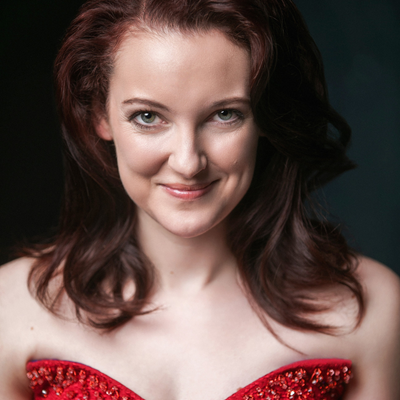
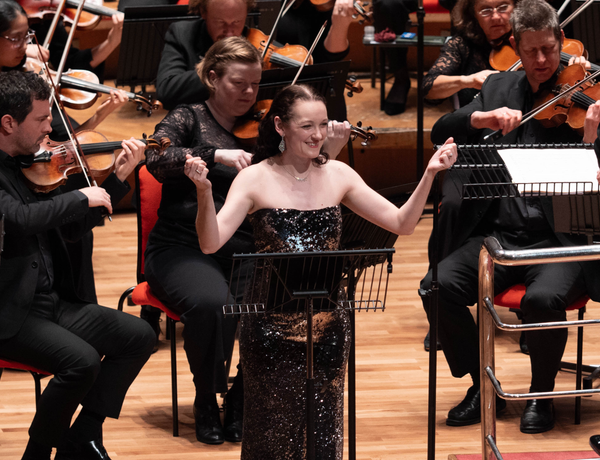
Jennifer France
Soprano
Introduction
I am incredibly excited to be making my debut with one of the finest orchestras in the world today, in a programme that feels perfectly aligned with who I am. This afternoon is all about sparkle, joy, and celebration – the perfect way to welcome the New Year together.
The repertoire we will be sharing with you is music I know deeply and love passionately. We open in true grandeur with Johann Strauss’ Die Fledermaus Overture, immediately setting the tone for the concert. It is a demanding piece for the orchestra, but above all, irresistibly fun to listen to. I’ve had the pleasure of working with Jennifer France, who once told me that listening to this energetic overture from the side of the stage helps her step into character – so let yourself be carried by its brilliant energy and see where it takes you.
One of my absolute favourites in tonight’s programme closes the first half: Christian Lumbye’s Kopenhagener Eisenbahn-Dampf-Galopp. This delightful piece takes us on a train journey, and I truly believe it might be one of the cutest pieces ever written. Close your eyes and listen carefully to the percussion – you will genuinely feel as though you’re onboard a steam railway train.
Another special moment comes with Strauss’ Amor. This piece is more often performed in a chamber music setting, so hearing it with a full symphony orchestra is something quite special. Take it as an invitation to pause, to breathe, and to let the music wash over you – simply enjoying the joy it brings.
Above all, I wish you a very Happy New Year. I try to live life fully, right up to the very last second of each year, so that when January 1st arrives, I feel ready for a brand-new adventure. I cannot imagine a more exciting way to begin 2026 than sharing this moment with you and this magnificent orchestra.
Nil Venditti
Conductor
Programme Notes
It simply wouldn’t be New Year without the music of Johann Strauss and friends! There’s something incredibly romantic and truly joyful about elegant waltzes, playful polkas and light-hearted operetta. So let the CBSO and Nil Venditti whirl you into a new year as we raise a glass to the start of another great year of music.
City of Dreams
Heaven, Vienna mine…
Laughter and music and stars that shine.
Wonderful city where I belong,
Of her I sing my song!
So sang the Austrian composer Rudolph Sieczynski in 1914 – but to be honest, Vienna back then was the city of everyone’s dreams: the heart of an empire that stretched from the Swiss Alps to the Ukrainian steppe, and from the forests of Bohemia to the blue Adriatic. Under Emperor Franz Joseph, its glittering dance halls and bustling coffee houses were where everyone in the Empire wanted to be. On the streets of Vienna you might meet Italians, Poles, Czechs and Hungarians; you’d see rabbis from Galicia, Bosnian Muslims, and Roma fiddlers from the mountains of Transylvania.
And across that vast empire, wherever the gold and black Habsburg double eagle flew, you could hear the music of Vienna – racy operettas, polkas that fizzed like champagne, and of course, those dreamy, endlessly seductive waltzes. When they called Johann Strauss II “the waltz king”, they weren’t joking. “Franz Joseph can reign only as long as Johann Strauss” quipped one Viennese wag, and as it turned out, he wasn’t far wrong.
So there’s no better way to get the party started than with Strauss’s operetta Die Fledermaus (1874). Take an Italian tenor, a Russian prince, a French maid and a (pretend) Hungarian countess - and just add champagne! The first notes of the overture even sound like three bottles popping open.
The story? It’s a Saturday night in Vienna in the early 1870s. Gabriel von Eisenstein is heading for an all-night part and by act two – as will sometimes happen after a glass of bubbly or five – Eisenstein has completely forgotten that he’s married. Passing himself off as the “Marquis Rénard”, he has eyes only for a masked but stunning young actress. And yet (he can’t help noticing) she does look uncannily like his wife’s maid Adèle. She’s outraged: the very idea! As she points out in the sparkling Mein Herr Marquis there’s only one possible response – to laugh!
No-one knew how to bring a smile to the face quite like Johann Strauss II. Early in 1868 he wrote a fiery quick polka called Sternschuppe (Shooting Star) for the annual ball of the Hesperus Association, a popular artists’ club. But its explosive percussion meant that quickly acquired a different nickname. Never one to contradict his public, Strauss published it later that year as Unter Donner und Blitz (Thunder and Lightning).
Friendly Rivals
Imitation is the sincerest form of flattery, and 600 miles north, in Copenhagen’s lively Tivoli pleasure gardens, they called Hans Christian Lumbye “the Strauss of the North”. Like his Viennese counterpart, he knew the value of a gimmick, and in his effervescent Champagne Galop (1845) it’s not hard to spot. Probably the best dance music in the world? It’s certainly as refreshing as a cool Carlsberg.
Two years later in 1847, Denmark’s first railway line opened between Copenhagen and Roskilde (its first steam locomotive, in true Nordic fashion, was christened Odin). This was still a strange and new technology - the London-Birmingham railway had opened only in 1838 - but Lumbye must have gone for a ride because his Copenhagen Steam Railway Galop gets the sounds (and sights) of a train ride through the Danish countryside spot-on. It’s one of the earliest musical portraits of a steam locomotive, and still one of the most charming.
Back in Vienna, Strauss’s orchestra was becoming a global sensation, so to share the load he brought his brothers into the firm. In the end, it would be little brother Eduard (“Edi”) who kept the flame burning into the 20th century, and with dances like the sparky quick polka Auf und davon! (Up and away!) (1871) he showed that he was no slouch at a catchy tune himself. The French composer Charles Gounod had a knack for an earworm too, and in his opera Roméo et Juliette (1867) he didn’t hesitate to make the young Juliet burst into a dizzy, show-stopping waltz: Je veux vivre (I want to live!). After all, audiences like to see their stars shine, and Gounod’s prima donna wasn’t going to let Shakespeare get in the way of her high notes!
But then, nothing could stop the onward whirl of the waltz, and Johann II had a limitless supply of lilting melodies. Rosen aus dem Suden (Roses from the South) began life in 1880 as a romantic number in an operetta with the playful title of The Queen’s Lace Handkerchief, but to a Viennese public who loved the Mediterranean (especially now the railway over the mountains to Trieste had opened), the new title evoked warm sun and luxurious pleasures. Ever the diplomat, Strauss dedicated it to the King of Italy.
Siblings and Superfans
Richard Strauss was no relation at all, but he wished he was, especially after he moved from his native Munich to work in Vienna. There’s definitely a touch of Viennese mischief about his song Amor (1918) – a sweet, naughty little musical portrait of baby Cupid going wild. But Josef (“Pepi”) Strauss certainly was a relation; in fact his older brother Johann II insisted that he was “the most talented of us all”. Josef was reluctant to join the family business - he had a good career as a civil engineer, and invented Vienna’s first street-sweeping machine. But genius will out: just listen to this delightful fast polka from 1868. Plapperlmäulchen means “Little Chatterbox”, and members of the Strauss family band quickly recognised it as a playful musical portrait of Josef’s ten-year old daughter Karoline.
Music was in the air in Vienna, and once in a generation it produced a miracle like Erich Wolfgang Korngold - one of the most astonishing child prodigies in musical history. He started composing at the age of seven, and when the Nazis forced him to flee in 1938, he found a new career in Hollywood. But he never forgot the Vienna he’d loved. In 1953, in Los Angeles, he thought back to his charmed boyhood and created Straussiana – a nostalgic medley of melodies by the Strauss family, sprinkled with Korngold’s special brand of orchestral stardust.
Yet Vienna kept dancing. When Johann Strauss died, his widow Adele passed his baton (literally) to the Hungarian-born Franz Lehár – who proceeded to take the world by storm in 1906 with the operetta The Merry Widow. His 1934 operetta Giuditta is a later, sadder tale: the story of a flame-haired beauty who breaks hearts across Italy and North Africa. Giuditta’s showstopping Meine Lippen sie küssen so heiss begins with a blaze of Latin passion, but before long she’s gliding into – what else? – the last of the great Viennese waltzes.
Still, there’s only one way to end a Viennese ball, and the Waltz King himself will always have the final word. “Sadly not by me” scribbled Brahms over the opening bars of Johann Strauss’s An der schönen blauen Donau (The Blue Danube). Incredibly, this most famous of all Viennese waltzes was a rare Strauss flop when it was first heard in 1867 – but make no mistake, this music can hold its head up beside Beethoven. Take those opening bars. With a hushed shimmer of violins and three simple notes on the horn Strauss creates pure magic. Feel the back of your neck tingle, and your toes begin to tap, and let the rhythm do the rest.
© Richard Bratby
Featured image © Jonathan Ferro