Britten's War Requiem

Full programme
- Britten, War Requiem (80mins)
Performers
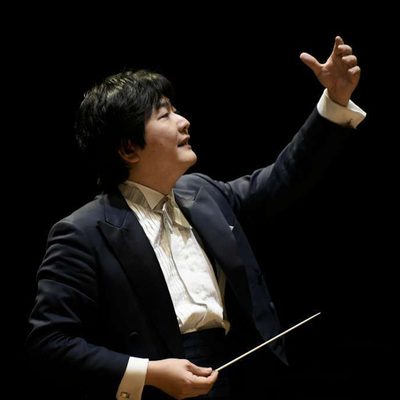
Kazuki Yamada
Conductor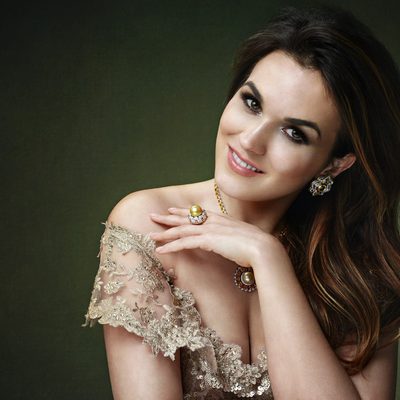
Olga Peretyatko
Soprano
Andrew Staples
Tenor
Christian Gerhaher
Baritone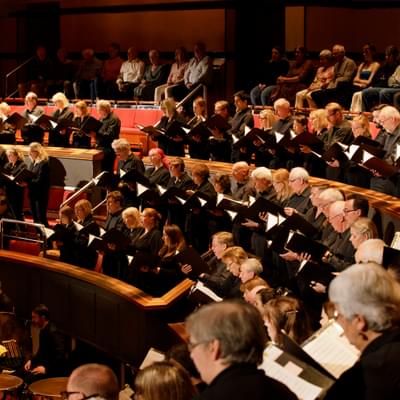
CBSO Chorus
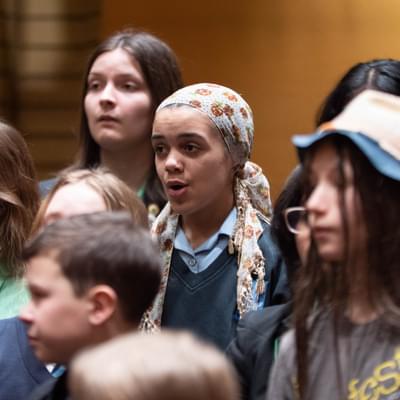
CBSO Youth Chorus

Trinity Boys Choir
Introduction
Britten’s very personal, very forceful response to a century of violence. Britten’s War Requiem is a profoundly moving, sometimes savage indictment of war. A lifelong pacifist, Britten aimed to articulate his horror and grief at the losses caused by two world wars. But he also hoped for some kind of unity. At the work’s premiere he deliberately chose soloists from countries that suffered in World War II: Germany, Russia, and Britain. The same nationalities are represented in this concert by three exceptional singers. Kazuki Yamada leads the huge forces required for this monumental piece: symphony orchestra, chamber orchestra, full choir, children’s choir, and solo singers, which all combine in the final bar – a plea for our shared humanity, and for peace. Fifty years after Britten’s death we still hope for the same.
Attended by HRH The Duke of Edinburgh KG KT GCVO.
This concert is generously supported by David and Sandra Burbidge.
Due to personal reasons, Irina Lungu is no longer able to sing in Britten’s War Requiem. We are grateful to Olga Peretyatko for taking her place in Coventry and in Europe.
Please note that texts for this performance are available within the digital concert guide PDF.
In conversation with Dr Lucy Walker: A historical insight into the CBSO, Coventry Cathedral and Britten’s War Requiem
Tonight’s performance signifies a moment in history. We visited Coventry Cathedral earlier this month to film with Dr Lucy Walker, who takes audiences on a historical journey to discover the origins of the piece.
Programme notes
War Requiem
Benjamin Britten (1913-1976)
Britten’s War Requiem is one of his most popular works. For such a large-scale piece, with its massed choirs and orchestras, it is performed with remarkable frequency – by both professional organisations and amateur choral societies - and in countries all over the world. The War Requiem’s popularity was, furthermore, instant. Described as a ‘masterpiece’ even before its premiere it was glowingly reviewed, and its recording the following year won two Grammy awards. But perhaps the word ‘popular’ should be replaced by ‘needed’, for the War Requiem appears to offer its listeners considerably more than a musical experience. It has a simple and direct pacifist message, yet also embodies a complex act of commemoration. It is both a memorial, and a warning.
The War Requiem was not Britten’s first pacifist work. He had joined the Peace Pledge Union in the 1930s, was a conscientious objector during World War II, and became a regular contributor to CND. Along with clearly pacifist works such as 1937’s Pacifist March, his collaborations with the poet WH Auden mingled satire with disquieting warnings of encroaching fascism (such as 1936’s Our Hunting Fathers). His Sinfonia da Requiem (1940) combined a tribute to his late parents with savage depictions of the violence of warfare; as Britten remarked to The New York Sun ‘I’m making it just as anti-war as possible.’ After the end the war, Britten wrote little with such a direct ‘anti-war’ message, although many of his operas contain at least a sub-text concerned with violence and the innocent victims of it. The War Requiem was his most direct, most personal and most urgent pacifist statement, composed sixteen years after the end of World War II, dedicated to friends who had died as a consequence of it, and in the middle of a very different, very cold war. It premiered five months before the Cuban Missile Crisis.
At the same time, The War Requiem is very specifically concerned with World War I, and is one of a remarkable number of artistic works written to remember – to memorialise – the so-called ‘Great War’ of 1914-18. Even more than 100 years after the conflict, there seems no sign of such memorials disappearing. Relatively recent films include Sam Mendes’ 1917, shot entirely from the point of (horrific) view of one soldier. Peter Jacksons’ extraordinary documentary They Shall Not Grow Old, with its 100-year old footage slowed down and colourised to look as if it had been shot yesterday, is an astonishing expression of empathy. Britten’s piece, in some ways, had a similar aim: to look back in time, and to bear witness to the actual events. Within the relatively formal structure of a large-scale, classical choral work, War Requiem pays solemn tribute to those who died in conflict and represents the fighters’ voices: it speaks from the heat of action.
The commission for the War Requiem came from Coventry Cathedral to mark the construction of its new building, the old cathedral having been bombed in a raid in November 1940. The episcopacy at Coventry Cathedral immediately vowed to rebuild; and, perhaps surprisingly, aspired to the spirit of reconciliation, rather than retribution. The bombed cathedral’s ruins remained in place, with the words ‘Father Forgive’ above its former altar. The architect of the new building, Basil Spence, insisted that the reminder of war’s devastation not be swept away but welcomed into the new era, and into the physical space of his modern design.
Britten had something similar in mind. The traditional text of the Requiem Mass is interspersed with Owen’s poetry; or, as Jeremy Eichler has put it, Britten ‘deploy[s] Owen’s verse like small detonations placed perfectly at key fulcrum points in the requiem text’. Britten wrote the words in an old exercise book from his schooldays, dated 1928 (German grammar, as it happens), drawing arrows between the sections to show how they would fit together. This mingling of past and present is further reflected in the musical construction. It is unquestionably a requiem in the grand tradition – full choir, full orchestra, soprano soloist – nodding to the many requiems from musical history, from Mozart to Fauré and, especially, to Verdi.
This grand, ‘Mass style’ is intercut with a kind of reportage from the midst of battle: two male soloists sing Owen’s poetry, accompanied by a smaller orchestra. These sections are, arguably, in Britten’s more customary idiom. The instrumental writing is spare and distinctive, occasionally spiky; the vocal style ranges from heart-rending lyricism to a biting, angry delivery of the text. The soloists each take the spotlight in solos throughout the work, but at other times share the lines of Owen’s verse, as if each poem is a mini dramatic scene. They resemble two comrades in the ‘Dies Irae’; share disgust with the ‘old man’ in a savagely satirical retelling of the ‘Abraham and Isaac’ story in the ‘Offertorium; and, devastatingly, one witnesses the death of the other in the ‘Libera Me’: ‘I am the enemy you killed, my friend.’ Above all this an ethereal children’s choir hovers, evoking a childlike state, not yet corrupted by war.
Britten deploys a further musical ‘detonation’ throughout the War Requiem which, in one sense, unites the movements and the diverse levels of activity, yet it is also defined by its non-unifying quality. This is a two-note chord of C and F#, an augmented fourth, historically known as the ‘diabola in musica’ (the devil in music). It is a musical interval which cries out to be ‘resolved’, or completed; in the War Requiem, this angular interval offers no such easy ‘resolution’. Its presence infuses the opening choral utterances in the ‘Kyrie,’ the choir for the most part unable to move away from either C or F#, and the interval is further intoned on the bells. It makes frequent appearances throughout the whole piece, posing questions rather than offering easy answers. Even at the end, where the entire ensemble is heard together for the first time, their combined attempts to conclude are frequently interrupted by the bells and the ‘diabolical’ interval: an effect, as Mervyn Cooke puts it, that is ‘profoundly unsettling’.
The premiere took place in the new Coventry Cathedral on 30 May 1962 as part of a three-week festival to mark the rededication of the cathedral. The soloists included the British tenor Peter Pears and German baritone Dietrich Fischer-Dieskau. A review in The Coventry Standard after the first performance was struck by Fischer-Dieskau’s appearance in this work, remarking that his ‘heartfelt rendering of these English war poems…was all the more meaningful when one reflected that Coventry Cathedral had been destroyed by his own air force.’ Fischer-Dieskau himself later reported that he found himself ‘completely undone’ at the end of the work, adding ‘I did not know where to hide my face. Dead friends and past suffering arose in my mind’. The choice of nations was, of course, hardly a coincidence. Britten had also wanted the Russian Galina Vishnevskaya as sopranos soloist, thus representing three countries involved in World War II. In a reminder of the politically charged times, she was forbidden to take part by the Russian Minister of Culture Ekaterina Furtseva (though she was allowed to sing on the Decca recording). The critics raved (‘I am at a loss to know how to praise the greatness of this piece of music’, wrote Peter Shaffer). And Britten, often so self-critical, remarked that it was his ‘most important’ work. He would doubtless be gratified that over sixty years later his powerful act of remembrance is still being performed. Yet he would surely be horrified that its message still has such relevance.
Programme notes by Lucy Walker.
Biographies
Kazuki Yamada, Conductor
Kazuki Yamada is Music Director of the City of Birmingham Symphony Orchestra (CBSO), Chief Conductor and Artistic Director of Deutsches Symphonie-Orchester Berlin (DSO), and Artistic Director of the Music Division at Tokyo Metropolitan Theatre. He previously served as Artistic and Music Director of the Orchestre Philharmonique de Monte-Carlo (OPMC) for ten years.
His time studying with Seiji Ozawa underlines the importance of Yamada’s distinctive “Japanese feeling” for music. Born in Kanagawa, Japan, he continues to work and perform in Japan
every season.
In the 2026/27 season, Yamada returns to the BBC Proms with the CBSO, followed by a European tour featuring Britten’s War Requiem. He begins his tenure with the DSO and makes debuts with Symphonieorchester des Bayerischen Rundfunks and the Koninklijk Concertgebouworkest. Other engagements include returns to the Boston and Chicago Symphony Orchestras, The Cleveland Orchestra, BBC Symphony Orchestra, Orchestre Philharmonique de Radio France, Orchestre National du Capitole de Toulouse and Swedish Radio Symphony Orchestra.
Yamada appears annually at the Seiji Ozawa International Academy Switzerland and supports the CBSO’s outreach programme. He gained international recognition after winning first prize at the 51st International Besançon Competition for Young Conductors in 2009.
Olga Peretyatko, Soprano
Olga Peretyatko is one of the world’s most sought-after sopranos. She achieved her international breakthrough in 2007 when she won second prize at Plácido Domingo’s Operalia Competition. Since then, she has appeared at leading opera houses including the Metropolitan Opera, Covent Garden, La Scala, the Vienna State Opera, the Berlin State Opera, Teatro Real Madrid, the Gran Teatre del Liceu Barcelona, and the Opéra Bastille Paris, as well as at renowned festivals in Salzburg, Baden-Baden, Aix-en-Provence, and Pesaro. In 2025, she was awarded the European Culture Prize in recognition of her outstanding artistic achievements.
The 2026/27 season sees Olga Peretyatko return to La Scala as Leïla in Bizet’s Les Pêcheurs de perles. At the Deutsche Oper Berlin, she appears as Donna Anna in Mozart’s Don Giovanni, and sings Violetta (La traviata) at the Korea National Opera (KNO) in Seoul — a role she also performs in a concert version at the Philharmonie de Paris with Le Cercle de l’Harmonie under Jérémie Rhorer. Further highlights include Orff’s Carmina Burana with the Essener Philharmoniker and a solo recital at Zurich Opera House.
Andrew Staples, Tenor
Andrew Staples is one of today’s most versatile artists, combining an international career as an opera and concert singer with acclaimed work as a film and stage director and photographer.
As a distinguished tenor, Staples has collaborated with many of the world’s leading conductors and appeared with orchestras such as the Berlin Philharmonic, Vienna Philharmonic, Cleveland Orchestra, London Symphony Orchestra, Royal Concertgebouw Orchestra, New York Philharmonic, Los Angeles Philharmonic, Bavarian Radio Symphony Orchestra, Philadelphia Orchestra and Mahler Chamber Orchestra. Recent performances have included Florestan in Fidelio with the Los Angeles Philharmonic under Gustavo Dudamel and Bacchus in Ariadne auf Naxos with the Budapest Festival Orchestra and Iván Fischer.
Alongside his performing career, Staples has established an acclaimed practice as a film and stage director. His filmmaking includes collaborations with Platoon (Apple), Stage+, MarqueeTV, ARTE, Medici TV, Voces8 and Alice Sara Ott. His film of John Field’s Complete Nocturnes won the 2025 OPUS KLASSIK Award for Audiovisual Music Production of the Year.
Christian Gerhaher, Baritone
Christian Gerhaher is widely regarded as one of the leading baritones of his generation and is internationally acclaimed as one of today’s foremost interpreters of the German Lied. He studied at the University of Music and Performing Arts Munich with Paul Kuën, Raimund Grumbach and Friedemann Berger. For more than three decades, he and pianist Gerold Huber have formed one of the world’s leading Lied partnerships.
As a concert and opera singer, Gerhaher regularly collaborates with renowned orchestras and conductors, including the Berliner Philharmoniker, the Royal Concertgebouw Orchestra, Sir Simon Rattle, Kirill Petrenko and Daniel Harding. His signature operatic roles include Amfortas (Parsifal), Wolfram (Tannhäuser), Wozzeck, Wotan in Wagners Das Rheingold and Simon Boccanegra. His artistic achievements have been recognised with numerous awards, including the Laurence Olivier Award and the German theatre prize Der Faust.
An exclusive Sony Classical artist, Christian Gerhaher has released numerous award-winning recordings, including acclaimed recordings of Schubert, Schumann and Mahler’s song repertoire. In 2025, his album of selected Brahms songs received the OPUS KLASSIK Award. Christian Gerhaher lives in Munich with his family.
Meet the CBSO
Violin I
Jonathan Martindale*
Andrew Harvey
Nathan Bomans*
Richard Thomas*
Bethan Allmand*
Vera Beumer
Victoria Farrell-Reed*
Cathy Chambers
Kath Gittings
Wendy Quirk
Victoria Gill
Gaia Ramsdell
Henry Salmon
Becky Kao
Violin II
Moritz Pfister#
Amy Jones#
Jennifer Christie
Georgia Hannant*#
Tam Mott
Chelsea Sharpe *
Bryony Morrison*#
Yuriko Matsuda*
Tim Birchall*#
Gabriel Dyker*#
Beatriz Carbonell
Adam Hill
Viola
Adam Römer*#
David BaMaung*#
Michael Jenkinson#
Jessica Tickle*#
Amy Thomas*#
Isobel Doncaster*
Matt Johnstone
Hannah Roberts
Mabon Rhyd
Henri Ridgeon
Cello
Arthur Boutillier
Kate Setterfield*#
Miguel Fernandes*#
Catherine Ardagh-Walter*#
Helen Edgar*#
Kanon Shibata (ROHM)
Philippa Schofield
Lavinnia Rae
Double Bass
Julian Atkinson*#
Jeremy Watt*#
Julian Walters*#
Mark Goodchild#
Daniel Vassallo*
Maitiú Gaffney
Flute
Ahran Kim
Japheth Law
Piccolo
Helen Benson
Oboe
Hyun Jung Song*
Ruth Contractor
Cor Anglais
Rachael Pankhurst*#
Clarinets
Joanna Patton*#
Jill Allan
Bass Clarinet
Mark O’Brien#
Bassoon
Tony Liu
Elena Comelli
Contrabassoon
Margaret Cookhorn*#
Horn
Tim Thorpe
Neil Shewan
Mark Phillips*#
Jeremy Bushell*#
Martin Wright#
Jack Sewter
Alex Harris
Trumpet
Jon Holland
Gideon Brooks
Tim Barber
Jonathan Quirk
Trombone
Richard Watkin#
Ryan Hume
Bass Trombone
David Vines*#
Tuba
Daniel Trodden*
Timpani
Matthew Hardy*#
Percussion
Jake Brown
Andrew Herbert#
Helen Edordu
Iris van den Bos-Henshaw
Jonathan Phillips
John Melbourne
Keyboard
James Keefe
Julian Wilkins
Chamber Orchestra
Flute
Marie-Christine Zupancic*#
Oboe
Emmet Byrne*#
Clarinet
Oliver Janes*#
Bassoon
Nikolaj Henriques*#
Horn
Elspeth Dutch*#
Percussion
Toby Kearney*#
Harp
Katherine Thomas*#
Violin I
Eugene Tzikindelean*#
Violin II
Lowri Porter*
Viola
Chris Yates*#
Cello
Sasho Somov
Double Bass
Anthony Alcock*#
# Recipient of the CBSO Long Service Award / * Supported player
Meet the CBSO Chorus
Soprano
Laura Bailie
Priti Bansel-Branch*
Lisa Bate
Sally Bateman*
Rachael Baylis*
Sarah Beedle*
Rachel Bowden
Di Charles***
Isabel Clarke
Teala Dearden
Kate Dodds
Isobel Edgar***
Catherine Foster***
Catherine Gardom
Elizabeth Haines
Emma Hall
Prue Hawthorne****
Anna Higgins
Anna Hodgkinson*
Robyn Jennings***
Catherine Lander*
Stephanie Lau
Alexandra Lewis*
Jieyi Li
Gillian Machin**
Eluned Mansell*
Catherine Mason**
Fiona Mellor
Janet Michalowski
Melissa Morris
Ros Mortimore
Alison Needham
Clare Noakes*
Sarah Padmore
Emily Pinching
Nicole Plowman
Saffron Pougher
Sarah Russell****
Jennifer Scholes***
Marion Scholey****
Jean Scott****
Martha Skerry
Trish Slezak
Helen Smallwood***
Wendy Spinner**
Sarah Tambling
Claire Tilling
Helen Tunnicliffe
Karen Wilson-de-Roze
Elizabeth Yeats
Fiona Zong
Alto
Johanna Ahrberg-Jackson
Christine Chadwick***
Helen Chamberlain**
Louise Davis
Rebekka Dickinson
Catherine Duke***
Sarah Ennis****
Lowri Evans
Gill Fletcher*
Sylvia Fox****
Judy Frodsham****
Naomi Goldsworthy-Linnell
Rosalind Hobson
Hazel Hughes*****
Isabel Jaquet
Hannah Komedera
Eva Landsberg
Susan Lawrence
Val Lewis*
Joan Lilburn
Wendy McGregor
Josephine Mesa Bandrés***
Moyra Morton*
Natalie Page
Anna Parker*
Elizabeth Parkin**
Bethany Piper
Amy Reddington
Jan Sterling
Diane Todd****
Sarah Trinder***
Belinda Wadsworth
Hannah Watson*
Rosemary Watts**
Rachel Wilks
Jeanette Wong
Toni Wright***
Alison York***
Tenor
Matthew Allison
Charles Barwell*
Chris ColeBryan
Benedict Coleman
Richard Cook
David Fletcher*
Paul Glossop***
David Gregory
Tom Ho
Peter Holmes
Guy Johnson
Derrick Jones
David Lewis
Robin Lewis**
Andrew Mein
Allen Roberts*
Harpreet Sandhu*
Hugh Thomson**
Luke Turnbull
Jonathan Winfield
Tony Yip
David Young**
Bass
Steve Ash
Lawrence Bacon****
Isaac Boothman
Tom Considine*
Rich Cowley
Dominic Danks
Julian Davey
Dom Edgar
Steve Gibbs***
Andrew Halstead*
Mike Hartley**
Tom Hazell
Harry Hextall
Hugh Houghton**
Damon Huber
John Keast***
Peter Leppard
Fraser Lewis
Phillip Matty
Chris O’Grady**
Andrew Packer****
Neil Parker
Tom Parker*
Andrew Parker**
Charles Potts
Phil Rawle*****
Calum Robarts**
Ben Smallwood
Gordon Thornett
Alan White
Tony Whitehouse*
Meet the CBSO Youth Chorus
Hannah Barnett
Esmee Behr
Romie Bibbey
Svara Bodhanker
Lillian Bridgewater
Gertrude Browning
Annabelle Carmichael
Grace Crawford
Tayesha David
Tara Davies
Holly Delaney-Waugh
Anuva Doger
Siu Yuet Du
Jasmine Fearon
Emilia Fox
Muskaan Gautam
Maia Goold
Coral Hemsoll
Neve Kennedy
Nina Kola
Aapti Krovvidi Venkata
Kristina Kulikova
Roseanna Lewis
Maggie Liang
Grace Low
Alice Low
Sarai Martin
Mariam Metreveli
Amara Narendran
Anna O’Hara-Green
Penelope O’Neill
Hajrah Rafiq
Ava Rajp
Aria Rattan
Lauren Roberts
Davica Roles
Alex Rupeika
Charlie Serban
Heera Swaminathan
Maddy Sykes
Phoebe Thomas
Deren Ugurlu
Pariya Vaziri
Amelia Wright
Zoe Yang
Trinity Boys Choir
Chika Achi
William Bennett
Alex Bradburn
Luke Burton
Tom Day
Oliver Griffith
Dylan Lockwood
Michael Mulroy
Kai Palmer
Henry Pettitt
Alex Pick
Daniel Pickles
Shashank Raghavendran
Jasper Seppala
Glenn Tong
Aarush Vakeesan
Ben Wrigh
Get closer to the music with a CBSO membership
As a CBSO Member, you’ll enjoy unforgettable experiences while helping us continue to make music that truly matters.
From as little as £5.50 a month, you can join our thriving community of music lovers, enjoy great benefits, and play your part in securing a vibrant future for orchestral music here in Birmingham.
All members have the chance to sit in on rehearsals, to meet musicians at our afternoon teas and other special events, and to receive behind-the-scenes news, as well as priority booking before concerts go on sale to the general public. Additionally, you can now opt-in a second member, from any address in the UK, entitling them to enjoy benefits with you.
For more information on how to join as a member or to support our work by making a donation, visit cbso.co.uk/support-us or call us on 0121 616 6510.
You might also like...
If you enjoyed today’s performance, why not continue the journey? Here are three concerts we think you’ll love, chosen for their connection to the music, themes or composers featured in today’s programme.
CBSO Choral Christmas
Friday 18 December 2026, 7:30pm
Symphony Hall, Birmingham
What could be more festive than a stage packed with musicians and choirs at Christmas? Sit back and enjoy glorious music with the CBSO Chorus, Youth Chorus, Children’s Chorus and CBSO SO Vocal.
Mendelssohn’s Violin Concerto
Wednesday 20 January 2027, 7pm
Symphony Hall, Birmingham
An exuberant Ballade, a ‘jewel’ of a Concerto – and a Symphony
of liberation. This programme is like musical dopamine, from
boisterous start to exhilarating finish, steered by the thoroughly
talented Thomas Søndergård.
Kazuki conducts Beethoven’s Eroica
Wednesday 17 February 2027, 2:15pm
Symphony Hall, Birmingham
An unmissable opportunity to hear one of music’s most fearless and inventive composers through a complete cycle of his symphonies. Kazuki Yamada and the CBSO begin at the very beginning with the first three.
Featured image © Garry Jones