Brahms’ German Requiem
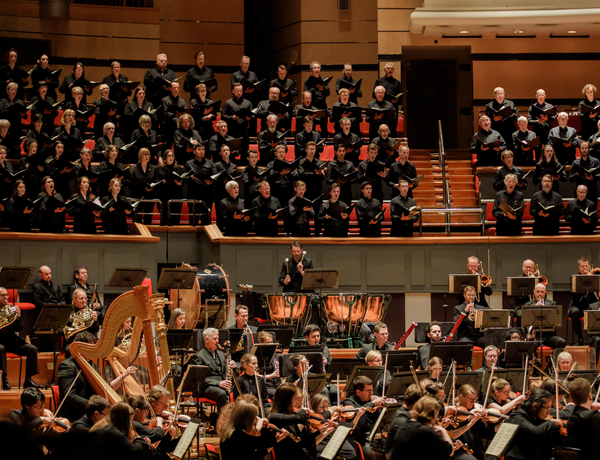
Full programme
- Purcell, Funeral Music For Queen Mary (10mins)
- Brahms, German Requiem (68mins)
Performers
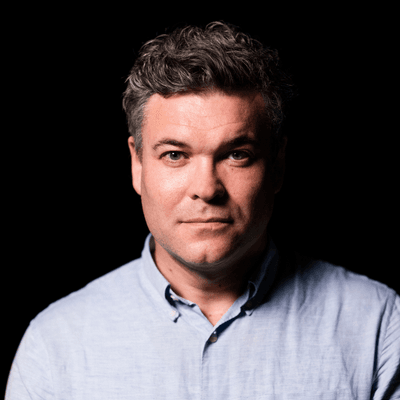
Ryan Wigglesworth
Conductor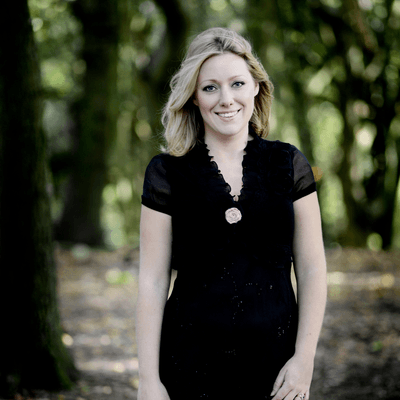
Sophie Bevan
Soprano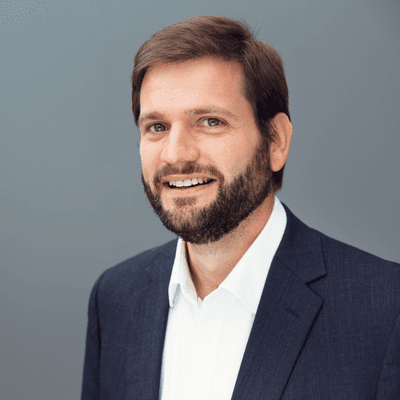
Gareth Brynmor John
Baritone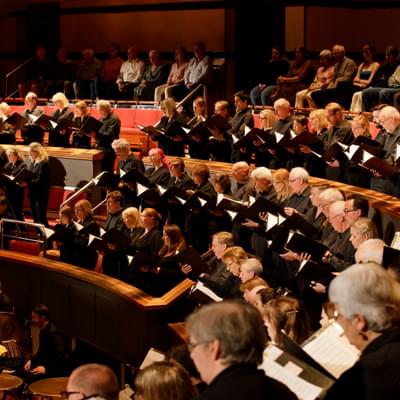
CBSO Chorus
Introduction
Welcome to Symphony Hall for a special evening of remembrance, reflection and consolation.
I remember vividly the first Brahms Requiem I was asked to sing. It was during my first year of undergraduate study at the Royal College of Music and I was in hospital suffering from a very painful condition that the doctors were struggling to diagnose. While this was going on I heard from the RCM that I’d been invited to be the soloist in a performance of the Requiem at the nearby Imperial College. Against all advice I decided from my hospital bed that, even though I could barely walk, I must do it! This performance turned out to be the beginning of a life-long love affair with the piece.
Although the soprano soloist has little to do in Brahms’ grand scheme, standing up to sing Ihr habt nun Traurigkeit is a daunting prospect. The phrases are long, and places to breathe are few and far between. Going back to that student performance I remember that when I started to sing the pain gradually ebbed away. I knew for sure that, somehow, this wonderful music was helping me to recover.
I also remember how moved I was singing these words from Isaiah – “As one whom his mother comforteth, so will I comfort you” – with my own mother in the audience. In more recent performances, and since the birth of my own children, that resonance has only deepened further.
Continuing the family theme, I should say, finally, what a joy it is to be sharing the stage tonight with my youngest sister who is singing soprano in the amazing CBSO Chorus! And let’s face it, the chorus is the star of tonight’s performance.
Sophie Bevan
Soprano
Programme notes
This programme offers the chance to reflect on love, loss and the passing of time. Conductor Ryan Wigglesworth is joined by soprano Sophie Bevan and baritone Gareth Brynmore John to perform two beautifully meditative choral works. Purcell’s dignified and sombre piece was written for the funeral service of Queen Mary, wife of William III, in 1695. Brahms’ German Requiem, composed in the 1860s, was composed in memory of loved ones, but its message of consolation is universal.
Funeral Music for Queen Mary
Henry Purcell (1659-1695)
When, in December 1694, the 32-year old Queen Mary discovered a rash in her arms, the court physicians initially diagnosed it as measles. By the time the doctors realised their mistake, it was already too late; the Queen had smallpox, of the most virulent strain, and she died at Kensington Palace on 28th December.
The winter of 1694-5 was punishingly cold and Mary’s funeral was postponed until 5 March. The Queen had requested a simple service, but there was never much chance of that. “The crowd was inconceivable” wrote a French eye-witness. “Never has there been a more solemn or majestic ceremony”. Both houses of Parliament attended, and the funeral procession was extended to include representatives of all classes of society.
As organist of Westminster Abbey, it fell to Henry Purcell to direct the music, and he seems to have taken the task intensely personally. As well as using funeral music by the Tudor composer Thomas Morley, he composed a solemn march (for four “flatt, mournfull trumpets”), a canzona, and an anthem. It made a deep impression: years later, one attendee, the composer Thomas Tudway, asked fellow witnesses “whether they heard anything so rapturously fine, so solemn, and so heavenly in operation, which drew tears from all; and yet a plain natural composition”. That it should be played just eight months later at Purcell’s own funeral seemed entirely fitting.
Ein deutsches Requiem (A German Requiem)
Johannes Brahms (1833-1897)
Johannes Brahms grew up in poverty in a Hamburg slum. Yet to the end of his life he was devoted to the memory of his parents - his patient and sensitive mother Christiane, and his estranged, horn-playing father Johann Jakob – and was adamant that his upbringing had been deeply loving. When the 76-year old Christiane suffered a stroke in January 1865, Brahms rushed from Vienna to Hamburg to be with her, but he arrived too late. Soon afterwards, back in Vienna, his friend Josef Gansbacher arrived unannounced at his apartment and found the usually reserved composer at the piano playing Bach, alone, with tears pouring down his face.
Two months later, in April 1865, Brahms sent his closest friend Clara Schumann two new pieces for chorus: Blessed are they that mourn and For all flesh is as grass. “I compiled the text myself from the Bible” he said, explaining that they would be part of what he called a “German Requiem”: a piece in memory of the dead, set to the words of Martin Luther. “You could appreciate a German text just as much as the traditional Latin one, couldn’t you?” he asked. “I hope that the whole thing will make sense, and that I have the courage and determination to see it through”. He did: that summer, in rented rooms amid the pine forests of Baden-Baden he continued to work on the Requiem. “We all think he wrote it in her [his mother’s] memory, though he has never expressly said so” said Clara to a friend, some years later.
The German Requiem was premiered in the cathedral in Bremen on Good Friday (10 April) 1868 and immediately sealed Brahms’s status as one of the foremost German composers of his generation. Its depth, sincerity and scale seemed remarkable from a 34-year old composer; but there’s a still more remarkable truth behind this profoundly spiritual work. The cathedral organist, Karl Reinthaler, admired the way Brahms had chosen his own words but was startled that the Requiem made no reference to Christ. He hadn’t realised that Brahms was an agnostic. “As regards the work’s title, I would gladly have left out the word ‘German’ and substituted ‘Human’ instead” Brahms explained.
So what we have is a sacred work designed not to communicate with an afterlife in which Brahms had no belief, but to offer comfort to those left behind. The very first lines – “Blessed are they that mourn” – explain the purpose of the whole piece. Naturally, Brahms turned to the words of spiritual consolation that he had known since boyhood (just as non-believers anywhere can find solace in hymns and prayers), and his own music echoed the style and pace of the music that had accompanied them – which in 19th century Hamburg, meant Bach. In 1868 Reinthaler got around his theological objections by inserting I Know that My Redeemer Liveth from Handel’s Messiah into the middle of the performance, and a few years later Brahms added a further movement to the Requiem (placed fifth) – a soprano aria of consolation, ending with the words “I will console you, as a mother would console you”. That particular choice of text hardly needs comment.
The German Requiem is the single largest work that Brahms ever wrote, and many things about it are unlike anything else in his music – from the subtle, rich-hued orchestration with its organ, harp and solemn trombones, to its deeply sincere engagement with sacred texts. Brahms’s friend Dvořák – a devout Catholic, and a kindly and loving father – was distressed by Brahms’s lack of conventional religious faith: “Such a man, such a great soul, and he believes in nothing - he believes in nothing!” But you only have to listen to the German Requiem – its seriousness, its beauty and its profound compassion - to realise that whatever Brahms might or might not have believed, it wasn’t nothing.
I. Selig sind, die da Leid tragen (Blessed are they that mourn)
Over a quiet steady pulse (slowly marching mourners – or perhaps a heartbeat), the chorus quietly intones the Requiem’s central tenet: Blessed are they that mourn, for they shall be comforted. The music grows in confidence and intensity, before falling gently back into quietness.
II. Denn alles Fleisch es ist wie Gras (For all flesh is as grass)
A halting funeral march, with muted strings and quiet drums, gradually accelerates into a shout of hope.
III. Herr, lehre doch mich (Lord, teach me)
The baritone soloist confronts the truth of mortality, and the chorus joins in: culminating in a bold fugal affirmation (fugue is a powerful musical means of creating order out of uncertainty) that the dead do not suffer.
IV. Wie lieblich sind deine Wohnungen (How lovely are thy dwelling places)
The Requiem’s tender heart: a serene choral intermezzo, in the sweetly-flowing rhythm of a waltz.
V. Ihr habt nun Traurigkeit (You now have sorrow)
Gentle violins and gently blossoming woodwinds accompany the soprano solo as she promises an end to suffering and an ultimate reunion, in Brahms’s equivalent of one of Bach’s great sacred arias. The chorus swells with quiet hope, and the final words reflect, in deep peace, on a mother’s consoling love.
VI. Denn wir haben hie keine bleibende Statt (For here we have no abiding place)
Everything must pass. The chorus’s hushed reflections unleash some of the Requiem’s stormiest and most dramatic music, before gathering into a massive cry of trumpet-topped triumph.
VII. Selig sind die Toten, die in dem Herrn sterben (Blessed are the dead, who die in the Lord)
The music echoes the Requiem’s opening, at first in glowing warmth, then gradually, luminously falling away towards quietness as the words reflect the truth that the good we do endures. There’s no final Amen but a harp ripples upwards over the word selig (blessed) as the light fades.
© Richard Bratby
CBSO Remembers
At tonight’s concert, we remember and celebrate those we have lost throughout the last year, including dear friends, members, and colleagues from across the industry.
We want to make the CBSO Remembers an annual tradition, hosted around this time each year. If you wish to include anyone on the dedication list, please contact marketing@cbso.co.uk
Mr Eric Adams
Mrs Lorna Archer
Mr Peter Arculus
Trevor Baker
Mr Peter G Battye
Mrs Alma Beattie
Mr Peter C Bennett
Mr Robert W Brooke
Mrs Susan Capener
Dr Anthony Cook
Mr John Wilfred Cook
Mrs Jane Cornall
Ms Maureen Cullen
Dr Jacqueline L Dilkes
Maureen Margaret Dorsett
Mr Edward G Froggatt
Mr Richard J Furlong
Mr Maurice George
Cecily Hake
Mr William L. Hales
Beryl Haughton
Edward Humphries
Dorothy Kirkman
Helen Lewis
Michael Norman Lloyd OBE
Mrs Pam MacLennan
Mr Peter McGann
Mr Arthur Dudley McGill
Mr Maurice Millward
John Frederick Moreton
Mr Frank North
Mr Joseph W Page
Mrs Amanda and
Mr Dennis Parkyn
Mr Timothy J Pendlebury
Mr Philip Pool
Eugene Popescu
Mrs Barbara Shaw
Mr Patrick Shields
Mrs Barbara Shields
Alan Stevenson
Mr Nigel Wilkins
Mrs Sybil Williams
Featured image © Andrew Fox