Puccini's Tosca
Full programme
- Puccini, Tosca (121mins)
Performers
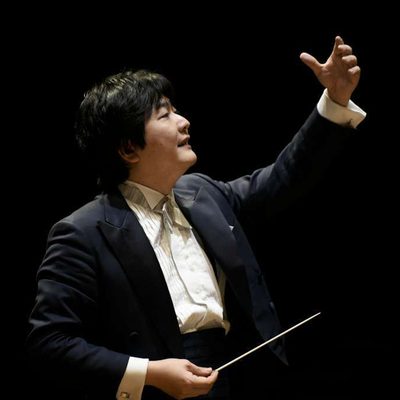
Kazuki Yamada
Conductor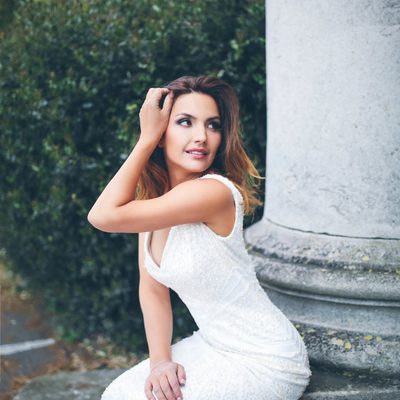
Anna Patalong
Soprano, Tosca
Gwyn Hughes Jones
Tenor, Cavaradossi
Ross Ramgobin
Baritone, Sacristan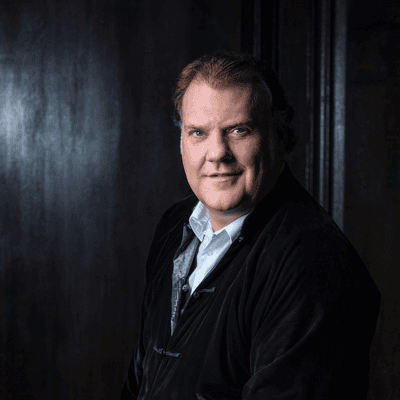
Sir Bryn Terfel
Baritone, Scarpia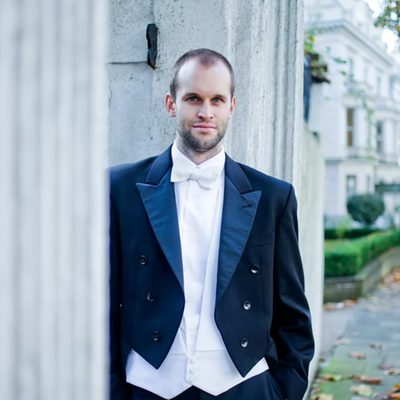
Ashley Riches
Bass, Angelotti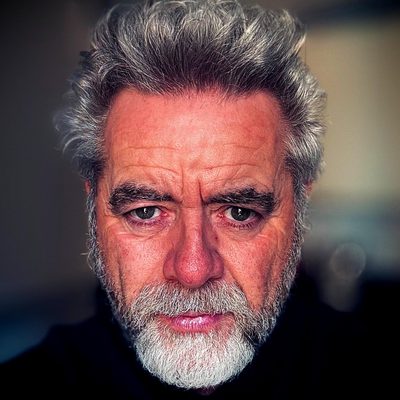
Aled Hall
Tenor, Spoletta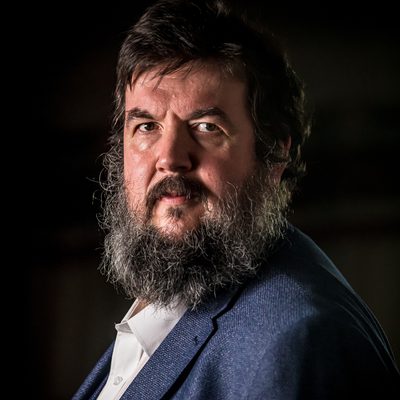
Sion Goronwy
Bass, Sciarrone
CBSO Youth Chorus
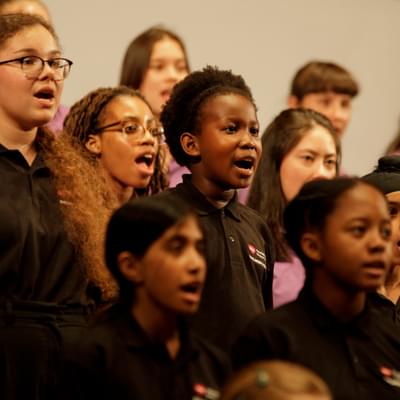
CBSO Children's Chorus
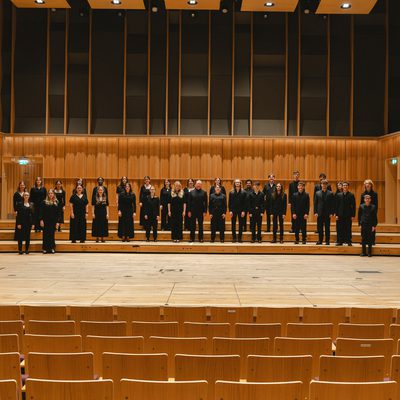
Royal Birmingham Conservatoire Chamber Choir

James Bonas
Director
Howard Hudson
Lighting Designer
William Swinnerton
Jailer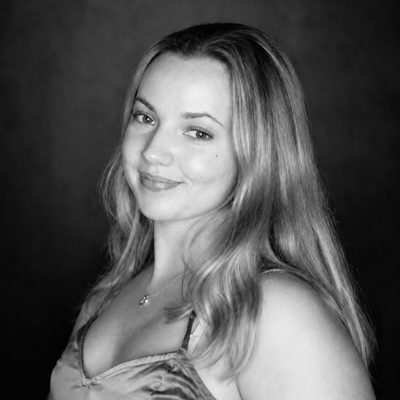
Evelyn Byford
Shepherd
Introduction
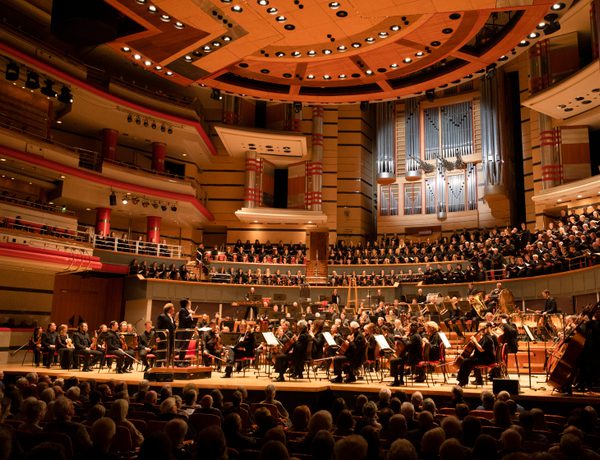
We welcome you all to a very special evening – the CBSO is renowned for its opera performances, and tonight’s concert performance of Puccini’s Tosca is bound to be no different. It will be a night to remember and made possible by all the incredible people at the CBSO who work behind the scenes to make this sort of evening possible.
We have put together an incredible array of soloists for you, some of whom I was lucky enough to work with for many years in a previous life when I was a member of the Welsh National Opera orchestra. They include two Welsh stars, the larger-than-life legend Sir Bryn Terfel and the extraordinary tenor that is Gwyn Hughes Jones. We are also excited to have Anna Patalong with us and grateful to her for stepping into Tosca’s shoes tonight.
If that wasn’t enough already, we have the acclaimed director James Bonas to stage tonight’s performance, and Howard Hudson to light our way. Then there’s the acclaimed CBSO Children’s and Youth Choruses, and it’s all brought together and led by our own Music Director, Kazuki Yamada, who has a soft spot for Puccini. Many of you will remember his Madam Butterfly two years ago in this very hall.
Tosca has always held a special place in my own musical life – it was the first Puccini opera I ever played, and whilst I’ve been lucky enough to play it over a hundred times with many different casts, it’s always as moving and powerfully emotional to experience.
Everyone who loves Tosca has their own favourite moment and if it’s your first time experiencing this amazing opera tonight, I’m sure you’ll find your own. For myself, the end of Act 1, Te Deum, is a personal favourite of mine. There’s something spine-tingling about everyone playing their socks off whilst church bells ring and Scarpia plots to ruin Tosca and Cavaradossi’s happiness. Powerful stuff.
Lowri Porter
Section Leader Second Violin
Programme notes
You’re in Rome. It’s 1800. The city is in chaos. The Chief of Police is corrupt, and nobody can be trusted. Tosca and her lover Cavaradossi dream of a life of art and beauty away from violence and horror, but get inexorably drawn in. Murder and mayhem ensues. The end. Puccini’s opera, composed over 100 years ago, still has the power to shock and move you to tears with its forceful and electrifying score. The CBSO’s own Kazuki Yamada leads the orchestra and an incredible roster of soloists including Anna Patalong, Sir Bryn Terfel and Gwyn Hughes Jones. We're thrilled to be working with a marvellous creative team consisting of renowned theatre director James Bonas and talented lighting designer Howard Hudson on the staging of this theatrical concert performance. Prepare to be enthralled.
The Cinematic Allure of Tosca
James Bond has gone to the opera only once across his twenty-five movie outings. In 2008’s Quantum of Solace he arrives at the spectacular ‘floating’ opera house in Bregenz, Austria. A group of shadowy conspirators are seated in the auditorium, communicating via concealed earpieces (and, even more shockingly, talking during the performance). Bond, eavesdropping on their conversation, interrupts with the reasonable remark ‘I really think you people should find a better place to meet’. Cue villains hastily heading for the exit. The opera they are watching is Puccini’s Tosca, the plot of which has some crossover with the film - revenge, corrupt law enforcement officials – and both share a taste for dramatic spectacle. The film makes use of an actual Bregenz production, featuring an immense eyeball casting an eye on the audience. We might go as far as to suggest that Tosca is the perfect opera for an action movie. For some, Tosca is the perfect opera full stop: as musicologist Julian Budden put it, it is ‘a triumph of pure theatre’.
However, as the villains flee the auditorium in A Quantum of Solace, one of the remaining conspirators remarks to his neighbour ‘Well, Tosca isn’t for everyone’. Despite its undoubted popularity, it is an opera which some critics have responded to with a mixture of revulsion and condescension. In her wide-ranging study of Puccini reception, Alexandra Wilson notes that early reviewers objected to the supposed superficial treatment of both story and characters. Others complained that Puccini, known for his sentimentality, was entirely the wrong composer to tackle such subject-matter as sex, murder and state corruption. Even one of Puccini’s librettists wasn’t keen on adapting the drama: Giuseppe Giocosa declared that ‘It is a drama of coarse emotional events, without poetry’. The ‘thriller’ quality to Tosca identified by Peter Gelb (quoted above) might be considered in its favour today, but as far back as 1926 critics complained that the libretto was ‘cinematic’ - and not in a good way. Even in the 1950s American critic Joseph Kerman famously denounced Tosca as a ‘shabby little shocker’.
It fared a little better in the UK in the early 1900s with British reviewers finding it ‘grand fun’, and even ‘the high water mark’ of Puccini’s achievements to date. And today, its critical fortunes have largely reversed. Tosca’s excesses were ideal for a Bond movie, and are now considered part of its strength, rather than the cause of its supposed flaws. A recent Guardian review of a performance described it as a ‘high octane bloodbath bonanza’ – and gave it five stars.
From play to opera
The opera is based on a play called La Tosca by the French playwright Victorien Sardou. It was written as a vehicle for the famous French actress Sarah Bernhardt and first performed in 1887. There is more political content in Sardou’s original, with more detailed discussions of the reported defeat of Napoleon’s army at the Battle of Marengo, as well as his later surprise victory. These are touched upon in Puccini’s adaptation (with a libretto by Luigi Illica and Giuseppe Giocosa) but the opera is more concerned with the fiery principal character, Floria Tosca, her passion for Cavaradossi, and her confrontation with the evil Baron Scarpia. Yet Puccini and his librettists retained Sardou’s precise locations and period of time; indeed, it is an opera unusually tied to a physical place, a moment in time, and a set of very specific political circumstances. It is set in Rome on 17-18 June 1800 during a turbulent era when the city was technically ungoverned. Most opera productions stick to the original setting and tend not to update or relocate it. One of the most literal manifestations of this was a 1992 televised version which was broadcast live from the actual locations in Rome at the actual times of day: afternoon, evening and dawn the next day.
It was an interesting experiment, though some remarked on the ‘barmy literalism’ of the concept, given that opera is an essentially stylised art form. Nonetheless, in the early twentieth century opera composers themselves were attempting to infuse their stage works with certain ‘verismo’ (realistic) elements. In Tosca this manifests in shorter, more organic arias rather than ‘set pieces’, and in the blurring of real-world sounds with the opera score, such as bells and canon-fire at the end of Act I, or a ‘real’ song sounding through an open window. Characters periodically break into spoken dialogue, but even their sung dialogue aims to resemble speech patterns rather than operatic recitative, and the plots are concerned with ‘real’ people, rather than royalty, or characters from mythology. (Puccini’s later ‘domestic noir’ opera Il Tabarro is perhaps a more advanced case study in this regard.)
Whatever one’s opinion as to how ‘realistic’ Tosca is as a result, its principal mode is raw, visceral emotion. While literal in its setting, its appeal to the senses is largely through its integration of emotional extremity with devastatingly powerful music, such as Cavaradossi’s ‘E Lucevan le Stelle’ sung from his prison cell. Two further scenes are almost outrageously successful in this regard: the conclusion to Act I where Scarpia outlines his evil plans against a backdrop of a celebratory church service; and the juxtaposition of Tosca’s sublime aria ‘Vissi d’Arte’, in which she sings that she ‘never did harm to a living soul’, with her murder of Scarpia five minutes later. As it happens, both of these scenes feature – somewhat chronologically disordered – in A Quantum of Solace, the latter intercut with a dramatic shoot-out. Tosca is both a perfect companion to an action movie, and one of the most thrilling and vivid operatic experiences in its own right.
Synopsis
Act I begins in the Church of Sant’ Andrea della Valle. Angelotti, on the run from the corrupt government, rushes in then disappears into a side chapel. A sacristan arrives, followed by Cavaradossi who is painting a portrait of Mary Magdelene, based on the Marchesa Attavanti. He sings of the contrast between this blonde woman and his dark-haired lover, the singer Floria Tosca. Angelotti, who is a friend of Cavaradossi’s, re-emerges but disappears again as Tosca arrives. She is suspicious that her lover has been with another woman, especially on seeing the portrait. Cavaradossi reassures her. Angelotti appears again and hears cannon fire indicating that his escape has been discovered. Angelotti and Cavaradossi escape to the latter’s villa. Choirboys arrive, preparing to sing a Te Deum in celebration of Napoleon’s apparent defeat at the Battle of Marengo. They are followed by Scarpia, the corrupt chief of police, who is on the hunt for Angelotti. Tosca reappears, and Scarpia taunts her by suggesting Cavaradossi is in love with the Marchesa. Tosca, furious, vows she will confront Cavaradossi. Scarpia’s men follow her, as they believe the artist is shielding Angelotti. The congregation fills the church, and sings the Te Deum; as they celebrate, Scarpia sings of his intention to take Tosca for himself.
Act II takes place shortly after. The action begins in Scarpia’s study, as he fantasises about Tosca. His henchman Spoletta arrives, bringing Cavaradossi. Scarpia interrogates him, while Tosca sings at a performance nearby. She is summoned, just as Cavaradossi is taken away in order to be tortured for information about Angelotti. Horrified by this, Tosca tells Scarpia where Angelotti is hiding. When a bruised and bloody Cavaradossi reappears he is furious with Tosca. A messenger arrives announcing that Napoleon has in fact won the Battle of Marengo. Cavaradossi declaims against tyranny, and is taken away to be executed. Scarpia tells Tosca that he will release Cavaradossi if she will submit to him. Refusing, Tosca instead sings ‘Vissi d’arte’: she has devoted her life to love, and to art. Spoletta reappears, announcing that Angelotti has killed himself. Tosca then agrees to Scarpia’s proposition, though insists that she and Cavaradossi be freed afterwards. Scarpia orders what he claims is a fake execution order for Cavaradossi. He attempts to seize Tosca, but she stabs him.
Act III takes place at dawn the next morning, as Cavaradossi is at the Castel Sant’Angelo awaiting his execution. He manages to get a letter sent to Tosca, then sings his aria ‘E lucevan le stelle’, full of despair. Tosca arrives with the safe conduct letter she seized from Scarpia, and tells him she murdered the chief of police. She says a fake execution has been arranged, after which they can escape. She instructs him in enacting his death as convincingly as possible. At 4am a bell sounds, and the firing squad gets ready. They fire, and Cavaradossi lies still on the ground. Tosca discovers he is in fact dead, and Scarpia had ordered a real execution. Her murder of the chief has been discovered, and Spoletta vows that she will pay. She launches herself over the battlements with a final cry: ‘Scarpia! Let’s meet before God!’.
© Lucy Walker
Featured image © Andrew Fox