Rush Hour Concert
Full programme
- Strauss, Don Juan (17mins)
- Strauss, The Woman Without a Shadow: Symphonic Fantasy (20mins)
Performers
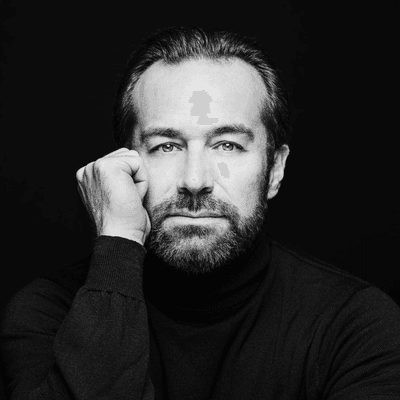
Fabien Gabel
Conductor
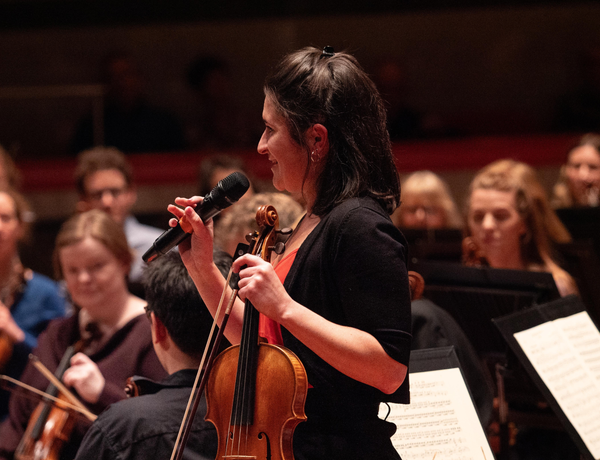
Amy Thomas
Presenter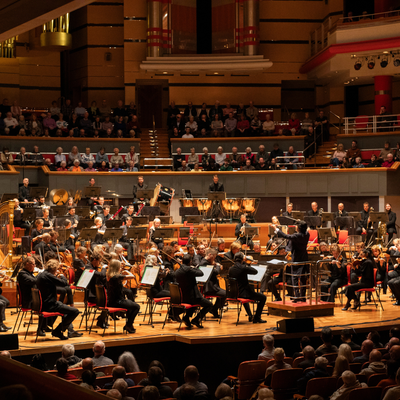
City of Birmingham Symphony Orchestra
Don Juan
Richard Strauss (1864-1949)
Don Juan has been womanising, swashbuckling and contemplating the meaninglessness of his own existence since the seventeenth century (the extent of these activities depending on the era). He emerged as a literary figure in 1630, depicted as more of a devil than a lover. Lord Byron, perhaps inevitably, put him at the centre of his most famous poem in the 1820s. In the twentieth century, again perhaps inevitably, he was played by Errol Flynn in a 1930s film, and existentialist author Albert Camus portrayed him as an ‘absurd hero’. Musically he is the doomed lead, as Don Giovanni, in Mozart’s 1787 opera, and in 1888 Strauss treated him to a gloriously uninhibited instrumental portrait, albeit one which ends in tragedy.
Strauss’s tone poem was based on an unfinished verse drama called Don Juans Ende, by the poet Nikolaus Lenau. In this version Don Juan is not womanising for the sake of it, but as part of a feverish search for the ‘ideal woman’. This is ultimately doomed: exhausted by the perpetual chase, Don Juan agrees to a duel, and dies. The piece follows his trajectory from exhilaration to disillusion. After a thrilling rush of adrenalin at the start – scurrying strings, sparkling percussion and an infectiously joyful melody – Don Juan pauses briefly to flirt, but then rushes onwards. Harp and solo violin draw our attention to his first major amorous episode, after which, caddishly, he does not linger, but gallops off to the tune of his opening theme. Muted horns, sliding suggestively down the scale, introduce an utterly beautiful song for oboe in the next romantic interlude, followed by an unequivocal statement of swaggering machismo: Don Juan’s own theme, blasted from the horn section. This theme seems set to triumph over the second half of the piece, but – even with a few minor key portents of doom – our hero comes to a shockingly abrupt end. After a silence, high trumpets ‘stab’ the string texture, reducing the piece to a shuddering conclusion. The piece was premiered in Weimar in 1889, a brilliantly brash calling-card for the 25-year old Strauss.
The Woman Without A Shadow: Symphonic Fantasy
Richard Strauss (1864-1949)
Strauss’s seventh opera, The Woman Without a Shadow (Die Frau Ohne Schatten) was completed in 1919. It was the first of what Strauss scholar Bryan Gilliam has called his three ‘marriage operas’ (the other two were Intermezzo and Die ägyptische Helena). Strauss was fascinated by marriage, his own decades-long union with soprano Pauline de Ahna, providing much inspiration – indeed Strauss is reported to have said he would happily write ten operas about his wife. ‘Shadow’ is a complicated exploration of two marriages, one magical, one earthbound. It is half fairy-tale, half German folk story, with a touch of Goethe’s Faust thrown in for good measure. The central ‘Frau’ is the Empress, daughter of Keikobad, who was captured as a gazelle by the Emperor and made human. She has no shadow, which in this opera symbolises her inability to bear children. Her father instructs her to obtain a shadow within a year, or she will have to return to his Kingdom and the Emperor will be turned to stone. She attempts to buy the shadow of The Dyer’s Wife with promises of sparkling riches, represented musically by some deliciously tempting orchestral effects early on in the Fantasy. Many plot machinations follow, but the result is a happy ending: the Dyer’s Wife, complete with shadow, is reunited with her husband, while the Empress acquires her own through her willingness to sacrifice herself for others.
The opera is considered by some to be Strauss’s best score, but given its opulent orchestration and staging complications it struggled for performances in war-ravaged Germany after World War I. Nearly three decades later, in the aftermath of yet another war, Strauss adapted some of the music for a Symphonic Fantasy (1946) based on themes from the opera. It opens with Keikobad’s stern, downward theme, before segueing into the evocative display of riches noted above. Generally speaking, the romantic, rhapsodic elements of the opera are to the fore here, sounding at times like a soundtrack to an extravagant Hollywood love story; the Empress’s Nurse conjures up a potential lover for the Dyer’s Wife in a particularly soaring moment. A solo trombone takes the part of the Dyer, from the Act III duet with his wife, and the final moments of the Fantasy are a celebratory hymn to transformation and self-realisation. Strauss perhaps felt this was what audiences needed in the year after the war. But above all the Fantasy is, like the opera, a grand celebration of marriage: by 1946, Strauss and Pauline had made it to 52 years.
© Lucy Walker