Rush Hour Concert
Full programme
- Gershwin, Rhapsody in Blue (17mins)
- Gershwin, American in Paris (20mins)
Performers


Programmes Notes
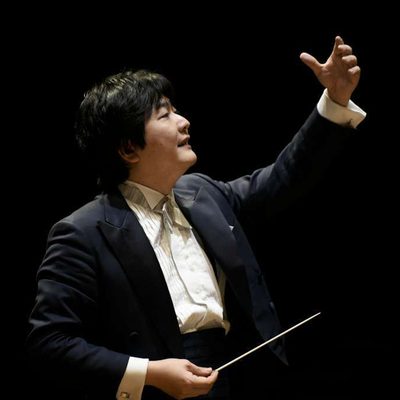
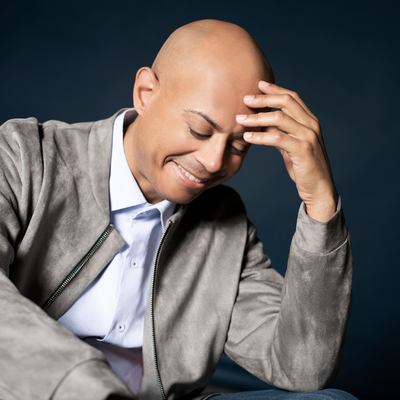
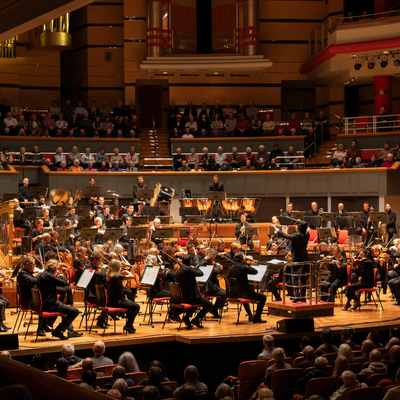
An American adventure, featuring Gershwin’s iconic and oh-so-smooth Rhapsody in Blue and his jazz-inspired An American in Paris. The phenomenal pianist Stewart Goodyear takes the piano seat and Kazuki Yamada leads the CBSO in this superb and thrilling programme.
Rhapsody in Blue
Gershwin (1898-1937)
The premiere of Gershwin’s Rhapsody in Blue was a major moment in American concert history and – just over 100 years later – is much discussed even today. The Rhapsody was first heard as part of an incredibly long concert entitled ‘An Experiment in Modern Music’ – the programme of which was jazz-focussed - at the Aeolian Hall, New York on 12 February 1924. Works of other American composers featured on the bill, such as Victor Herbert and ‘novelty pianist’ Zez Confrey, and Gershwin’s new work was the penultimate piece – by which time some of the audience had left, and others were bad-tempered with fatigue. It was, however, rapturously received in the hall; while the critics were less impressed, tending toward condescension (one critic wrote that Gershwin had ‘made an honest woman out of jazz’).
From whatever perspective, Rhapsody in Blue has remained a stalwart of the concert hall, as well as having a busy social life at the movies. Throughout the twentieth century and beyond it has become shorthand in cinema soundtracks for a glittering kind of East coast life: the opening clarinet swoop blending with the stylish monochrome opening of Manhattan (1977); the dance-rhythms fusing with the life of the main character in The Great Gatsby (2013); or the sound world evoking metropolitan romance for the chaotic lead of Trainwreck (2015). Its ‘Rhapsodic’ nature defies formal analysis, and instead the piece is a vivacious collection of themes and styles, creating an overall ‘montage’ effect, linked together by improvisatory-like bursts from the solo piano. Its frenetic high spirits calm briefly in the centre of the piece, giving way to a purely romantic melody. Yet it does not take long for the insistent rhythmic drive – what Gershwin called the ‘rattle-ty bang’ - to start up again. As a more friendly critic, Olin Downes, wrote after the premiere ‘the audience was stirred and many a hardened concertgoer excited with the sensation of a new talent finding its voice.’ Audiences are surely still stirred more than a century later.
An American in Paris
The city of Paris has long been a subject of fantasy and romance across all art-forms – perhaps most extravagantly in Hollywood films, where the figure of the ‘American’ gazing in enchantment at the Eiffel Tower, the Seine or simply a cobbled street often generates movie magic (see French Kiss, Before Sunset, and any number of Audrey Hepburn films for perfect examples). In Midnight in Paris, the wistful male lead finds himself transported back from 2011 to the 1920s to hang out with Ernest Hemingway and Gertrude Stein. This is the era in which George Gershwin – another American in Paris – found himself walking the streets, and inspired to compose his gloriously evocative orchestral piece. As well as depicting the city itself, Gershwin’s own starry-eyed enthusiasm is written into the chipper rhythms of the opening section as listeners are led through Paris accompanied by the sound of car-horns (he brought back to the US some authentic Parisian taxi horns to use in the early performances). The more jazz-imbued sections are suggestive of the American’s homesickness, with a slinky melody and a passage resembling the Charleston. The ‘strolling’ melody returns, as the American begins to sink into Parisian life.
Gershwin had begun the piece during his first trip to Paris in 1926, and completed it following his second visit in 1928. In between, he met the French composer Maurice Ravel, who had visited New York and was in turn intoxicated by that city (and wrote a jazz-inspired Piano Concerto not long after). A Hollywood film was later inspired by Gershwin’s work: Gene Kelly’s An American in Paris in 1951 created a whole narrative out of the score, and choreographed numerous sequences to this and other pieces by Gershwin. In 1963’s Charade, set in Paris (with Americans), Audrey Hepburn even refers to Gene Kelly dancing along the Seine in the earlier movie. Gershwin’s colourful, continent-hopping work is a gift that keeps on giving.
© Lucy Walker