Satnam Rana presents Bringing the Light
Full programme
- Joan Armatrading, Homeland (CBSO Commission, World Premiere) (15mins)
- Cassie Kinoshi, i was in the state of mind to stay (CBSO Commission, World Premiere) (5mins)
- A. R. Rahman (arr. Matt Dunkley), Slumdog Millionaire: Suite (10mins)
- Roxanna Panufnik, Aurora (CBSO Commission, World Premiere) (30mins)
Performers
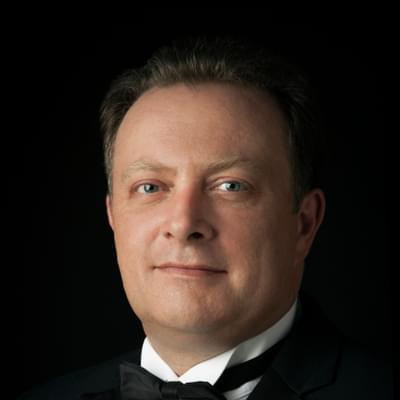
Michael Seal
Conductor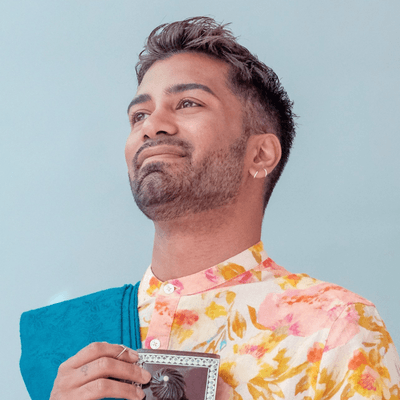
Akash Parekar
Sitar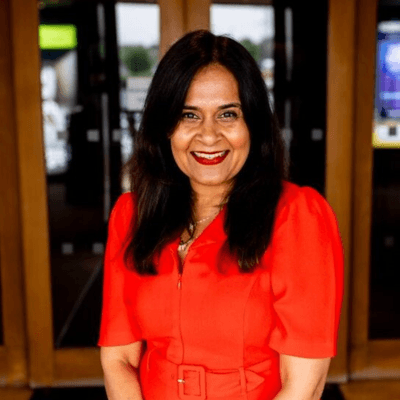
Satnam Rana
Presenter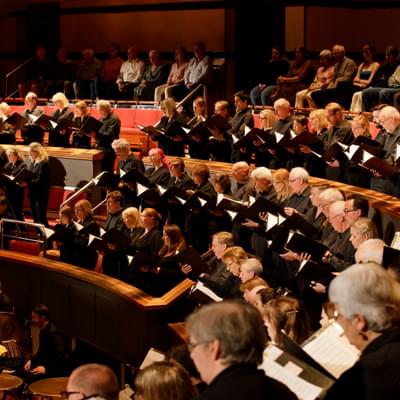
CBSO Chorus
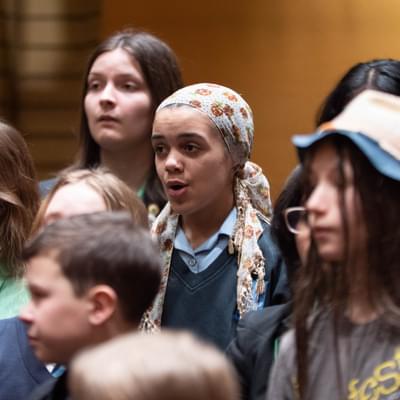
CBSO Youth Chorus
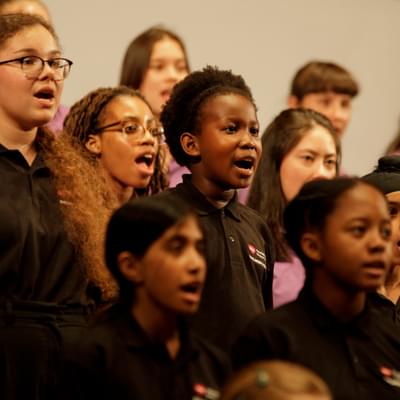
CBSO Children's Chorus
Introduction
A very warm welcome to you all; thank you for joining us at Symphony Hall today. At the CBSO, we’re passionate about creating experiences that feel both rooted in our home city and open to the world. Our concert and pre-concert activity celebrates Birmingham and its incredible diversity: from its people and its faiths, through to its musicians and the natural environment.
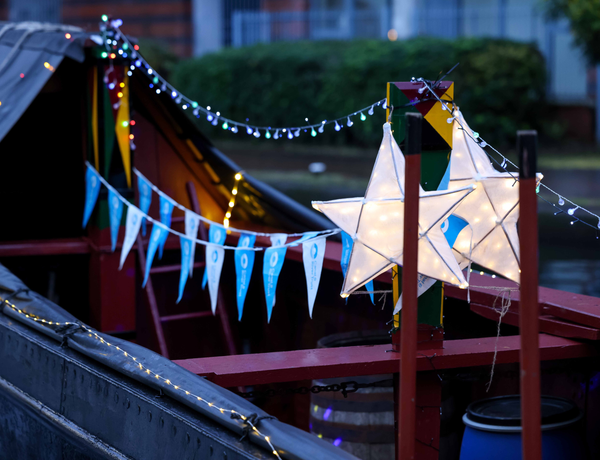
Bringing the Light began as a CBSO Community Board project in November 2024. The Board worked with Canal & River Trust to light up the canal in a Lantern Walk, with a concert at the CBSO Centre showcasing Birmingham performers of different musical heritage and styles. This year, you may have joined us for lantern making workshops with Crafting Community or joined us to walk beside the Heritage Canal Boats, Swift and Scorpio.
With community activity happening across the city, working with our fantastic partners in outdoor spaces and places, this concert will encapsulate the breadth and depth of connection that the CBSO holds as Birmingham’s orchestra. From involving all four of the CBSO Choruses and young musicians from Royal Birmingham Conservatoire to commissioning three works that aim to uplift, connect and inspire, we hope this concert demonstrates the power of music as a force to unite us all.
This concert features three world premieres: pieces that have been composed specifically for the CBSO and reflect the rich culture of Birmingham. Joan Armatrading’s Homeland highlights the city and its people, reflecting our strong sense of community, resilience and warmth.
Cassie Kinoshi’s i was in a state of mind to stay calls on nature as a source of connection to oneself, and a reminder that even in the most built-up places, the natural world remains present and sustaining.
At the heart of the concert is Aurora: a new work by composer Roxanna Panufnik and writer Jessica Duchen, co-commissioned by the CBSO, Royal Choral Society and the Arktisk Filharmoni. It is a powerful piece that explores the power of light as a universal symbol of hope, connection and unity – drawing inspiration from festivals of light from around the world. Developed in close collaboration with 14 UK faith leaders and devotional musicians, the text of each movement represents a different faith: Christian Christmas; Muslim Milad un Nabi; Sikh, Jain and Hindu Diwali; Jewish Hanukkah; Tibetan Buddhist Gaden Ngamchoe and ending with a beautiful, musical depiction of the Aurora Borealis for those of all faiths and none.
Thank you for being with us today to hear these pieces being performed for the very first time. We hope you feel it is a true celebration of what makes this city so special.
Jo Wright
Community & Talent Development Manager
Programme Notes: CBSO Commissions & World Premieres
Satnam Rana presents an evening dedicated to celebrating light and winter festivals – enjoy beautiful music for sitar, full orchestra and our choruses. Tonight is about celebrating new works, you’ll hear brand new commissions by Cassie Kinoshi, Roxanna Panufnik and Joan Armatrading.
Joan Armatrading (b. 1950)
Homeland
Homeland is a piece that highlights the city of Birmingham and its people, reflecting their strong sense of community, resilience and warmth. It is a tribute to a place to which I am bonded, and one I will always hold with affection and pride.
Through both words and music, the piece weaves together the sounds, energy, and rhythms of the city while reaching out into its vast surrounding countryside. This is Birmingham not simply as a backdrop, but as a living, breathing presence—an often-underrated landscape where industry and nature exist side by side in quiet beauty.
Cassie Kinoshi (b. 1993)
i was in the state of mind to stay
Music: Cassie Kinoshi
Words: lydia luke
i was in the state of mind to stay focuses how nature can provide steadiness and comfort when living in the city. For many young people growing up in the city, moments of connection with the natural world - whether it’s the rain on a bus window, flowers at a market stall, or the scent of a fig tree through an open window - become ways of finding calm, grounding, and a sense of belonging.
The words, written by lydia luke and developed in workshops with the Southwark Playhouse Youth Company (ages 14–18), reflect the perspectives of young people for whom the city is home. Their contributions emphasised how nature is not separate from city life but woven into it, and how these small yet powerful, significant moments and memories can offer solace in a fast and demanding environment.
The music responds by holding space for these small moments, allowing them to settle and expand. They are powerful reminders of how important nature is in our daily lives and how we are a part a nature too, i am in the centre of life also perhaps a reminder of how small our existence is in the vastness of the universe. Rather than portraying nature as something distant or idealised, the piece treats it as part of daily life: a source of connection to oneself, and a reminder that even in the most built-up places, the natural world remains present and sustaining.
Roxanna Panufnik (b. 1968)
Aurora
Music: Roxanna Panufnik
Words: Jessica Duchen
Aurora: Faith in Harmony celebrates the almost universal symbolism of light banishing darkness, perennial in winter festivals around the world. Jessica Duchen’s concept springs from Roxanna Panufnik’s passionate belief in drawing together different spiritual traditions, highlighting common ground to help heal the divisions in our society. Original poems blend with traditional texts, evoking the atmospheres of five festivals from different faiths. The ‘Aurora Borealis’ finale celebrates the secular through the imagery of an awe-inspiring natural phenomenon.
1. STAR OF THE SEA: CHRISTMAS. Our journey begins with a Christmas carol, inspired by the ancient Latin plainchant ‘Ave Maris Stella’. The Christmas star lights the way over the darkened seas. The mood is of overwhelming wonder, fervent joy and exultant peals of church bells.
2. PROPHET OF LIGHT: MILAD UN NABI. This festival marking Prophet Muhammad’s birthday is usually celebrated at home with the family and publicly with decorative lights and music after dark. Verses by the 11th-century Sanhaji Sufi Muslim poet Al-Busiri inform this section, the sung melody along with the beautiful Arabic Nahawand Muraṣṣa maqam (scale) and the chant ‘Recitation of Salutations on holy Prophet Muhammad, peace be upon Him’, which can be traced back to the 17th century. This is a quiet, intimate festival, as the same date also commemorates the Prophet’s death.
3. RETURN AND RENEWAL: DIWALI. The Hindu, Jain and Sikh faiths all celebrate Diwali, each investing it with a different significance. Representing the victory of light over darkness, knowledge over ignorance, hope over despair, each version focuses on a tale of return and renewal. The three traditions draw from pan-Indian music and I have used different and appropriate (to each faith) raags (scales) and tabla taals (rhythms) to differentiate between them.
For the Sikh faith, there is the symbolic celebration of the macrocosm and microcosm. The soulful Ahir-Bhairav raag creates a mystical quality over sung teen taal in ‘bohls’ – the vocal syllables with which tabla and Kathak dance rhythms are traditionally learnt. For the Jain faith, the festival symbolizes the ultimate achieving of the soul’s state of Bliss, accompanied by celestial drums. The music here is in the Yaman raag (coincidentally a scale often used in Polish music, so close to my heart!) and becomes cosmic and lighter, later using the Keherwa taal. In the Hindu festival, the oldest of the three traditions – placed last to form the climax – millions of lights shine around houses and temples. The joyous Bahar raag and returning teen taal ends the movement in a colourful, blazing celebration.
4. TOGETHER YEARNING: HANUKKAH. The Jewish festival of light celebrates the rededication of the Second Temple in Jerusalem and recalls a legend in which lamp oil sufficient only for one day lasted for eight in adversity. On the nine-branched Hannukiyah, another candle is lit every sundown for eight nights. The words draw on Psalm 91 and Hanukkah imagery from commentaries on the Torah, plus the intimacy of this joyous, family-based festival. The musical mood starts darkly and references Hebrew chants and modes. But the choruses are ever increasingly bright and rhapsodic, drawing from eastern-European Klezmer music (Mi Shebeyrakh Klezmer mode and Bulgar Klezmer rhythm).
5. FROM THE LAND OF SNOW: GADEN NGAMCHOE. On the 25th day of the 10th month of the Tibetan Royal Year, Tibetan Buddhists celebrate Gaden Ngamchoe, marking the passing of the great Tibetan Buddhist master Jé Tsongkhapa Lobsang Dakpa in the 15th century. People meditate and chant a verse/prayer 'Mig-tse-ma' (we use a very old and traditional musical setting) while butter lamps and candles glimmer around houses and monasteries. Long and short horns, oboes and bass drum + cymbal clashes represent a traditional Tibetan Buddhist orchestra.
6. MIRACLE OF NATURE: AURORA BOREALIS. An original poem evokes the way that the Northern Lights can cast wonder into the hearts of even the staunchest secularists. The Aurora can be explained, but what the heart perceives still seems miraculous. The grand finale, which starts with an orchestral interlude bringing in strands from each of the earlier movements, unites people of all faiths and none within one giant celebration.
To ensure maximum accuracy and acceptance, we have consulted key advisers within the UK organizations of each faith and their respective devotional musicians, to ensure the authenticity of this festive work.
CHRISTMAS Rev. Bonnie Evans-Hills, Priest Scottish Episcopal Church, Executive Committee of the World Congress of Faiths.
MILAD UN NABI Imam Dr. Sayed Ali Abbas Razawi Director General and Chief Imam Scottish Ahlul Bayt Society; Associate, Project on Shi’sm and Global Affairs; International Ambassador, Religions for Peace; Words and music: Shaykh Faizil Aqtab Siddiqi, Chancellor of Hijaz College Islamic University
DIWALI
Sikh: Jasvir Singh CBE, co-chair of City Sikhs, music: Omleen Ajimal, singer at South London Sikh Gurdwara. Jain: Ashwin Mehta, Trustee, Shrimad Rajchandra Mission Dharampur (UK), music: Vivek Haria, composer & writer.
Hindu: Krish Raval, founder director of Faith in Leadership; leadership educator and coach, music: Kartik Raghunathan, violinist and composer.
HANUKKAH: Rabbi Alexandra Wright, Senior Rabbi, Liberal Jewish Synagogue, London; music: Victor Tunkel
GADEN NGAMCHOE (words and music): Tsering Yangkey, Representative of His Holiness the Dalai Lama, Office of Tibet, London; Tenzin Kunga, Secretary, Office of Tibet, London; instrumental music: Jane Rasch and Tibetan Monks from Tashi Lhunpo Monastery India
Featured image © Pete Medlicott